


The Building Women & Youth-led Network Alliances for Agroecology and Organic Agriculture (WYNA) Programme builds on the experience and knowledge developed through the Knowledge Centre for Organic Agriculture and Agroecology in Africa (KCOA) project. Implemented by GIZ in collaboration with YPARD, PELUM Kenya, and AGSN, it promotes collaboration, capacity building, and leadership development. WYNA raises awareness, equips youth and female professionals with practical skills, and fosters entrepreneurship, green jobs, and strong network partnerships. Through inclusion and innovation, the programme empowers the next generation of African agrifood leaders by supporting fellows, interns, and community-driven solutions. In order to provide a platform for dialogue, peer learning, and networking among diverse stakeholders across regions for youth and women, the WYNA programme is organizing a series of WYNA Global cafes among which is the very first WYNA Global Cafe held online on 19th February 2026 under the theme Organic Certification Systems.
The first WYNA Global Café, held by zoom was attended by over 142 participants with 77 female, 61 Male and ‘’prefered not to say and unidentified’ category had 4 participants. The participants were comprised of a diverse, global audience, including Youth and women engaged in agroecology and sustainable agriculture, consumers, Smallholder farmers and farmer organizations, Youth-led agribusinesses and cooperatives, Extension agents and development practitioners, Certification bodies and organic sector actors, Civil society organizations, networks, and policymakers interested in sustainable food systems.
The café featured three key presentations delivered by experienced actors in the organic sector, including Chariton Namuwoza from NOGAMU, Sasha Mentz from South African Organic Sector Organisation, and Arbenz Markus from Kilimohai Organic. These presentations were complemented by key addresses from consortium partners, including Ms. Rosinah Mbenya, Country Coordinator of PELUM Kenya, and Oluwatayo Oni from AGSN. Detailed summaries of the presentations and remarks are provided below

Ms. Rosinah Mbenya welcomed participants to the meeting and appreciated the presence of diverse stakeholders, noting that achieving organic food milestones requires deliberate collaboration among farmers, civil society, policymakers, private sector actors, and development partners. She emphasized that sustainable progress in organic agriculture can only be achieved through coordinated multi-stakeholder action that promotes shared learning, joint responsibility, and practical engagement across the food system.
In her remarks, Ms. Mbenya highlighted the importance of creating safe and inclusive spaces where women and young people are empowered to learn, lead, and contribute meaningfully to sustainable food systems transformation. She observed that women and youth remain central actors in agroecology and organic agriculture, yet their participation often requires stronger institutional support, mentorship, and access to opportunities that strengthen their voices and leadership.
Drawing from the work of PELUM Kenya, she cited the hosting of one of the WYNA Fellows, Ms. Irene Gitau, as one example of how the organization contributes to nurturing young professionals through practical exposure and engagement in agroecology work. She further noted that PELUM Kenya has continued to support women and youth through initiatives such as AWOLA and YALTA, which focus on leadership development, capacity strengthening, and promoting active participation in agroecology and organic agriculture initiatives.
Ms. Mbenya also noted that PELUM Kenya remains actively involved in policy and advocacy engagements that advance agroecology and organic agriculture, ensuring that farmers’ perspectives and community needs are reflected in broader food systems discussions. Through these efforts, the organization continues to promote farmer-centered approaches and stronger collaboration across sectors.
She reaffirmed PELUM Kenya’s commitment to continue supporting farmers and other actors within the organic food value chain, while encouraging stronger partnerships and practical collaboration in advancing agroecology and organic agriculture across communities. Her remarks underscored the importance of collective action, inclusive participation, and sustained commitment in building resilient and sustainable food systems
Presentation-Introduction of the WYNA Programme by Tayo Oni:
Oluwatayo Oni of AGSN provided an overview of the Building Women and Youth-led Network Alliances for Agroecology and Organic Agriculture (WYNA) Programme, explaining that the initiative launched in September 2025 in Kampala- Uganda, was established to strengthen the participation of young professionals and women within agri-food systems through a strategic focus on advocacy, capacity building, knowledge exchange, network strengthening, and the promotion of green jobs and entrepreneurship leveraging on the existing work under the KCOA Platform. He noted that the programme is implemented through a consortium comprising YPARD, AGSN, and PELUM Kenya, with funding support from GIZ.
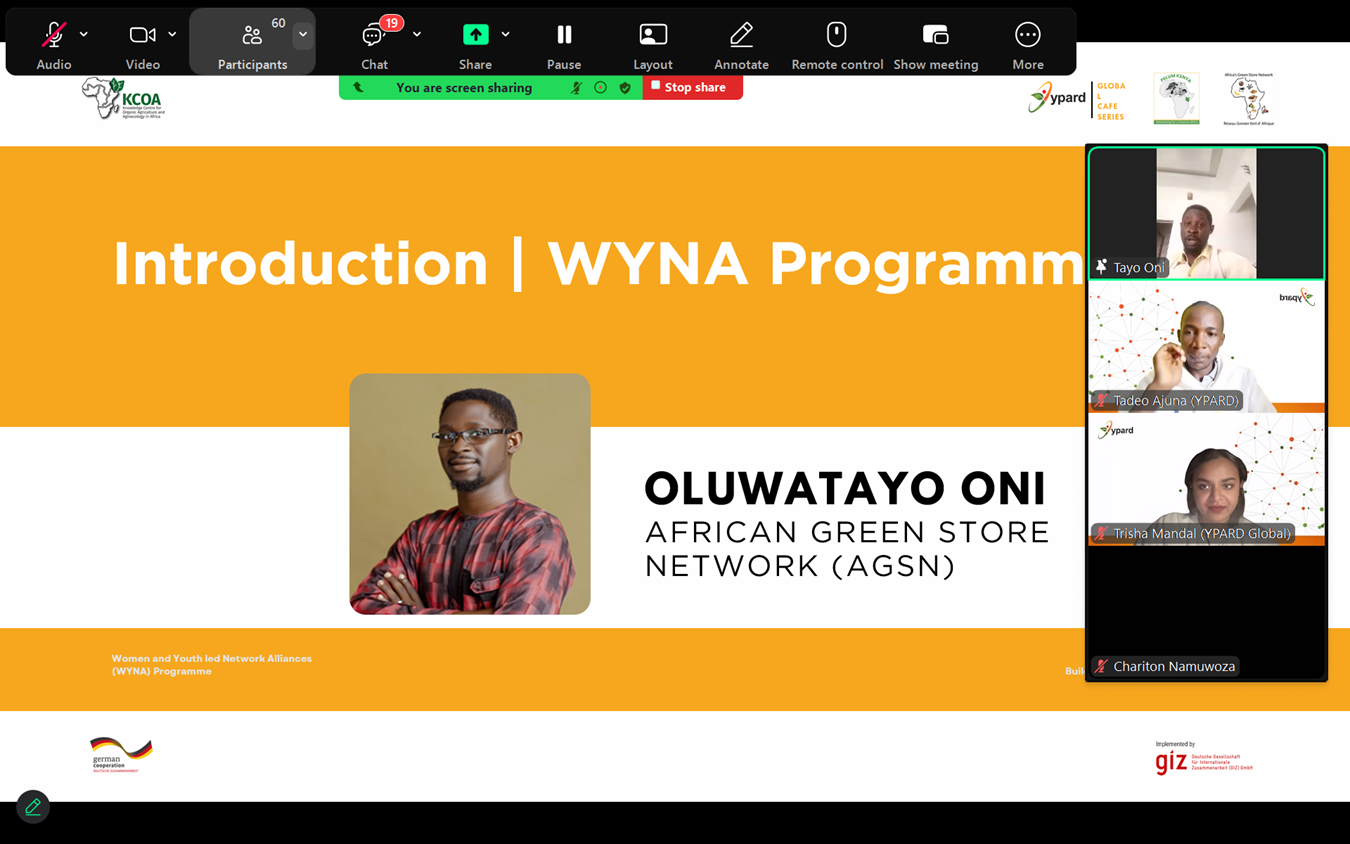
Mr. Oni further emphasized that the programme seeks to build stronger synergies among women- and youth-led networks while advancing agroecological transformation across the continent through collaborative learning and strategic engagement. He highlighted several initiatives already undertaken under the programme, including training on artificial intelligence applications in agroecology, mentorship and structured learning opportunities for youth fellows and interns, farm visits, knowledge cafés, networking events, and participation in national platforms such as AWOLA. He concluded by wishing participants a productive meeting and reaffirmed AGSN’s commitment to continue supporting the growth and development of the organic sector across Africa.
Chariton Namuwoza (See screenshot below during his presentation) delivered a presentation on organic certification systems, highlighting the importance of certification in building consumer trust, improving market access, and ensuring credibility in organic production. He began by providing an overview of NOGAMU and its role in promoting organic agriculture and supporting certification processes within the region.
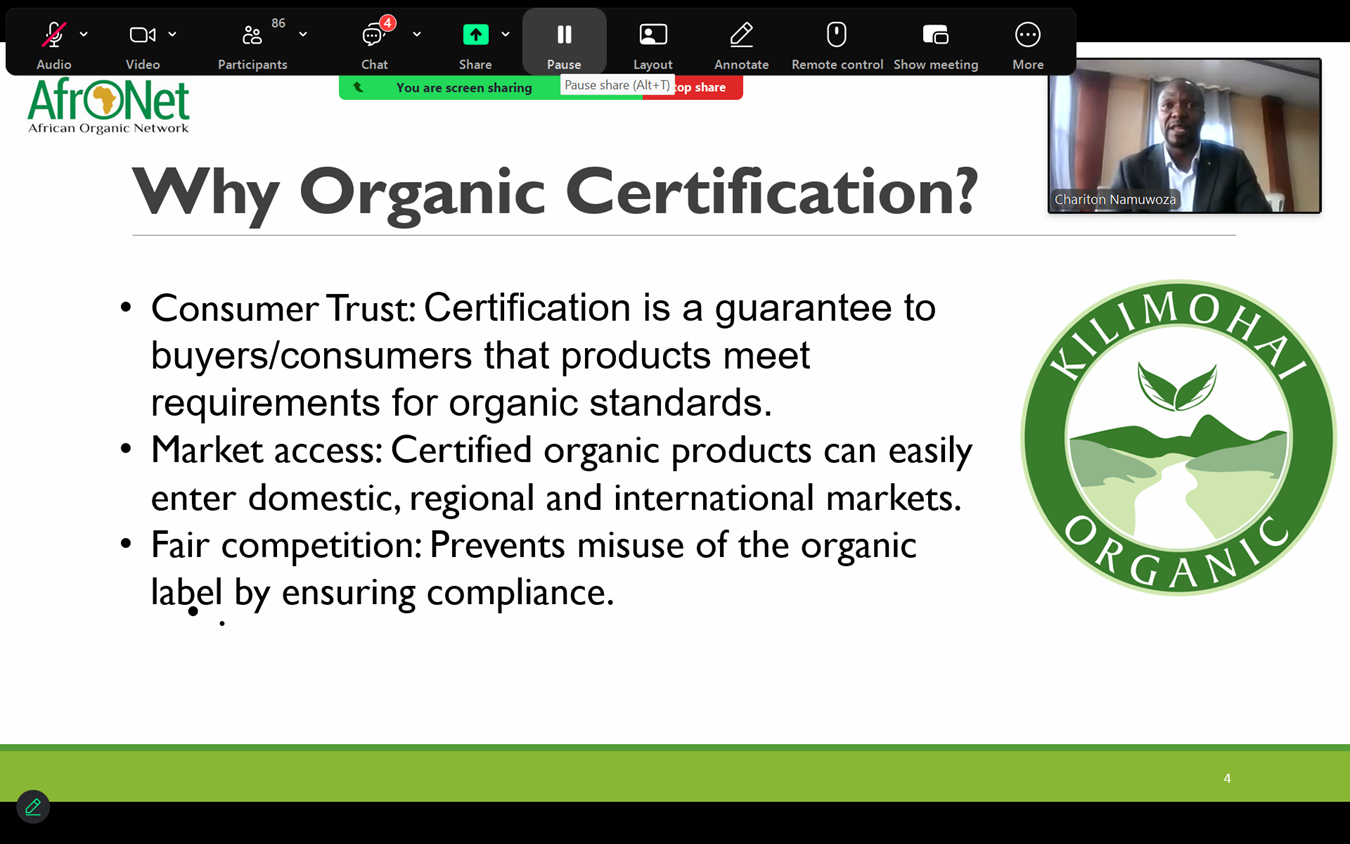
He explained that organic certification assures buyers and consumers that products comply with recognized organic standards, while also enabling producers to access domestic, regional, and international markets. In addition, certification promotes fair competition by safeguarding the integrity of the organic label and ensuring compliance across value chains. Mr. Namuwoza noted that organic standards are guided by the core principles of health, ecology, fairness, and care, with strong emphasis on avoiding synthetic chemicals, promoting soil health, biodiversity, and sustainability. He referenced key standards including EAOPS, EU Organic, NOP, JAS, Naturland, and Bio Suisse.
Regarding the Certification processm he outlined key stages including application to certification bodies, farm inspection, compliance assessment, and periodic renewal through regular inspections. He further addressed different certification systems, common challenges faced in attaining certification, and emerging opportunities within the organic sector. He concluded by appreciating YPARD for the invitation and expressed his willingness to continue supporting similar engagements
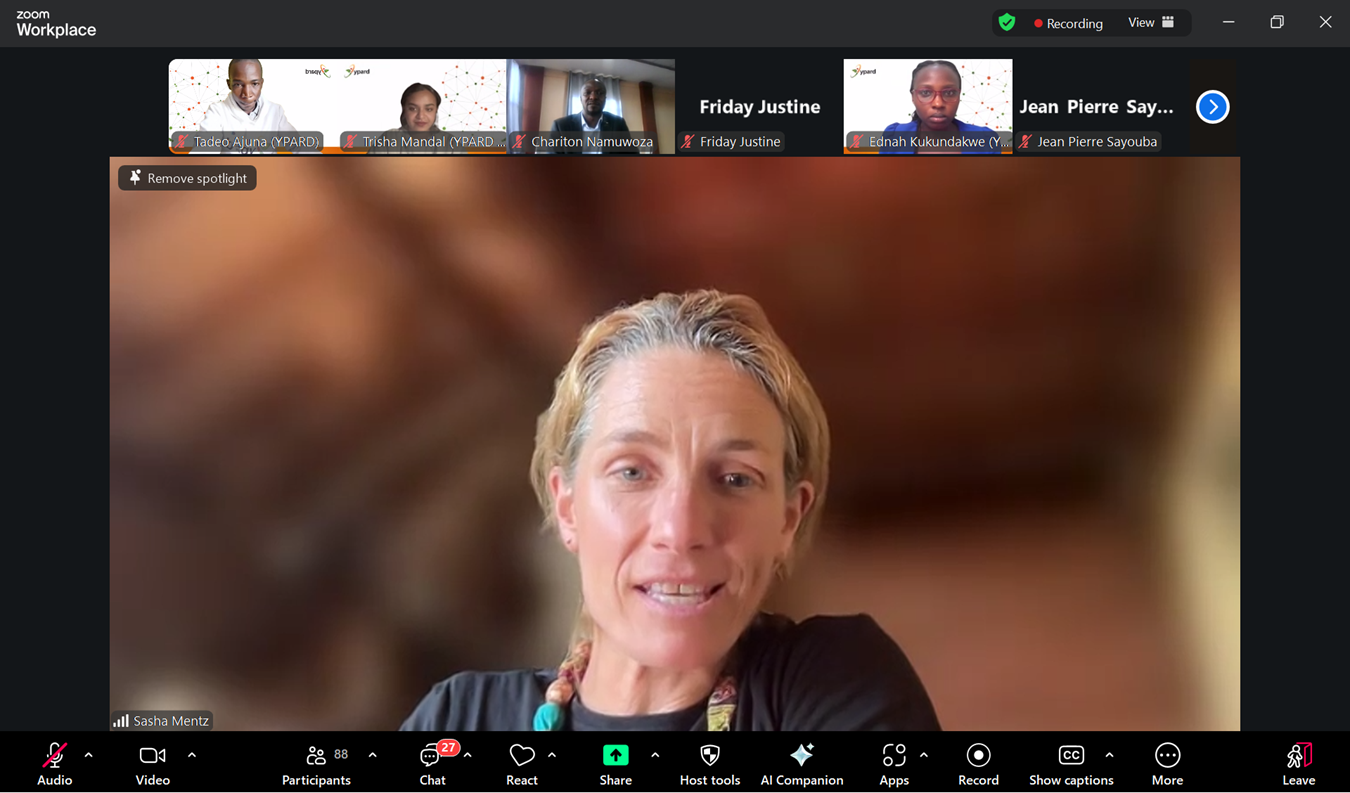
Sasha Mentz (In screenshot below delivering her presentation during the cafe) began her presentation by guiding participants through the different ways organic production can be verified, explaining that proof of organic production may take the form of first-party self-claims made by producers, second-party peer review involving verification by fellow farmers or consumers, or third-party certification conducted by an independent certification body. She used this introduction to position the relevance of alternative assurance models that are more accessible to smallholder producers.
She then introduced Participatory Guarantee Systems (PGS) as locally focused quality assurance systems that certify producers through active stakeholder participation and are built on trust, social networks, and knowledge exchange. According to her presentation, PGS offers a practical and inclusive approach for smallholder farmers by relying on shared responsibility and locally agreed standards rather than costly external certification mechanisms.
Ms. Mentz further explained the key elements and features of PGS, noting that such systems are founded on norms developed by stakeholders themselves, grassroots organization, and principles that strengthen livelihoods while promoting organic agriculture. She highlighted the importance of documented management procedures, farmer compliance verification mechanisms, support systems for participating farmers, farmer pledges, and the use of seals, labels, or certificates, together with clearly defined consequences for non-compliance.
She also clarified why PGS remains important, particularly for local markets and small-scale producers, and discussed the differences between PGS and third-party certification. Her presentation further covered when a PGS should be established, the certification flow within a PGS system, key documentation required, and common implementation challenges that stakeholders should anticipate and address
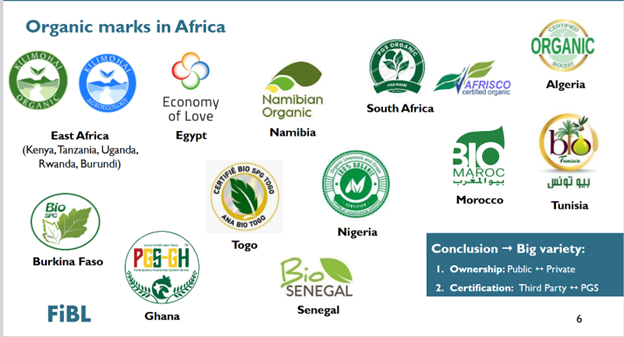
Arbenz Markus opened his presentation with a brief introduction to Participatory Guarantee Systems (PGS), building on earlier discussions by situating PGS within the broader development of organic assurance systems in Africa. He proceeded to present the different organic marks used across the continent and explained how regional labeling systems have evolved to strengthen consumer recognition and market trust for organic products.
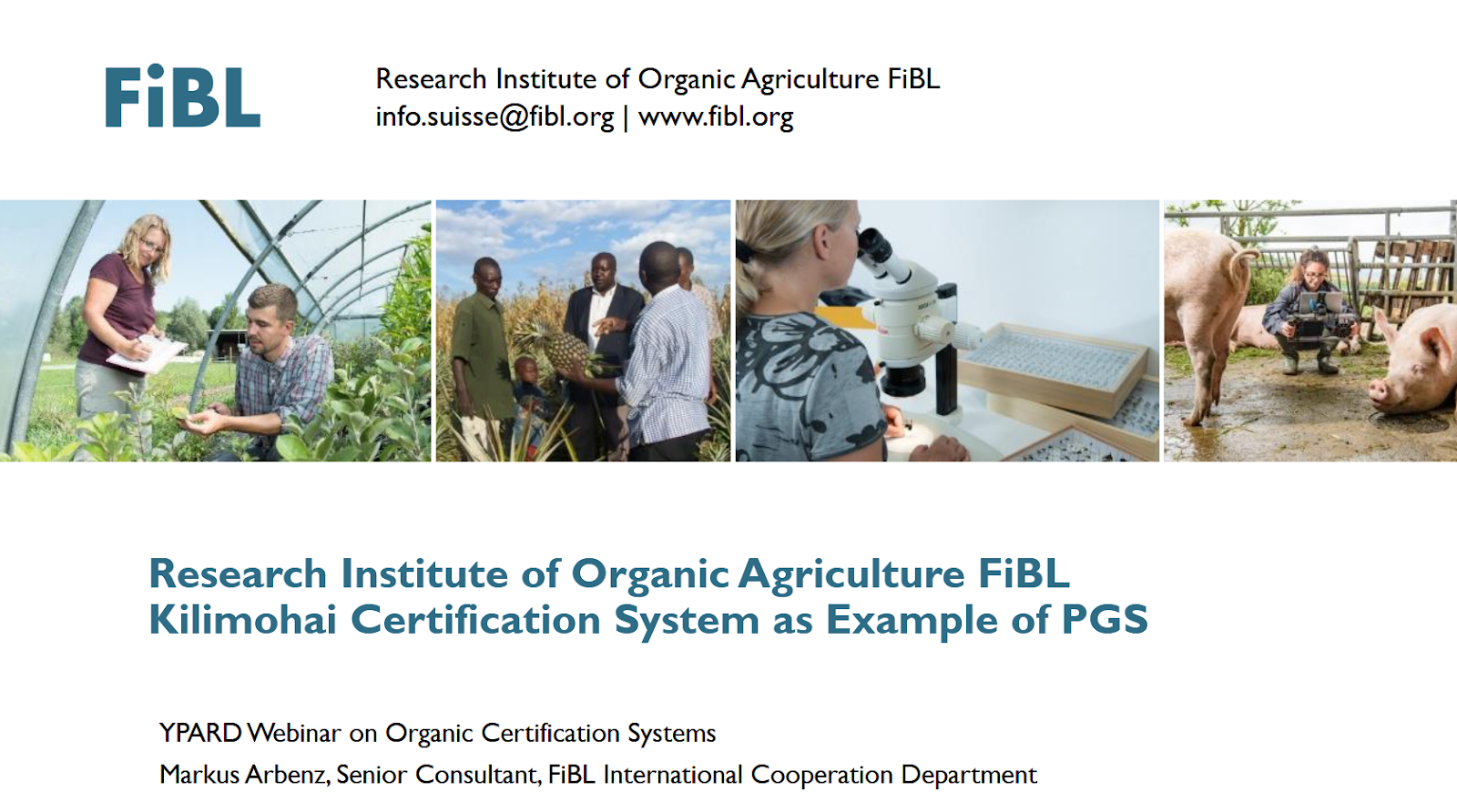
He then provided an overview of Kenya Organic Agriculture Network (KOAN), outlining its role in coordinating and advancing the organic sector in Kenya. His presentation highlighted the growth of organic agriculture in Kenya and introduced the Kilimohai label as a key certification and market recognition tool for organic and agroecological products in East Africa. He noted that the Kilimohai label is based on the East African Organic Product Standards, which are owned by National Organic Agriculture Movements in East Africa, endorsed by national bureaus of standards, and recognized as equivalent to regional organic standards frameworks.
Mr. Markus further explained the institutional structure supporting the Kilimohai PGS system, highlighting the role of the Joint Management Committee at international level, the membership-based governance of Kenya Organic Agriculture Network, the KOAN PGS Committee responsible for accrediting PGS groups, technical staff involved in management and training, accredited PGS assessors, and the producer groups themselves. He emphasized that these structures ensure accountability, quality assurance, and continuous learning within the certification process.
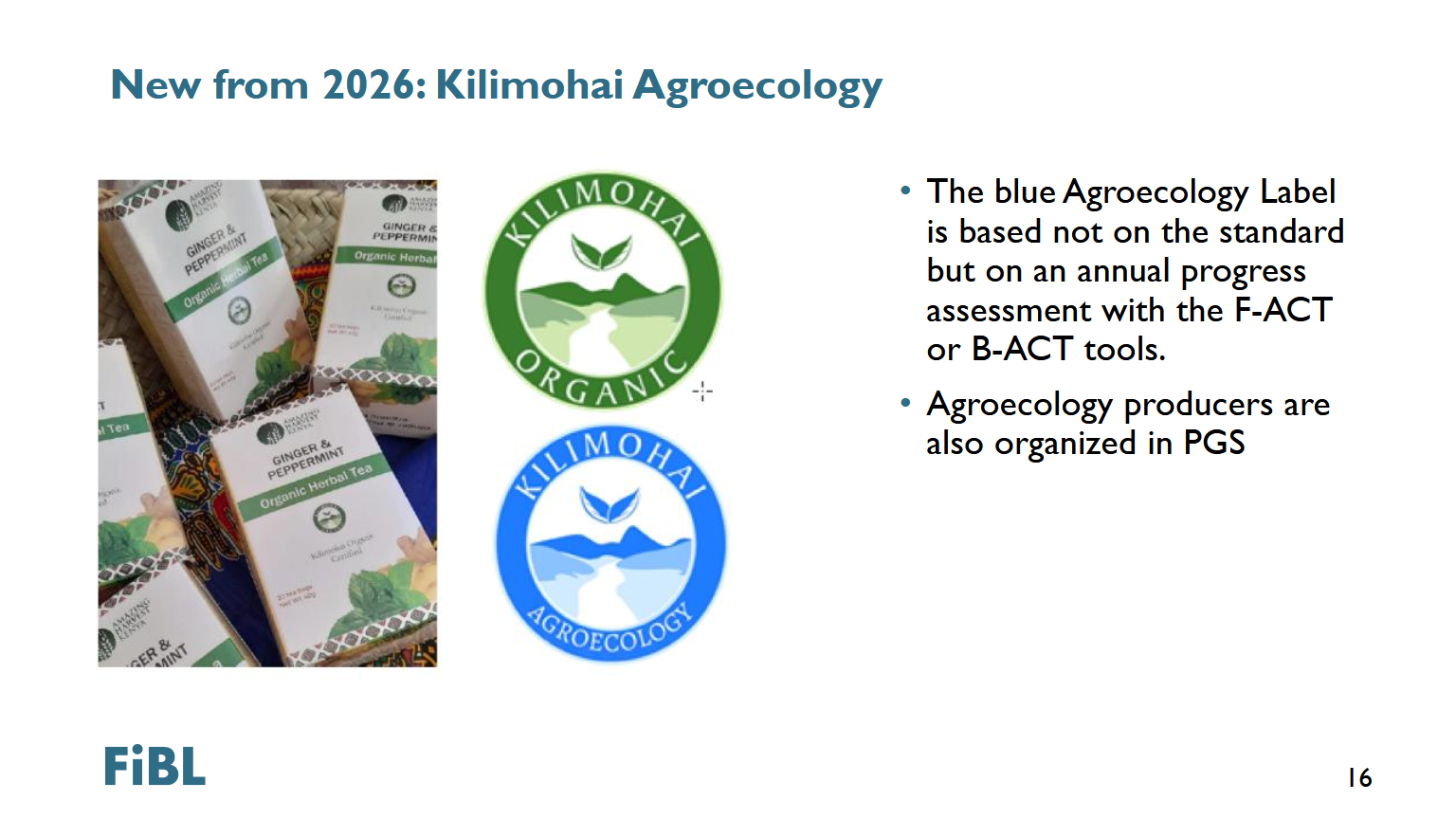
He also introduced the Kilimohai Brand Book and informed participants of a new development beginning in 2026: the Kilimohai Agroecology blue label. He explained that unlike the standard organic label, this new agroecology label will be based on annual progress assessments using F-ACT or B-ACT tools, while maintaining organization of agroecology producers within PGS structures. His presentation illustrated how certification systems continue to evolve to accommodate broader agroecological transitions across the region
Overall, the first WYNA Global Café provided a strong foundation for the programme’s learning agenda. It created space for participants to engage deeply with both the technical and social dimensions of organic agriculture, while reinforcing the importance of women’s and youth leadership in building more inclusive, resilient, and sustainable food systems.
As WYNA continues to convene such spaces, the Global Café stands as a clear reflection of the programme’s mission that aims at connecting , equipping, and amplifying women and youth as key drivers of agroecology and organic agriculture in Africa. More than just an online dialogue, the session marked the beginning of a growing community of practice committed to transforming food systems through collaboration, trust, and locally grounded solutions.

.jpg)