
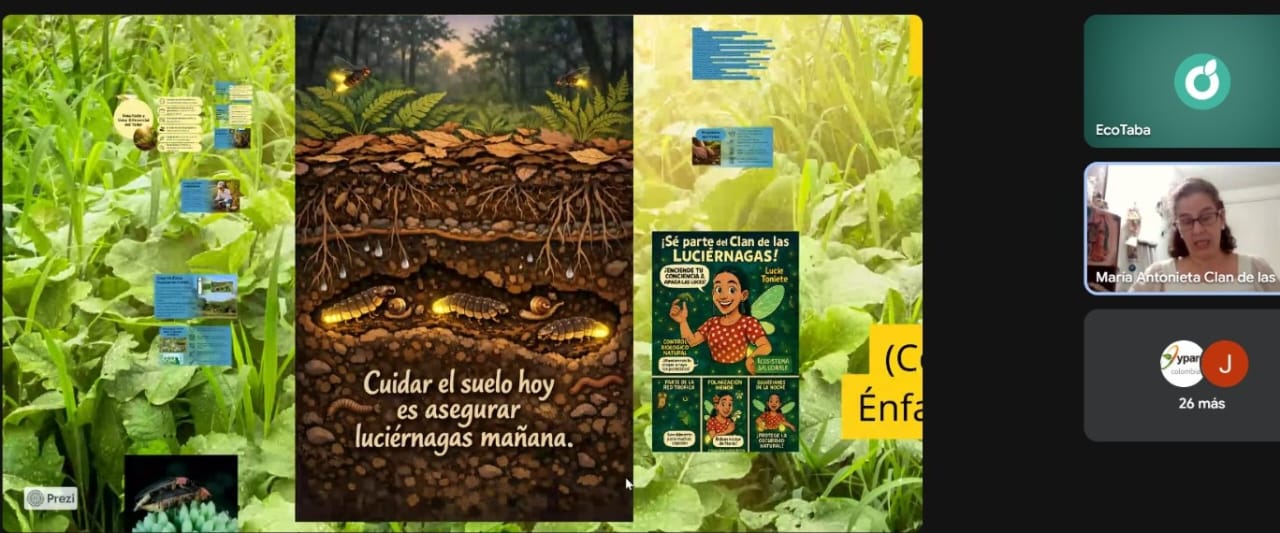

In May 2026, a new educational and community-driven initiative was launched in Colombia’s Andean Region with the aim of strengthening agroecology, territorial knowledge, climate justice, and collective memory among rural women and youth. The School of Agrobiodiversity: Sovereign Gardens of Peace and Territory, led by YPARD Colombia and Ecotaba, was created as a space for training, dialogue, and exchange between communities committed to building more sustainable and just food systems. The initiative brings together participants from several departments across the country, including Tolima, Boyacá, Antioquia, Santander, Norte de Santander, Caldas, Risaralda, Quindío, and Huila. Through a collaborative and community-centered approach, the School seeks to strengthen local networks while recognizing the vital role rural women have historically played in protecting seeds, biodiversity, food systems, and traditional knowledge. More than a conventional training programme, the School represents a collective effort to create spaces where rural voices, experiences, and territorial realities are valued as essential sources of knowledge and transformation.
The School was established with the understanding that agroecology cannot be separated from the broader realities facing rural communities. Climate change, biodiversity loss, territorial conflict, food insecurity, and social inequality continue to affect many rural territories across Colombia, particularly impacting women and young people. For the organizations behind the initiative, strengthening agroecological knowledge also means strengthening community resilience, memory, peacebuilding, and climate justice. “One of the main contributions the School offers is to continue opening spaces for dialogue on agroecology, biodiversity, the ways in which the effects of climate change are perceived, and the construction of memory and peace in the region and in Colombia,” explained Ana María Algarra, Coordinator of Ecotaba. The programme aims to amplify the experiences and perspectives of rural women from diverse regional contexts while building stronger connections between communities, social organizations, youth networks, and academic institutions.
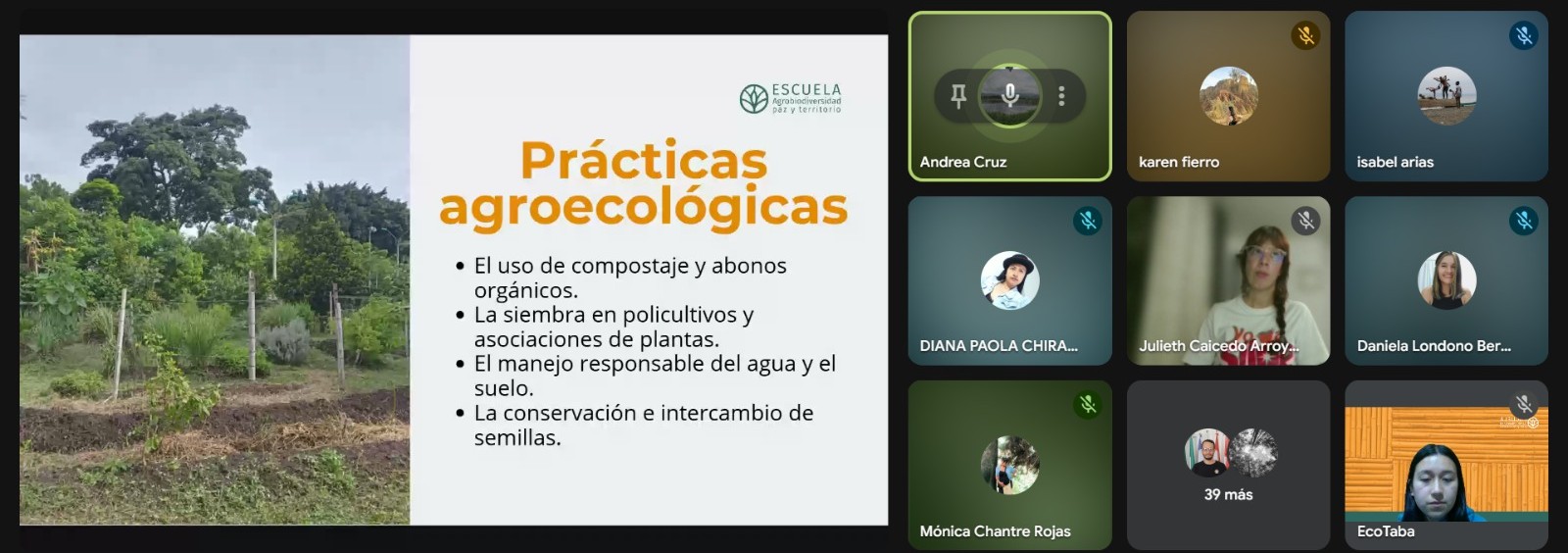
One of the defining aspects of the School is its comprehensive approach to agroecology. Rather than viewing agroecology solely as a farming method, the initiative approaches it as a broader social, environmental, and political practice connected to dignity, identity, food sovereignty, and community wellbeing. The programme integrates discussions around agroecology, biodiversity conservation, peacebuilding, territorial memory, and climate justice into one interconnected learning process. “You can’t talk about memory and peacebuilding without agroecology and community gardens. Everything is interwoven with climate justice initiatives and biodiversity conservation practices,” noted Ana María Algarra.
The initiative also acknowledges the disproportionate impacts climate change has on rural women and farming communities. By creating spaces for exchange and collective learning, the School allows participants to share experiences, traditional practices, resistance strategies, and local knowledge systems that are often overlooked within formal academic settings. “Agroecology is not seen merely as a different way of farming, but also as a different way of life. Here we are talking about the basic right to food, water, a healthy environment, and to live with dignity in our territories,” Ana María Algarra added.
For YPARD Colombia, the initiative also represents an important opportunity to strengthen participation and advocacy among rural youth and women in the Andean Region. According to Rosmery Báez, Country Representative of YPARD Colombia, the School creates a valuable platform for sharing experiences related to community gardens, autonomous territorial initiatives, and women-led agroecological projects while connecting academic learning with realities from the territories. “This School represents an opportunity to share knowledge and experiences regarding community gardens and autonomous projects led by rural women, linking academic processes with the realities of the territories,” she explained. The initiative further highlights the importance of creating spaces where rural women and young people are recognized not simply as beneficiaries of development programmes, but as leaders, knowledge holders, innovators, and active contributors to social transformation.
Unlike many traditional rural training programmes, the School of Agrobiodiversity was intentionally designed as a horizontal and participatory learning space. Rather than relying solely on lecture-based teaching, the methodology emphasizes dialogue, active participation, collaborative learning, and collective knowledge construction. Participants engage in virtual sessions focused on agroecology, climate change, biodiversity, food sovereignty, and territorial memory, alongside masterclasses exploring creative writing, agrarian policy, and the use of technology in agriculture.

The programme will conclude with an in-person gathering in Victoria, Caldas, allowing participants to strengthen connections and continue exchanging experiences face-to-face. The response to the initiative demonstrated strong interest from rural women across the region. Approximately 230 women applied to participate, with 73 selected for this edition of the School. Organizers hope that participants will continue replicating the knowledge and experiences gained through the programme within their own communities, helping strengthen local networks and support ongoing processes of social and environmental transformation.
At the heart of the School is the recognition of women’s leadership, resilience, and contributions within rural territories. “Every woman’s role is valuable, and the impact they make in every setting is admirable. Their efforts, resilience, and persistence have made it possible to create meaningful spaces where they can contribute their experiences. Women’s power lies in their words,” concluded Rosmery Báez.
Through initiatives such as the School of Agrobiodiversity, rural women and youth continue demonstrating that agroecology is not only about food production, but also about protecting territories, strengthening communities, preserving memory, and building more just and sustainable futures from the ground up.

.jpg)