
.jpg)

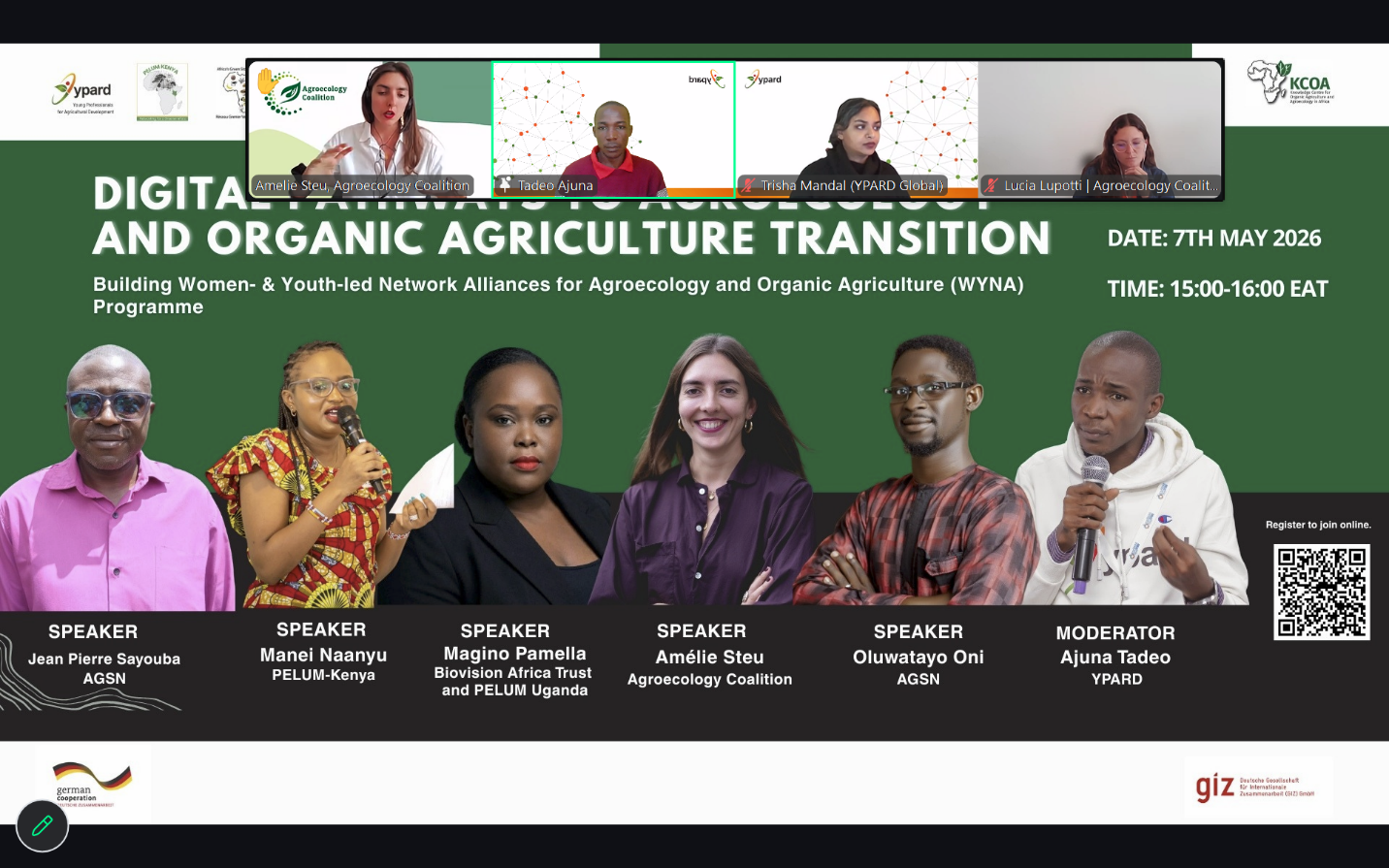
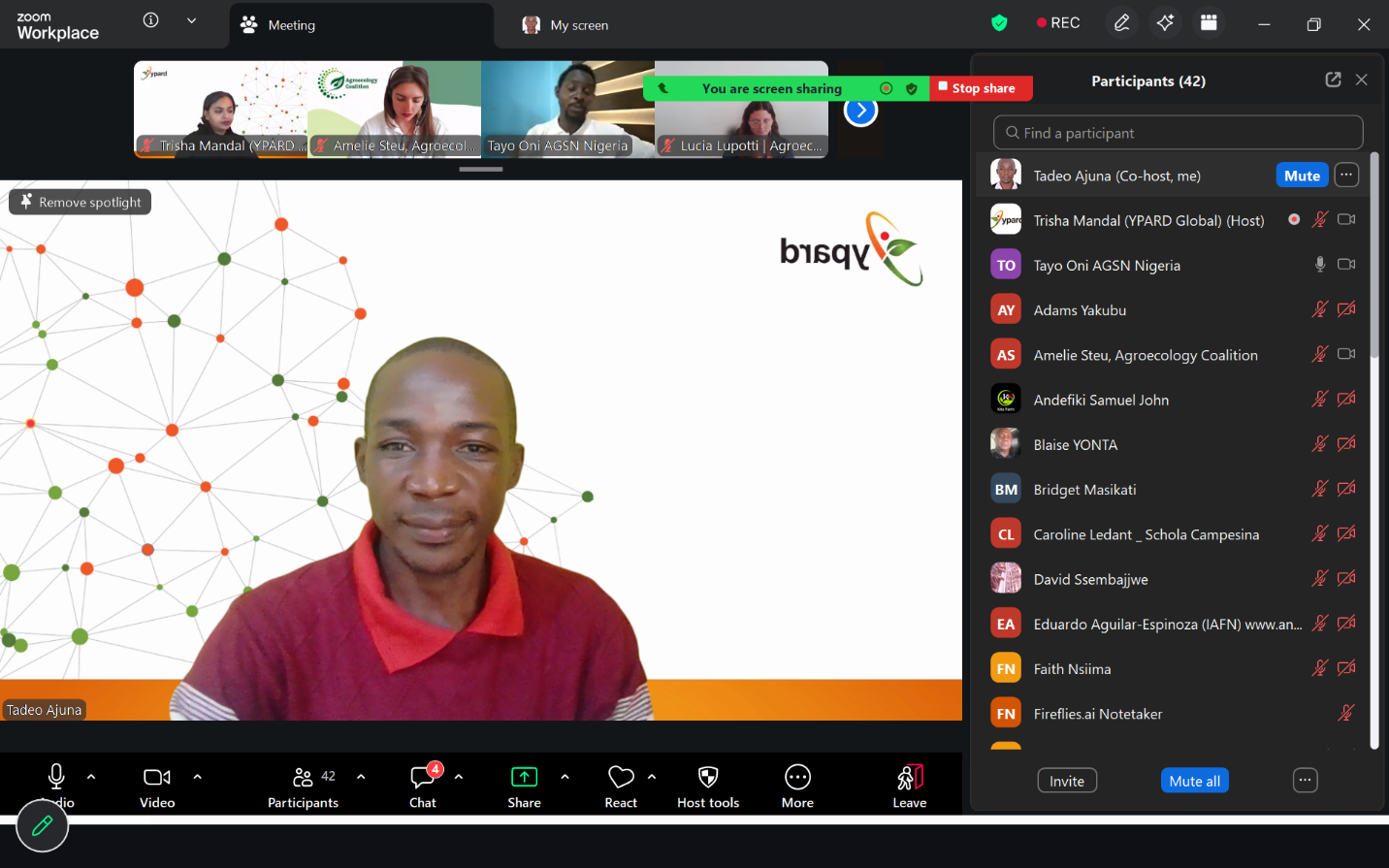
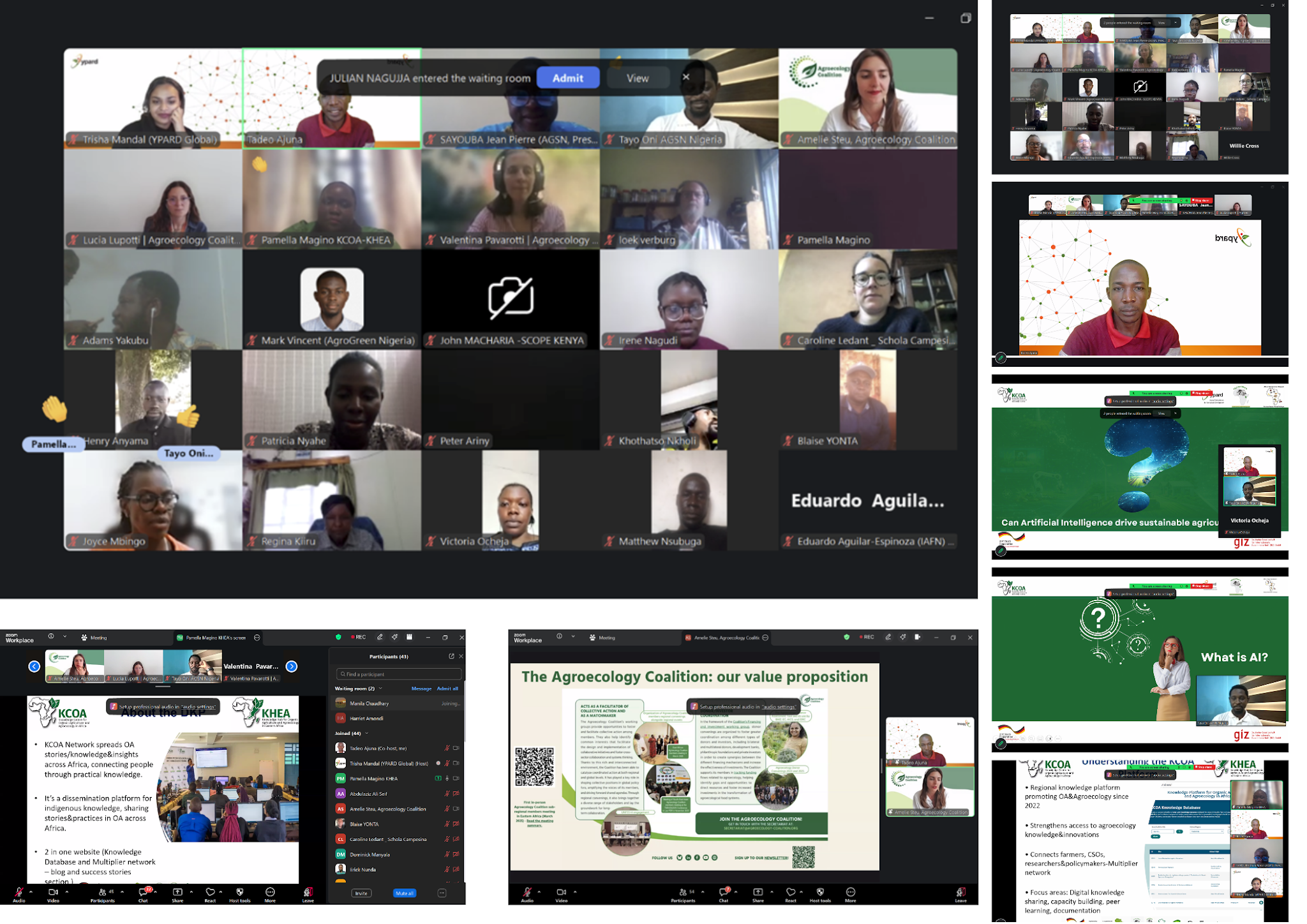
On 7th May 2026, YPARD successfully convened the 2nd WYNA Global Café under the theme “Digital Pathways to Agroecology and Organic Agriculture transition” . The WYNA Global cafes are a series of webinars/cafes organized under the Building Women & Youth-led Network Alliances for Agroecology and Organic Agriculture (WYNA) Programme. The virtual café/ webinar brought together over 86 participants in real time attendance and meeting materials including power point presentations disseminated to over 260 registered participants and these included but not limited to Agroecology networks and platforms, youth leaders, Agritech practitioners, farmers, development partners, and other agroecology and organic Agriculture stakeholders from across the world to explore how digital innovations are transforming access to knowledge, strengthening farmer decision-making, and accelerating the transition to sustainable agrifood systems. The Café was officially moderated by YPARD Programme coordinator Ajuna Tadeo.
The 2nd WYNA Global Café focused on the growing role of digital and online platforms in supporting the transition to agroecology and organic agriculture. The event featured insightful discussions and presentations from leading actors in the organic agriculture and agroecology sector, highlighting innovative approaches to knowledge sharing, digital transformation, and sustainable food systems. The Café brought together a distinguished panel of speakers who shared practical experiences, lessons learned, and emerging opportunities from their respective organizations, including JeanPierre Sayouba and Oluwatayo Oni from the Africa Green Store Network (AGSN), Magino Pamella from the Knowledge Centre for Organic Agriculture and Agroecology (KCOA) and KHEA, Amélie Steu from the Agroecology Coalition, and Manei Naanyu from PELUM Kenya.
JeanPierre Sayouba, President of the Africa Green Store Network (AGSN), welcomed participants to the Café and expressed his appreciation to YPARD and the WYNA Consortium for organizing such a timely and important event. In his remarks, he highlighted AGSN’s role in promoting digital technologies in organic agriculture and agroecology, including the delivery of Artificial Intelligence (AI) training programmes and other digital innovation initiatives aimed at supporting farmers and practitioners.
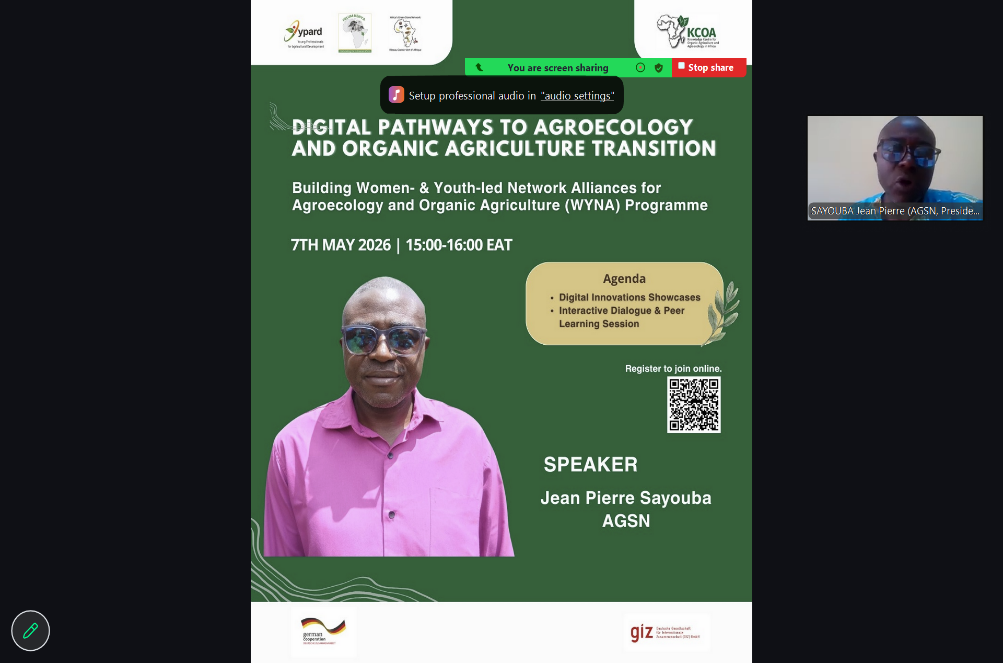
He (See photo left) emphasized the importance of leveraging digital technologies to strengthen agroecology and organic agriculture networks, improve access to information and knowledge, as well as empower women and youth as key drivers of sustainable agrifood systems transformation. He concluded by encouraging participants to actively engage in the discussions and share their experiences and insights throughout the Café.
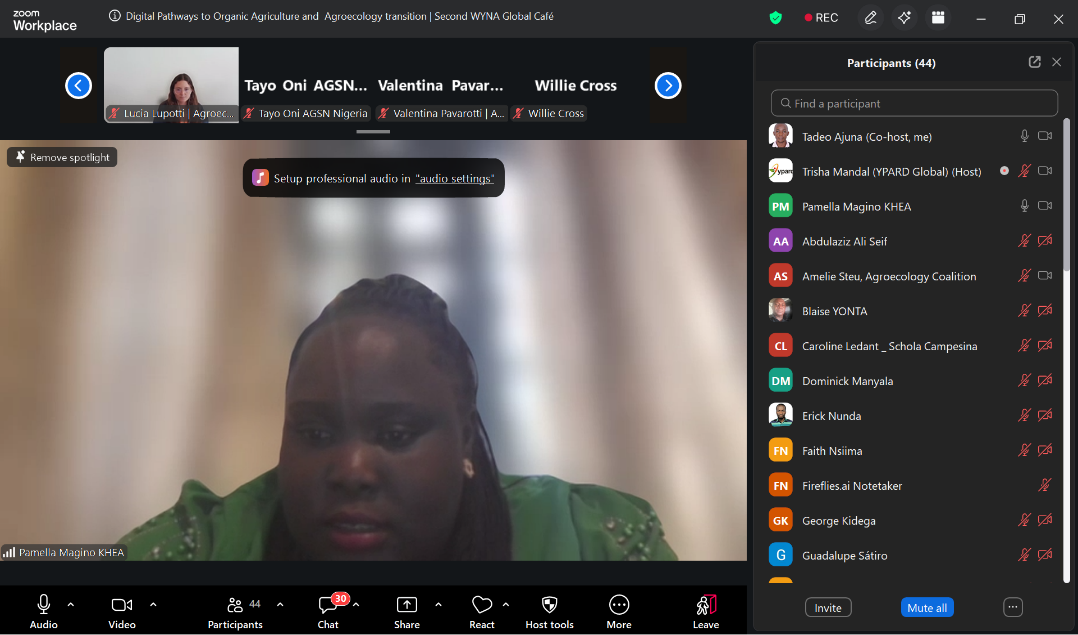
Magino Pamella from the Knowledge Centre for Organic Agriculture and Agroecology (KCOA) presented how KCOA digital platform is strengthening agroecology knowledge sharing across the continent. Participants learned how the platform serves as a regional knowledge hub connecting farmers, civil society organizations, researchers, and policymakers through digital resources, peer learning opportunities, and capacity-building initiatives.
The presentation highlighted the platform's extensive repository of validated knowledge products, farmer success stories, training materials, and practical guides that support organic agriculture and agroecology practitioners. Through these digital resources, KCOA is helping bridge knowledge gaps, improve access to information, and strengthen collaboration among stakeholders across Africa. At the end of her presentation, Some participants were enrolled onto the platform.
Oluwatayo Oni of the Africa Green Store Network (AGSN) delivered an engaging presentation on the role of Artificial Intelligence (AI) in advancing agroecological transformation. The session explored how AI-powered tools can support sustainable agriculture through precision farming, climate prediction, soil health monitoring, pest and disease detection, and resource optimization.
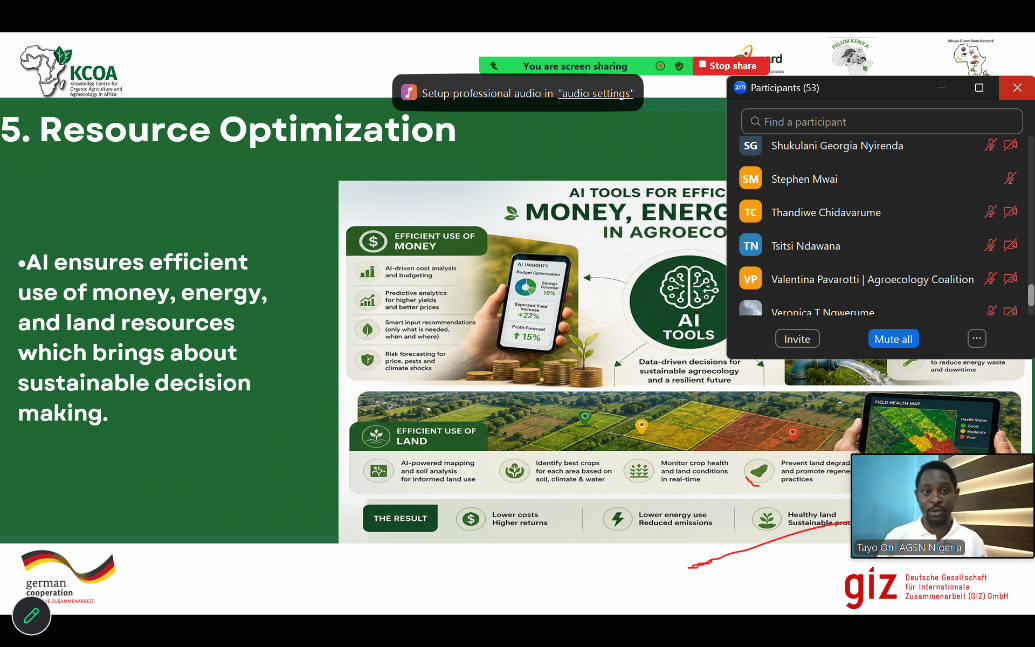
Participants discussed how AI can enhance decision-making, improve productivity, reduce resource wastage, and contribute to environmentally sustainable farming practices. The presentation also demonstrated how freely accessible AI tools can assist farmers, trainers, and extension workers in developing educational materials, creating communication products, and improving knowledge dissemination within farming communities.
The discussion emphasized that while technology cannot replace local knowledge and farmer experience, it can serve as a powerful complement that enhances learning, innovation, and sustainable agricultural practices.
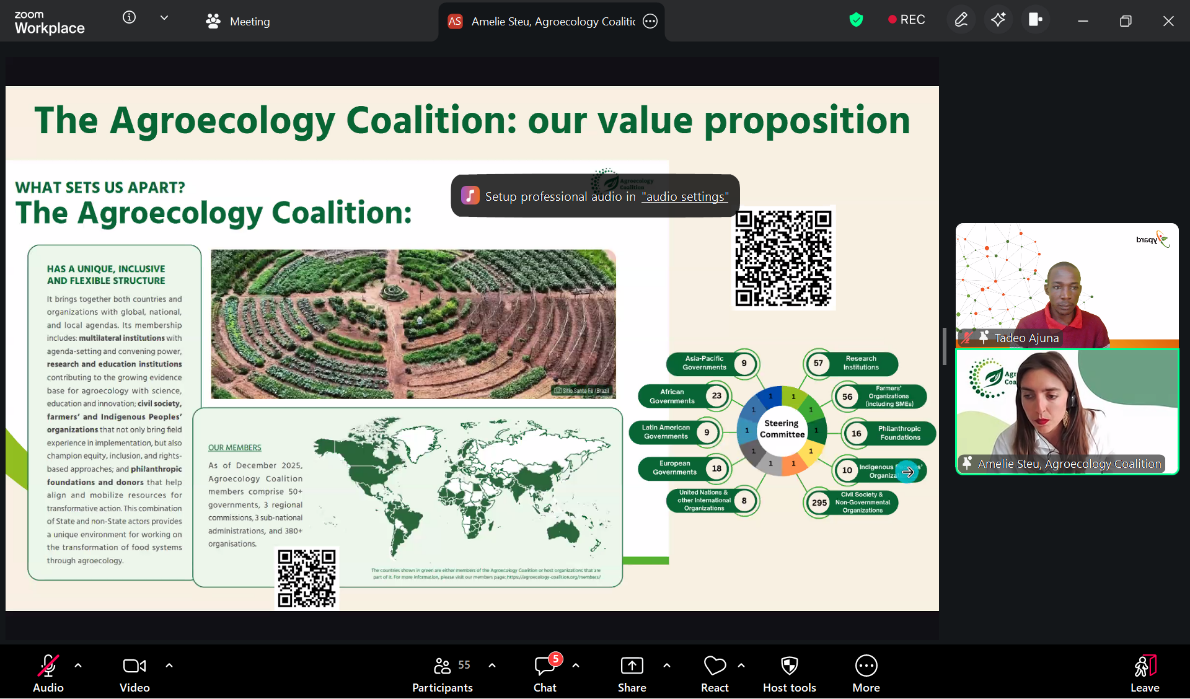
Amélie Steu from the Agroecology Coalition shared insights into how the Coalition is utilizing digital pathways to accelerate agroecological transitions globally. Participants learned about the Coalition’s efforts to connect diverse stakeholders, facilitate knowledge exchange, and promote collaborative action guided by internationally recognized agroecology principles.
The presentation showcased the Coalition’s growing role as a global knowledge hub through educational resources, webinars, digital publications, videos, infographics, and collaborative learning platforms. Special attention was given to the Coalition’s commitment to youth engagement and gender inclusion, highlighting the importance of ensuring that women and young people have meaningful opportunities to contribute to and benefit from agroecological transformation.
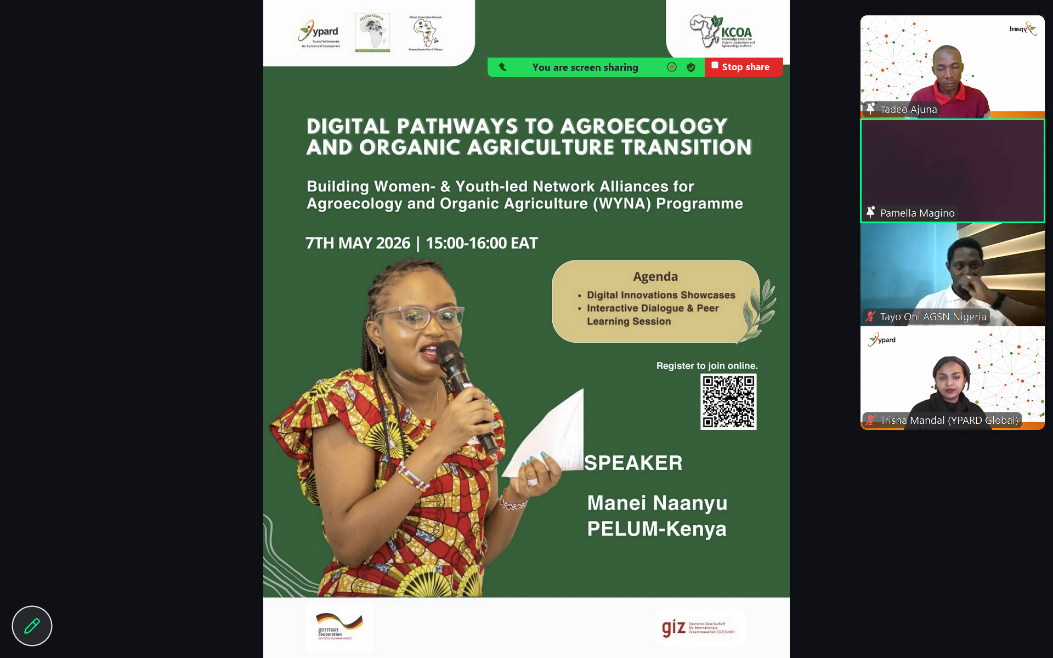
Delivering the closing remarks, Manei Naanyu thanked the speakers and participants for their active engagement and valuable contributions throughout the Café. She emphasized that digital tools have immense potential to accelerate agroecological transitions when combined with local knowledge, collaboration, and community-driven approaches. She further encouraged stakeholders to continue strengthening partnerships and knowledge-sharing platforms that empower women and youth to lead sustainable agricultural transformation.
The 2nd WYNA Global Café reaffirmed the growing importance of digital innovation in advancing organic agriculture and agroecology. From AI-powered decision-making tools and online knowledge platforms to global learning networks, digital technologies are creating new opportunities for farmers, practitioners, and communities to access information, share experiences, and drive sustainable change.
As the WYNA Programme continues to strengthen women- and youth-led alliances for agroecology and organic agriculture, these conversations remain essential for building stronger networks, fostering innovation, and supporting the next generation of agroecology leaders. The WYNA Programme extends its sincere appreciation to all participants, partners and speakers for their valuable contributions and engagement.
The 3rd WYNA Global Café will be announced in due course, and stakeholders are encouraged to continue engaging in the growing movement for Organic Agriculture and agroecological transformation.
.png)
.png)