
In January, the 18th Global Forum for Food and Agriculture (GFFA) in Berlin, Germany brought together a range of different stakeholders to discuss the future of agrifood systems. Under this year’s theme of ‘Water. Harvests. Our Future’, the conference highlighted the key role of sustainable water and agricultural management in safeguarding food security. In addition to several high level and expert panels, the GFFA hosted the Cooperation Market where research institutes, NGOs, and associations presented their innovative projects and practical examples of sustainable water and agricultural management.
Through the WYNA Programme, YPARD and consortia partners PELUM Kenya and African Green Store Network (AGSN) advance the goals of the KCOA by positioning young people and women as central actors in sustainable water management. The initiative demonstrates agroecological practices, such as integrated water management, soil health regeneration and cropping systems like hydroponics to optimize water efficiency while restoring ecosystems. The WYNA Programme and the KCOA are funded by the Deutsche Gesellschaft für Internationale Zusammenarbeit (GIZ).
A key contribution to water sustainability comes from reducing the use of synthetic fertilizers, pesticides and other key water pollutants: a cornerstone of agroecology and organic agriculture promoted under KCOA and the WYNA Programme. Additionally, agroecological practices encouraged by the project, such as crop rotation, mixed cropping cover, agroforestry, mulching and other soil management methods, will be essential in saving water on the farms and as avenues for increasing soil water retention. This shift not only safeguards water quality but also enhances biodiversity and long-term soil fertility.
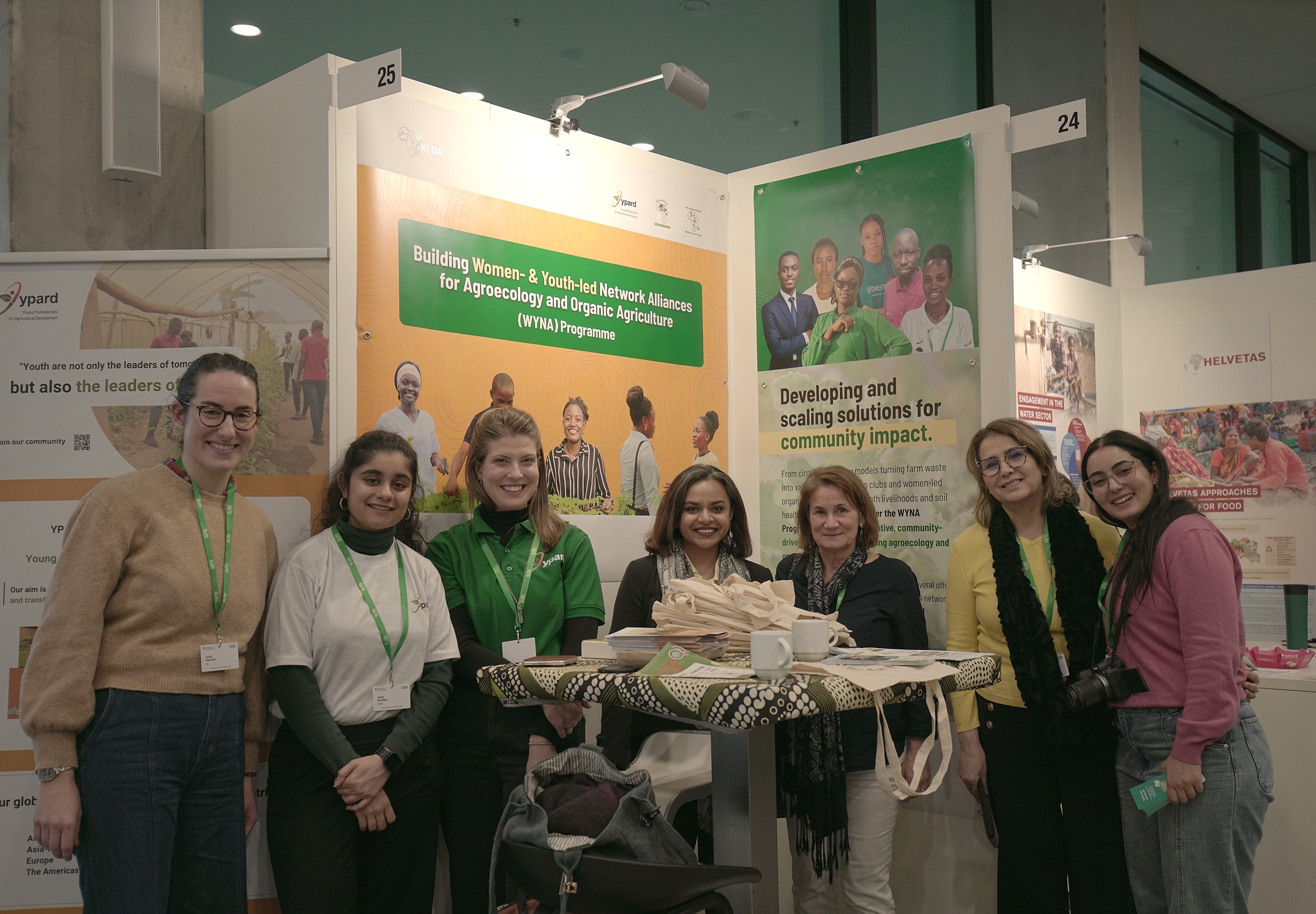
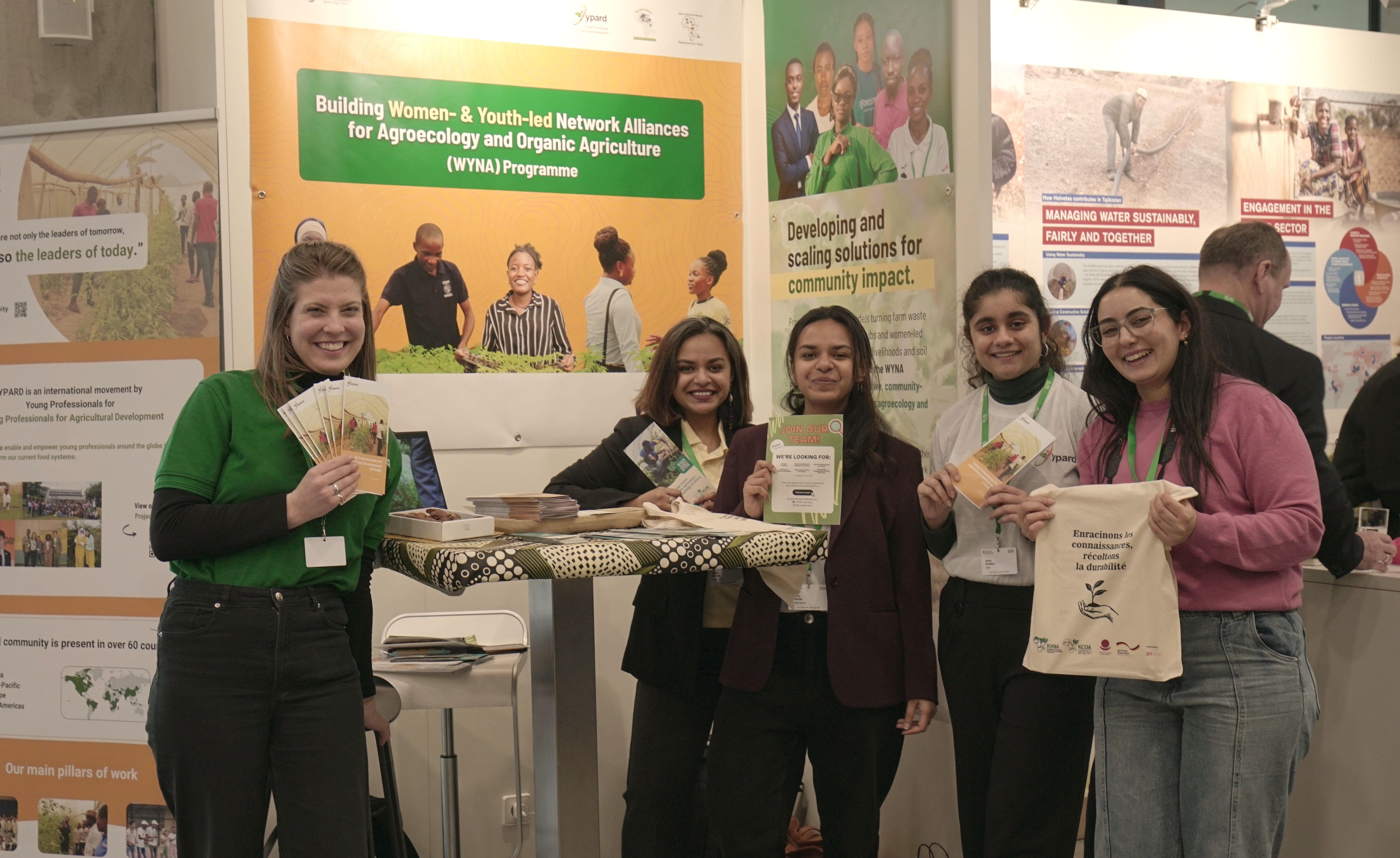
The presence of the WYNA and KCOA teams at the Cooperation Market of the GFFA helped to demonstrate the significant connections between agroecology and sustainable water and agricultural management. A key activity of the WYNA Programme, the Community Solution Fellowships, garnered considerable interest from the attendees at the Market. The Fellowships support young people based in four different countries in Africa who are practically applying sustainable agriculture and water management techniques in their projects. From circular-economy models in managing farm waste and creating value, to training farmers in crop rotation and intercropping, organic soil enrichment, and reduced dependence on synthetic agrochemicals, the six Fellows under the WYNA Programme are scaling innovative, community-driven approaches to promote agroecology and organic agriculture in Africa.
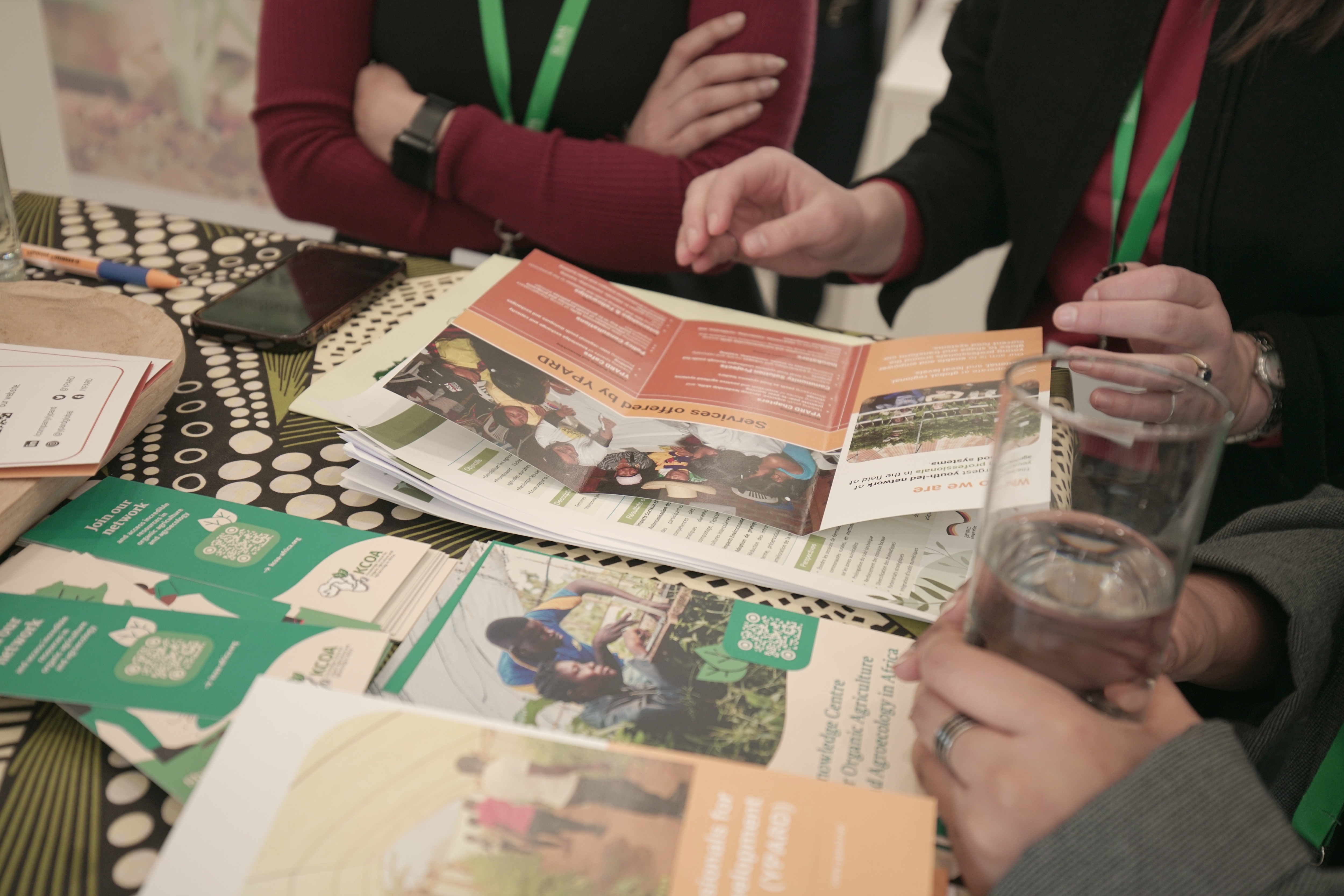
Another key part of the exhibition was the promotion of the KCOA Knowledge Platform. The Knowledge Platform is an extensive database that provides practical, accessible, and quality resources on agroecology and organic agriculture that have been vetted by the experts in the KCOA Network. Through this Platform and a network of five regional knowledge hubs in Africa, the KCOA gives access to valuable information on organic and agroecological methods, helps build technical skills, and connects professionals in the sector.
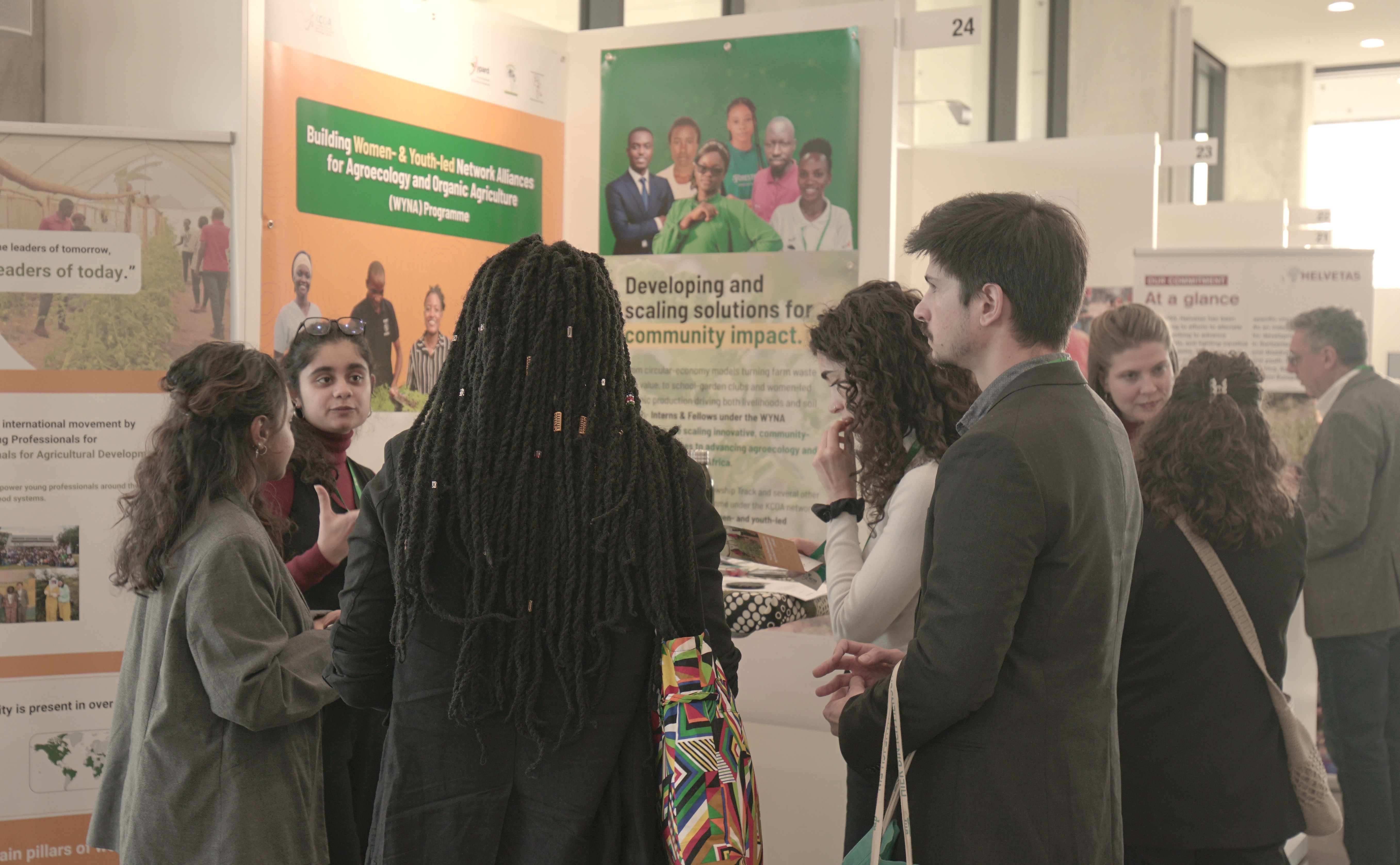
The exhibition stand also showcased the newly re-activated YPARD Germany, represented by the Co-Country Representatives of the Chapter, Arnaz Dholakia and Pritha Mandal. Their presence highlighted YPARD’s growing engagement within Europe and its role in connecting young professionals, students, and researchers to global conversations on sustainable agrifood systems. The chapter attracted strong interest from students and early-career researchers from several universities in attendance, sparking discussions on youth leadership, agroecology, and opportunities for international collaboration. This engagement underscored the importance of national YPARD chapters as platforms for amplifying youth voices and linking local academic and professional communities to global initiatives such as WYNA and KCOA.
Over the 15th and 16th of January, the WYNA/KCOA stand was visited by more than 70 representatives from government institutions, intergovernmental agencies, universities, and research organizations, enabling productive exchanges on agroecology, organic agriculture, and their vital links to sustainable water management. These interactions reinforced the central role of young people, women, and community-led initiatives in driving resilient and inclusive agrifood systems. By showcasing practical solutions and fostering dialogue across sectors, the WYNA Programme and the KCOA Network demonstrated how agroecology can contribute to safeguarding water resources while supporting food security and environmental sustainability.