
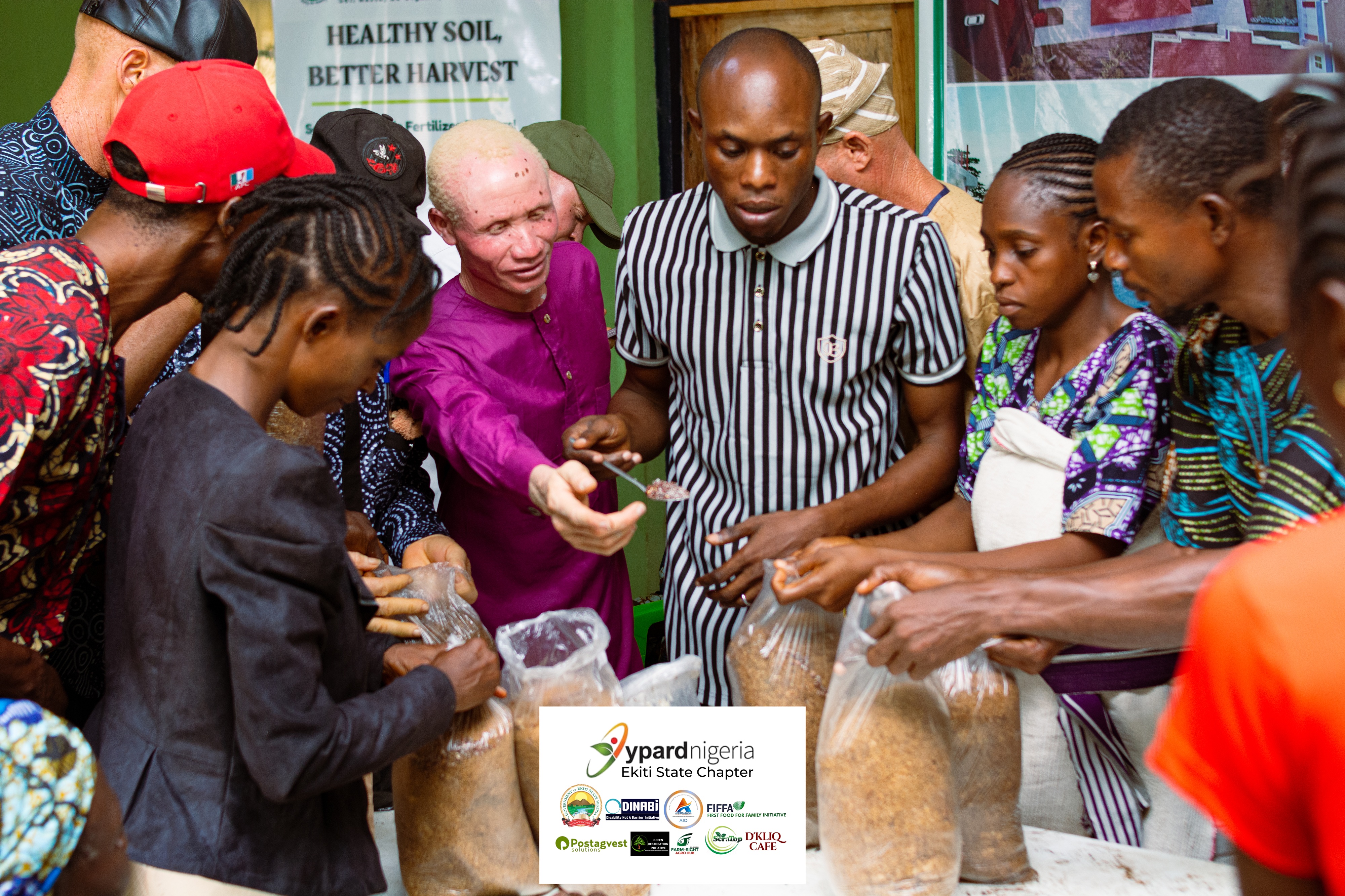

Organized by the Ekiti State Chapter of YPARD Nigeria, the program, “We Fit Grow Too: Empowering Persons with Disabilities in Organic Farming,” brought together 39 participants from across different disability groups. These included persons with albinism, physical disabilities, visual impairments, and hearing impairments. The program was designed as an inclusive agricultural empowerment initiative aimed at equipping Persons with Disabilities (PWDs) with practical knowledge and skills in organic and climate-smart agriculture. Created with the aim of promoting an inclusive learning environment, the initiative gave space to participants to gain hands-on agricultural skills while also learning about sustainable farming practices that contribute to climate resilience and livelihood improvement.
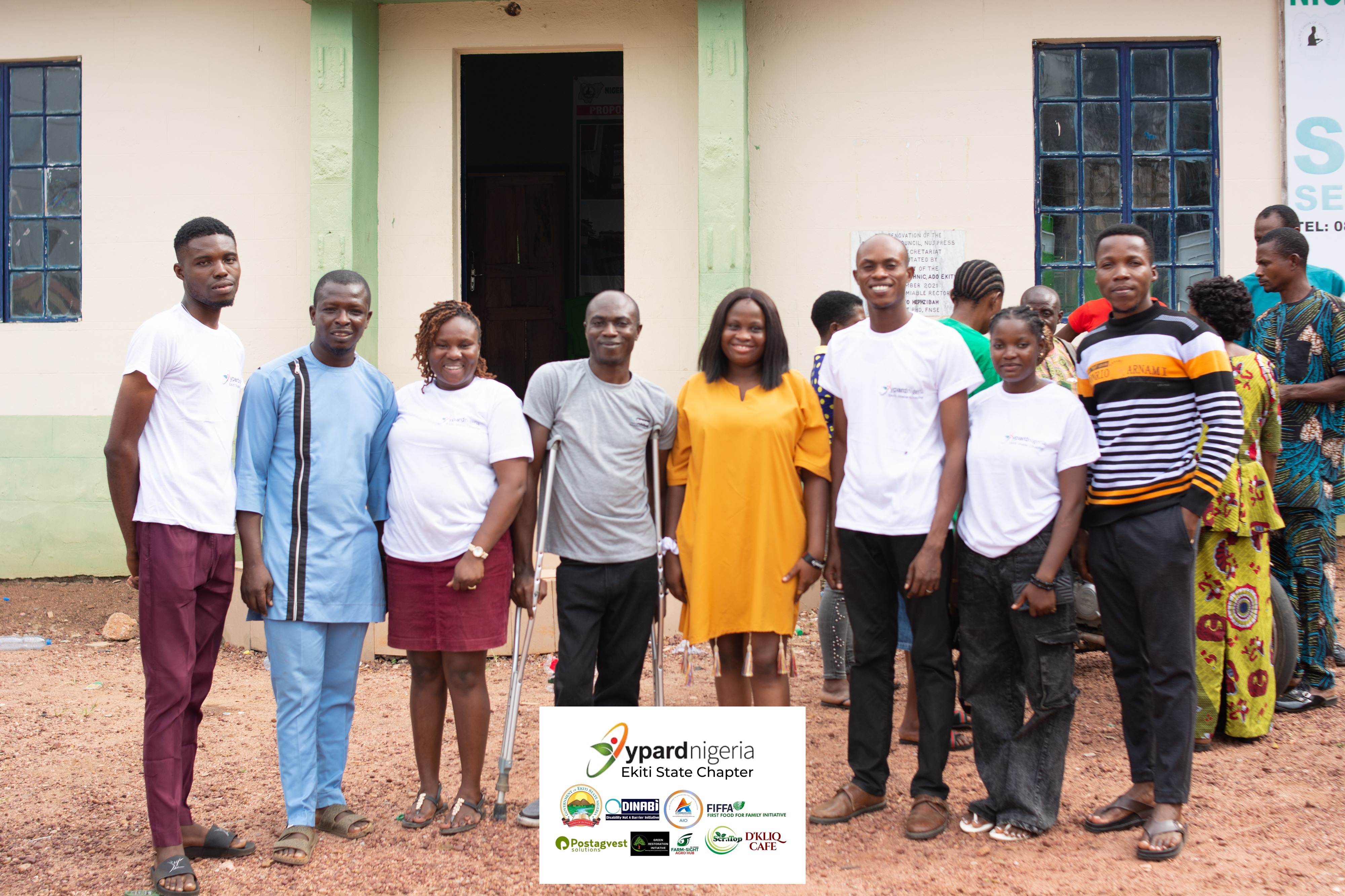
The success of the program was made possible through collaboration with several committed partners, including Scratop, Postharvest Solutions, First Food for Family Initiative, Farm-Sight Agro Hub, Disability is not a Barrier Initiative, Ekiti State Government, Green Restoration Initiative, Ayoideraoluwa Charity Foundation, and D'Kliq Cafe. Their combined support ensured that the training was not only informative but also practical and empowering.
The training was organized with the following key objectives:
Rather than relying on theory alone, the program focused on hands-on learning—giving participants the chance to practice what they were taught.
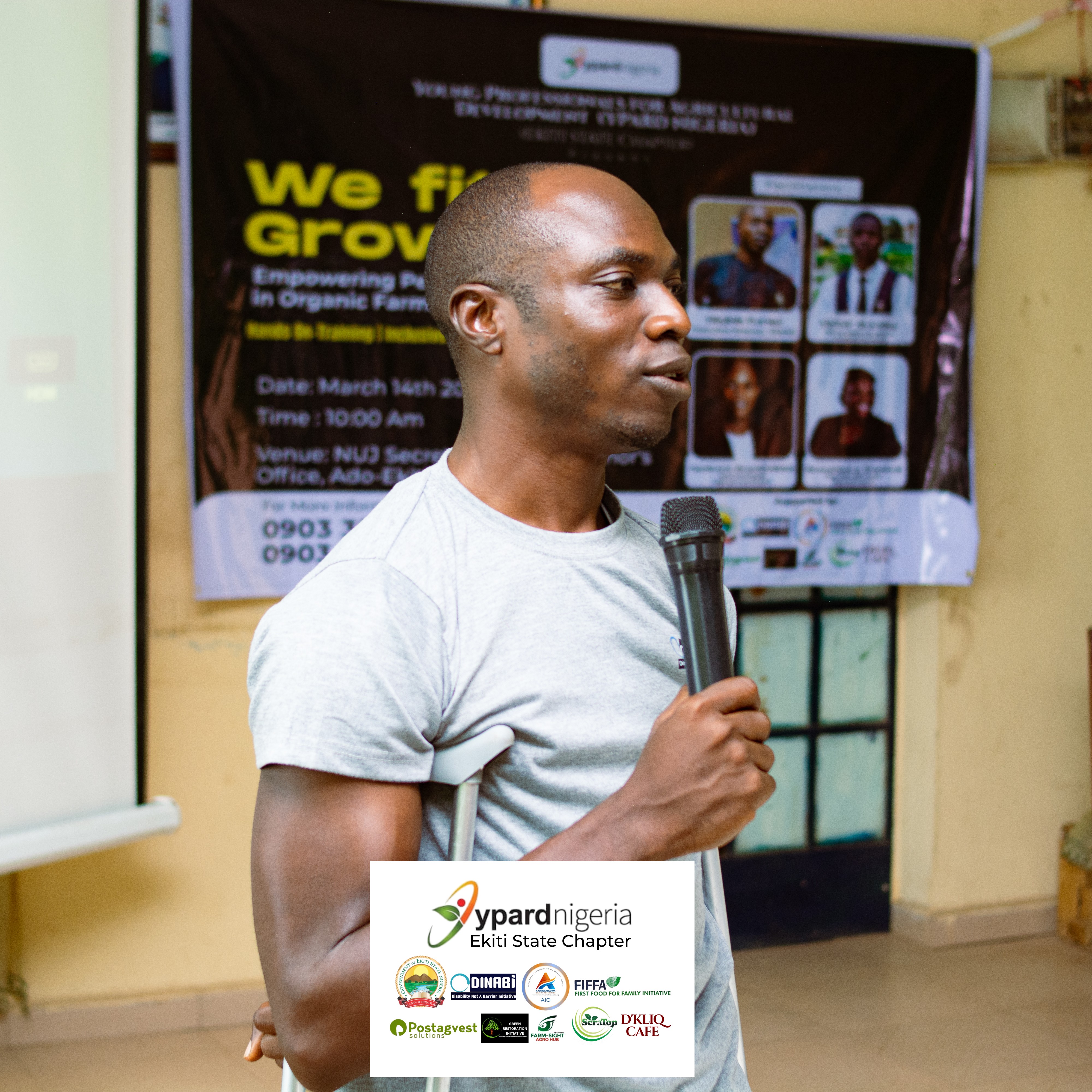
The first session was facilitated by Olajide Funso, Executive Director of DINABi.
The session focused on the intersection between disability, climate change and agriculture. The facilitator highlighted how climate change impacts agricultural productivity and how vulnerable populations, particularly Persons with Disabilities, are often disproportionately affected.
Participants were encouraged to view agriculture as an inclusive and accessible economic opportunity. The session emphasized that climate-smart agricultural practices such as organic farming, mushroom cultivation, and vegetable gardening can be easily adopted by individuals regardless of physical limitations. The discussion also emphasized resilience, inclusion, and empowerment through agriculture.
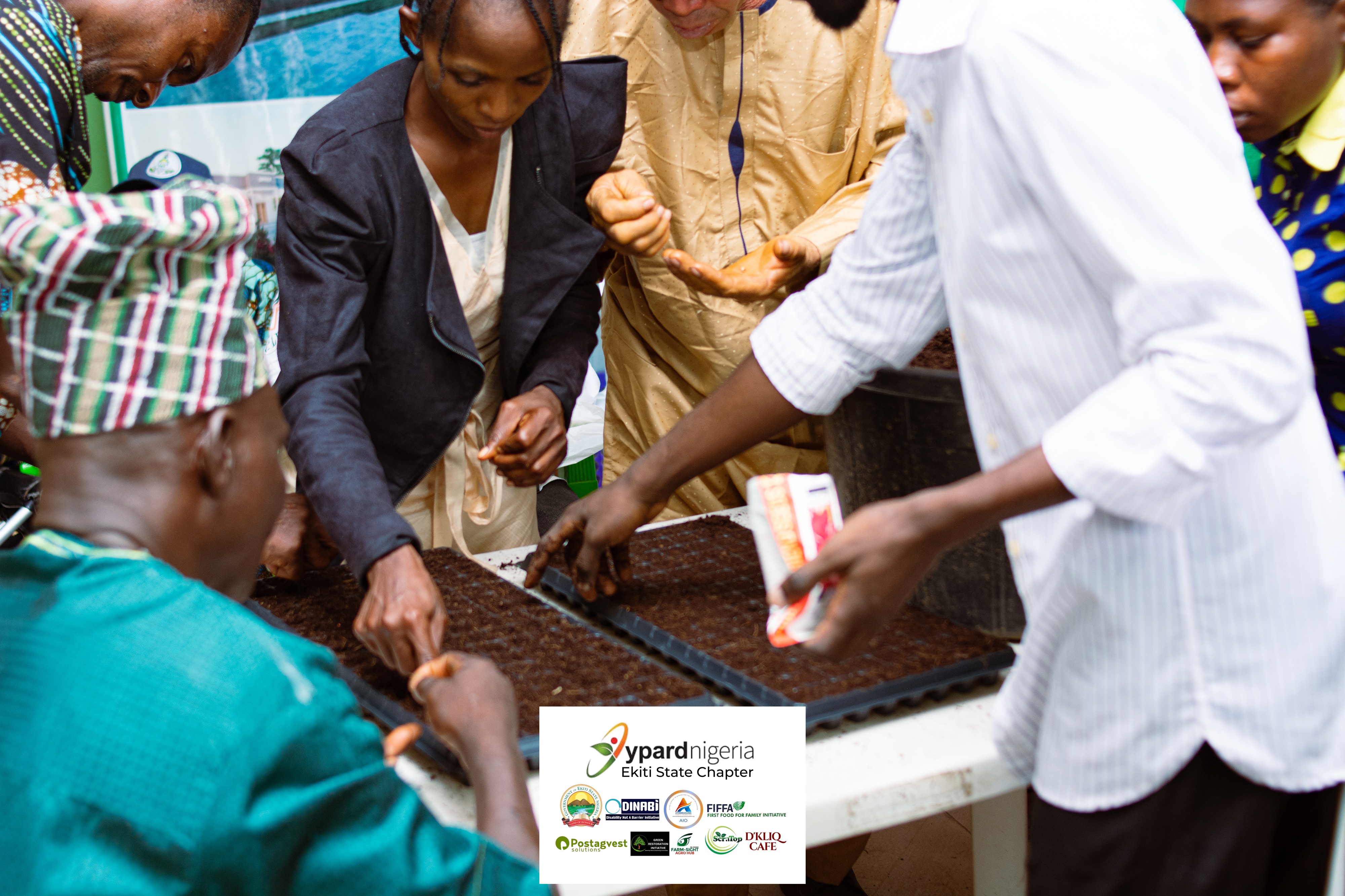
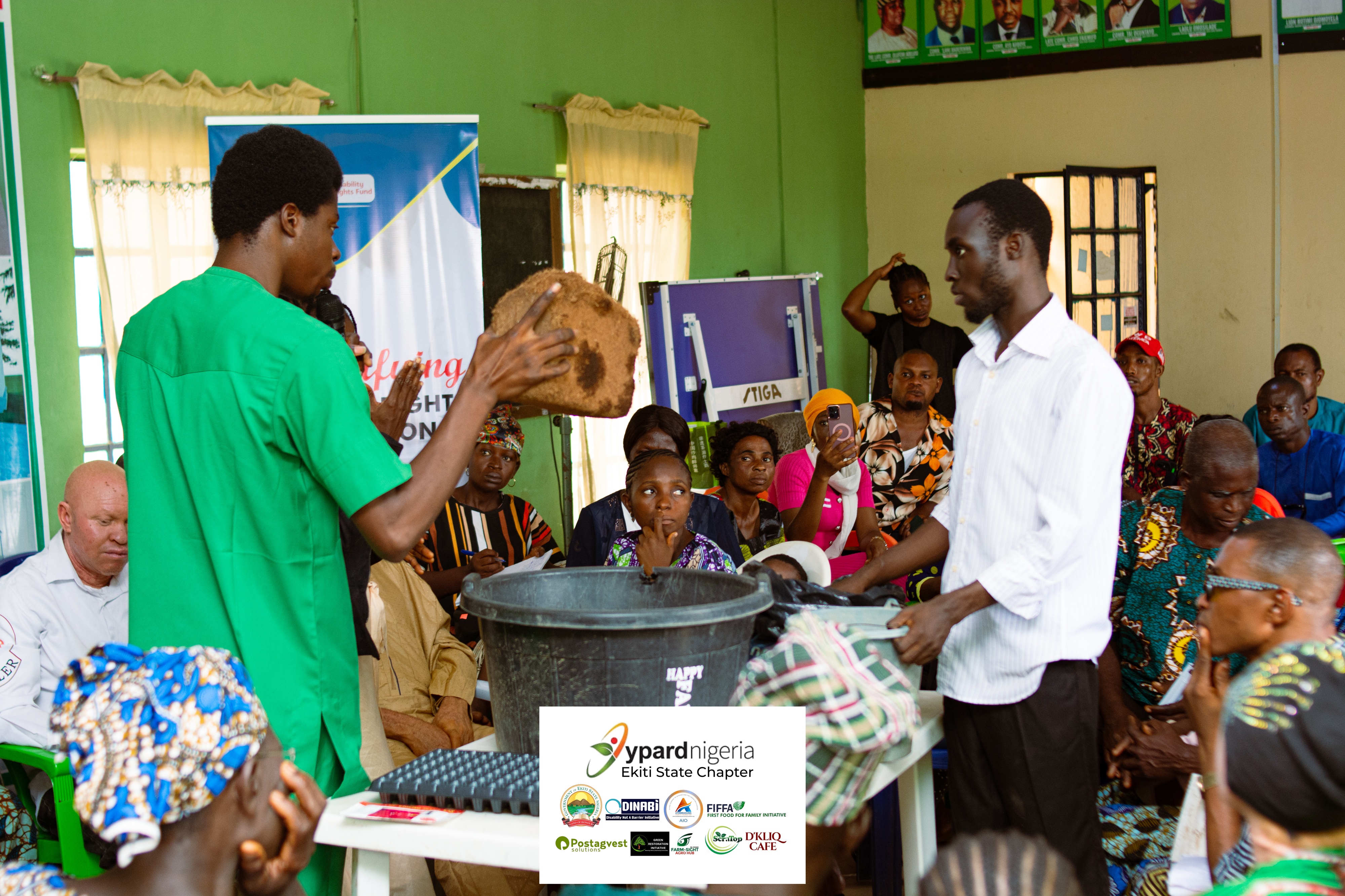
Next came a session facilitated by Victor Sunday from Postagvest Solutions.
This session provided a hands-on demonstration on vegetable and tomato farming, focusing on nursery establishment and seedling management.
Participants were trained on:
Participants were actively involved in raising tomato and vegetable seedlings in nursery trays, allowing them to directly practice what was being taught.
This session highlighted how small-scale vegetable production can be an accessible agricultural enterprise for Persons with Disabilities.
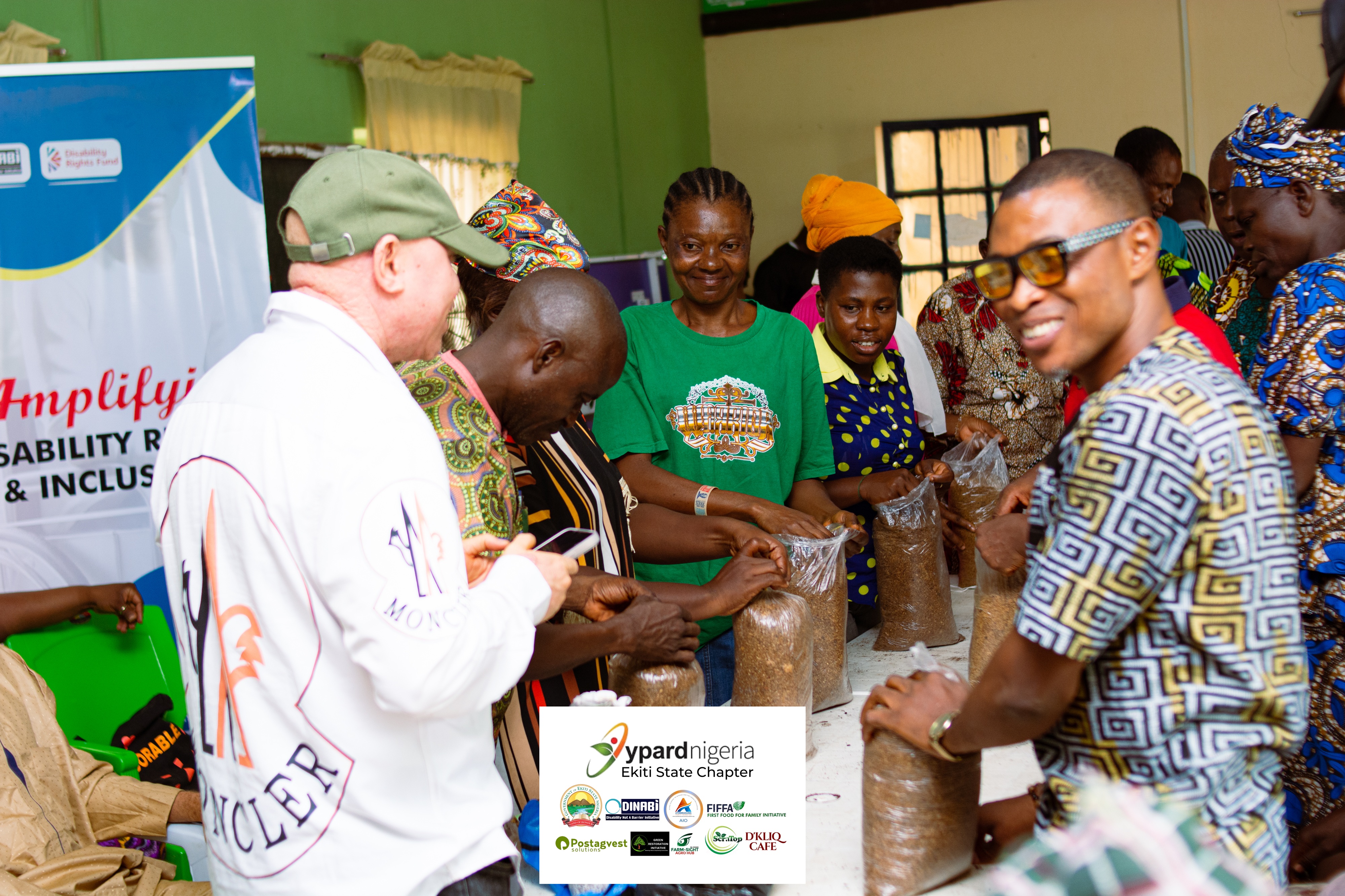
Ojuoluwa Oluwatobiloba, Southwest Regional Coordinator of Young Professionals for Agricultural Development Nigeria, led the third session for the training.
Participants received practical training on mushroom cultivation, which is a climate-smart agricultural practice that requires limited land and can be practiced indoors.
The session covered:
Participants were guided step-by-step through the process and were able to actively inoculate the substrate bags, gaining practical experience in mushroom farming.
The facilitator also discussed the commercial potential of mushroom farming, especially as a high-value agricultural product.
A demonstration on the use of organic fertilizer was facilitated by Ruth Ede, Executive Lead of Scratop.
Participants were introduced to:
.jpg)
The demonstration emphasized how organic fertilizers can help farmers maintain soil productivity while protecting the environment.
To ensure the training didn’t end in the classroom, participants received start-up kits containing:
These resources were designed to help participants immediately begin their own farming activities, right from their homes or communities.
The program left a lasting impression:
Most importantly, the initiative reinforced a powerful idea: agriculture is not limited by ability.
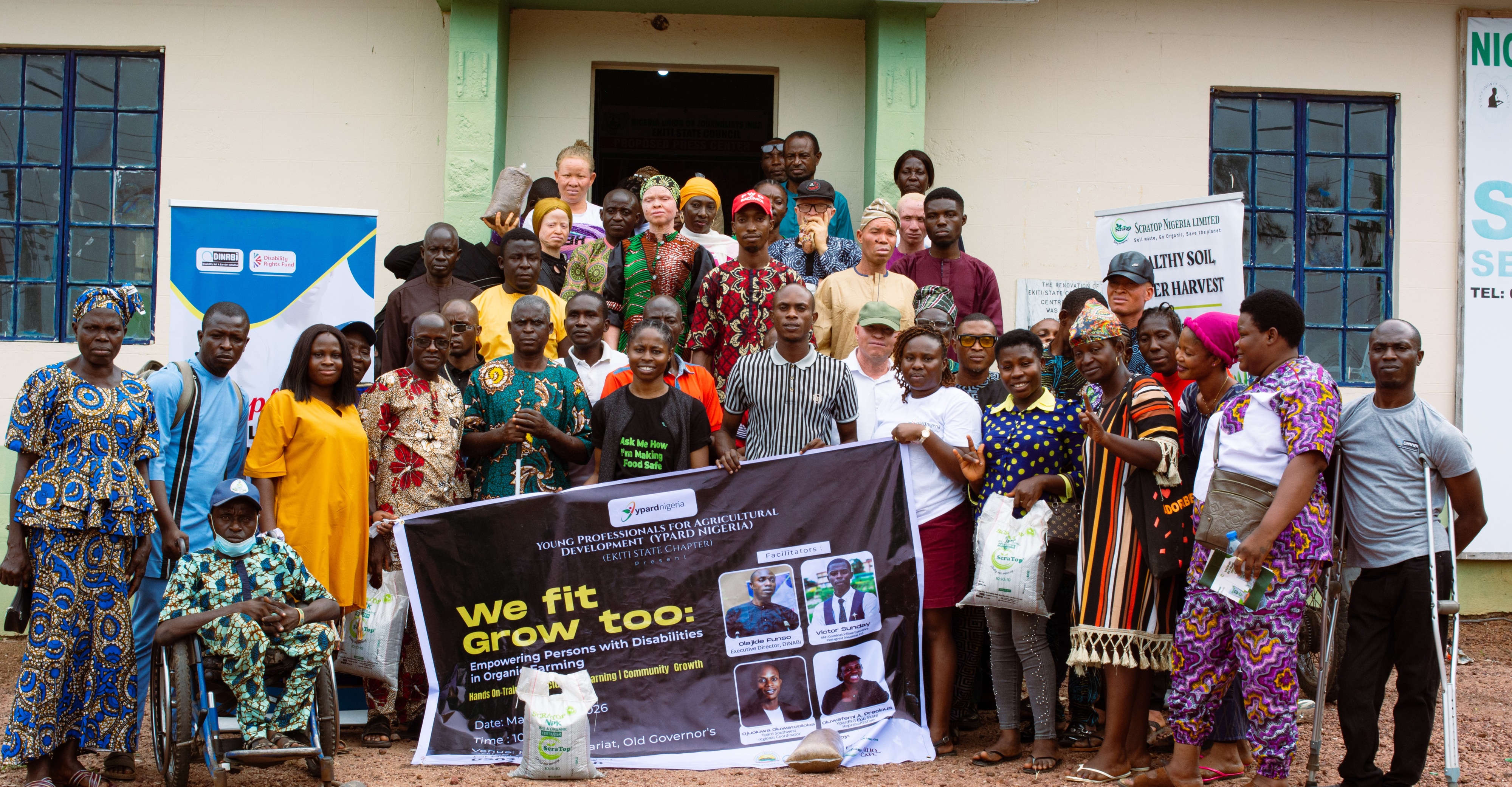
The “We Fit Grow Too: Empowering Persons with Disabilities in Organic Farming” training successfully demonstrated the power of inclusive agricultural development in promoting livelihood opportunities and climate resilience. The program equipped participants with the necessary tools to begin their journey in organic farming by combining knowledge sharing, hands-on training and empowerment resources.
The collaboration between Young Professionals for Agricultural Development Nigeria and its partners ensured the successful implementation of the program and reinforced the importance of multi-stakeholder partnerships in promoting inclusive and sustainable agricultural development.
The success of the initiative highlights the need for continued support for programs that empower marginalized groups through agriculture, ensuring that no one is left behind in the pursuit of sustainable development and food security.
.png)
.png)