
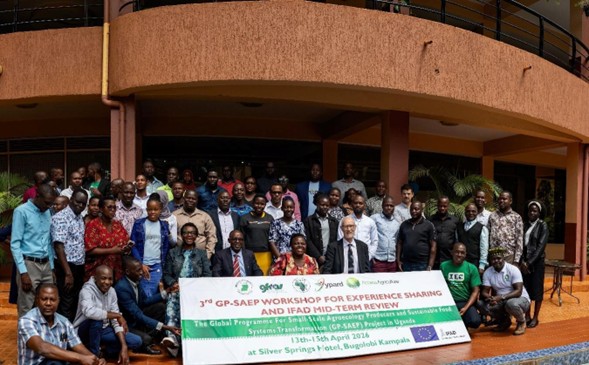

Over the years, Young Professionals for Agricultural Development has played a pivotal role in engaging young people in advancing agroecology through a range of global and regional initiatives. Among these is the Global Programme for Smallholder Agroecological Producers and Sustainable Transformation of Agrifood Systems (GP-SAEP), a consortium-led project spearheaded by Global Forum for Rural Advisory Services.
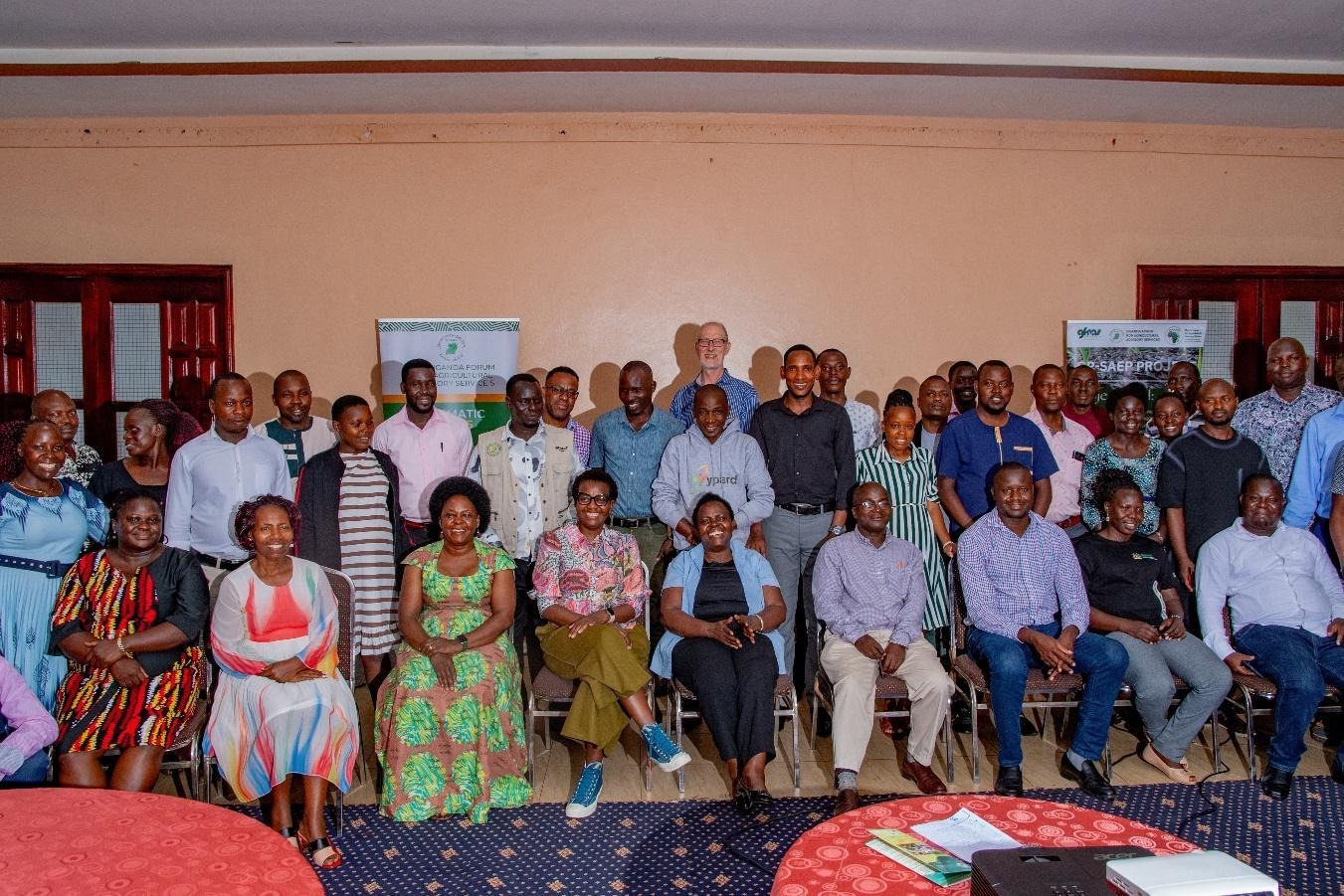
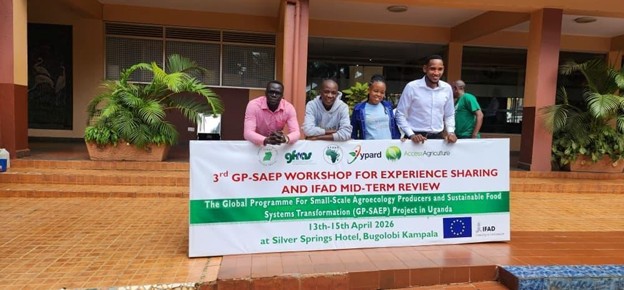
From 13–15 April 2026, key stakeholders convened at Silver Springs Hotel in Kampala for the GP-SAEP Experience Sharing Workshop. The three-day event brought together a dynamic and diverse group of partners, including implementing organizations such as GFRAS, YPARD, Access Agriculture, Uganda Forum for Agricultural Advisory Services, and African Forum for Agricultural Advisory Services.
The workshop was further enriched by the participation of a visiting evaluation officer from International Fund for Agricultural Development, alongside representatives from the Ministry of Agriculture, Animal Industry and Fisheries and other invited stakeholders.
Serving as a vibrant platform for reflection, learning, and collaboration, the workshop enabled partners to take stock of two years of project implementation. Through interactive discussions, experience sharing, and collective analysis, participants exchanged valuable insights on successes, challenges, and lessons learned in advancing agroecological practices. The convening also strengthened partnerships and fostered a shared vision for scaling impact and driving sustainable transformation within agrifood systems. YPARD was represented by its Youth Fellows under the GP-SAEP project i.e Nabulime Deborah, Ajuna Tadeo, and Mufuruki Frank who have been at the forefront of promoting agroecology among young people and farming communities especially throught the Youth Community of practice and YPARD Cafes.
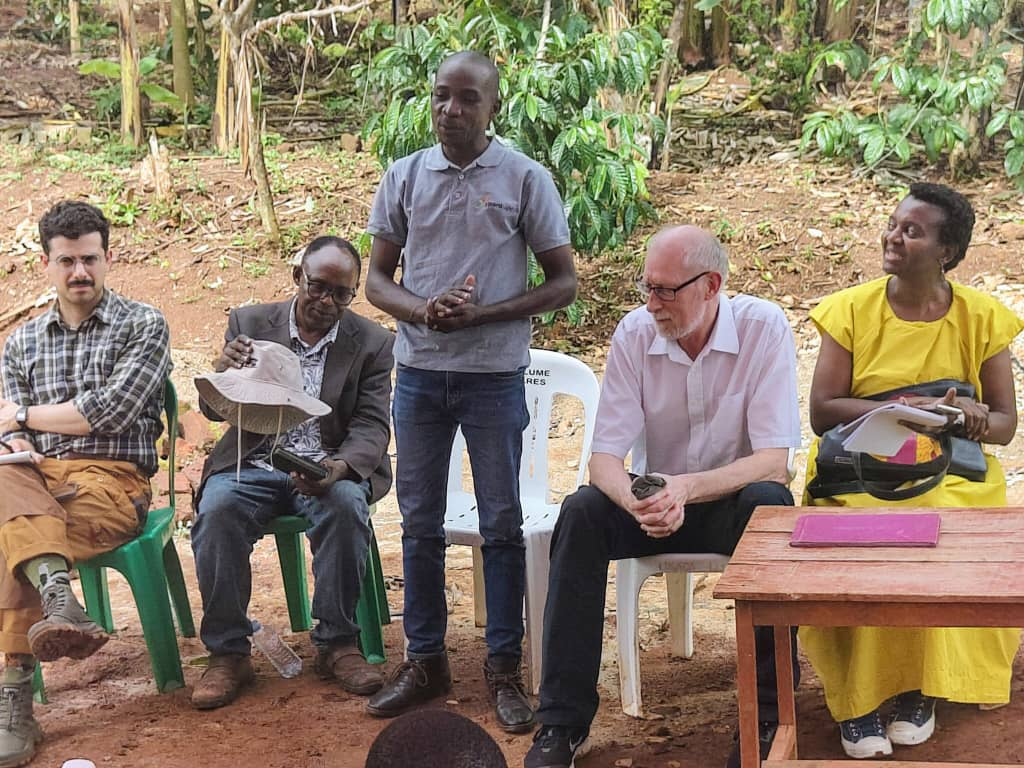
During the workshop, all partners shared their experiences and reflections from the implementation of the project, creating a rich space for dialogue and mutual learning. Representing the fellows, Ajuna Tadeo who also serves as YPARD’s Programme Coordinator delivered a comprehensive presentation highlighting the collective experiences, achievements, and contributions of the fellows (see photo below left during his presentation).
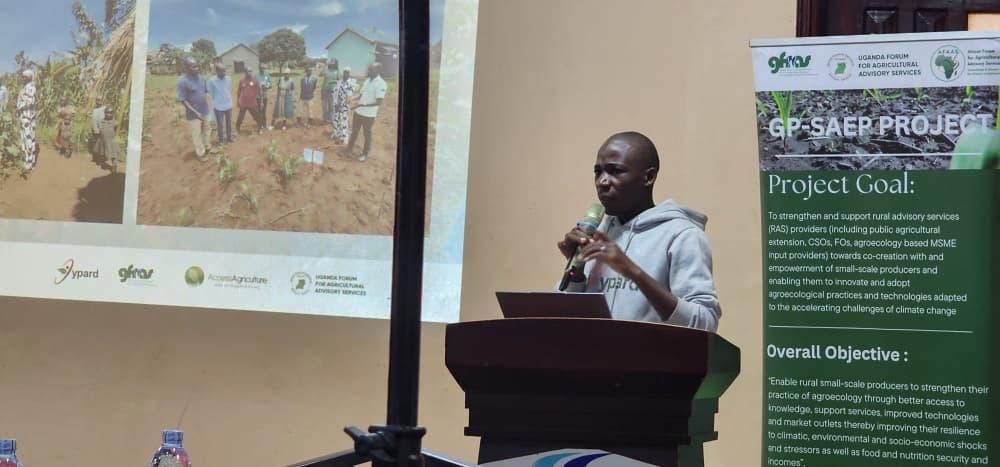
In his presentation, Tadeo placed strong emphasis on YPARD’s focus under Component 3 of the GP-SAEP project: Accelerating Agroecological Transformation through Rural Advisory Services (RAS). He explained that this component is designed to empower young people and extension actors to actively promote agroecology using participatory, inclusive, and farmer-led advisory approaches that respond to real community needs. He further elaborated on YPARD’s strategic role in advancing Agroecological Rural Advisory Services (ÆRAS), noting that the organization contributes through multiple, interconnected approaches. These include the dissemination of knowledge and practical resources, fostering mentorship and intergenerational learning, strengthening networking and collaboration among stakeholders, facilitating dialogue and exchange platforms, and delivering targeted capacity-building through the fellowship programme.
In addition, YPARD continues to play a key role in advocating for youth-led sustainability leadership within agrifood systems. Tadeo also highlighted several flagship initiatives that have been instrumental in driving impact, including the Fellowship Programme, YPARD Cafés, and Youth Communities of Practice (YCoPs). These platforms serve as dynamic spaces for peer-to-peer learning, continuous engagement, and knowledge exchange, enabling young professionals to share experiences, co-create solutions, and actively contribute to the advancement of agroecology.
Drawing from lived experience, Tadeo noted that mentorship has been a transformative element of the programme, shifting extension services from traditional top-down approaches to more collaborative, co-creative processes with farmers. Youth Fellows have also taken on active roles as co-facilitators in farmer-led learning and have participated in high-level platforms such as the African Agriculture Extension Week in Malawi and the East African Agroecology Conference in Nairobi. The presentation also highlighted key achievements, including increased youth awareness and adoption of agroecological practices, stronger networks among stakeholders, and improved youth visibility in policy and advocacy spaces. However, challenges remain particularly limited to access to finance and land for young people, as well as the need for sustained mentorship and long-term support systems.
Tadeo concluded with recommendations to expand youth engagement platforms and strengthen efforts towards building climate-resilient agrifood systems.
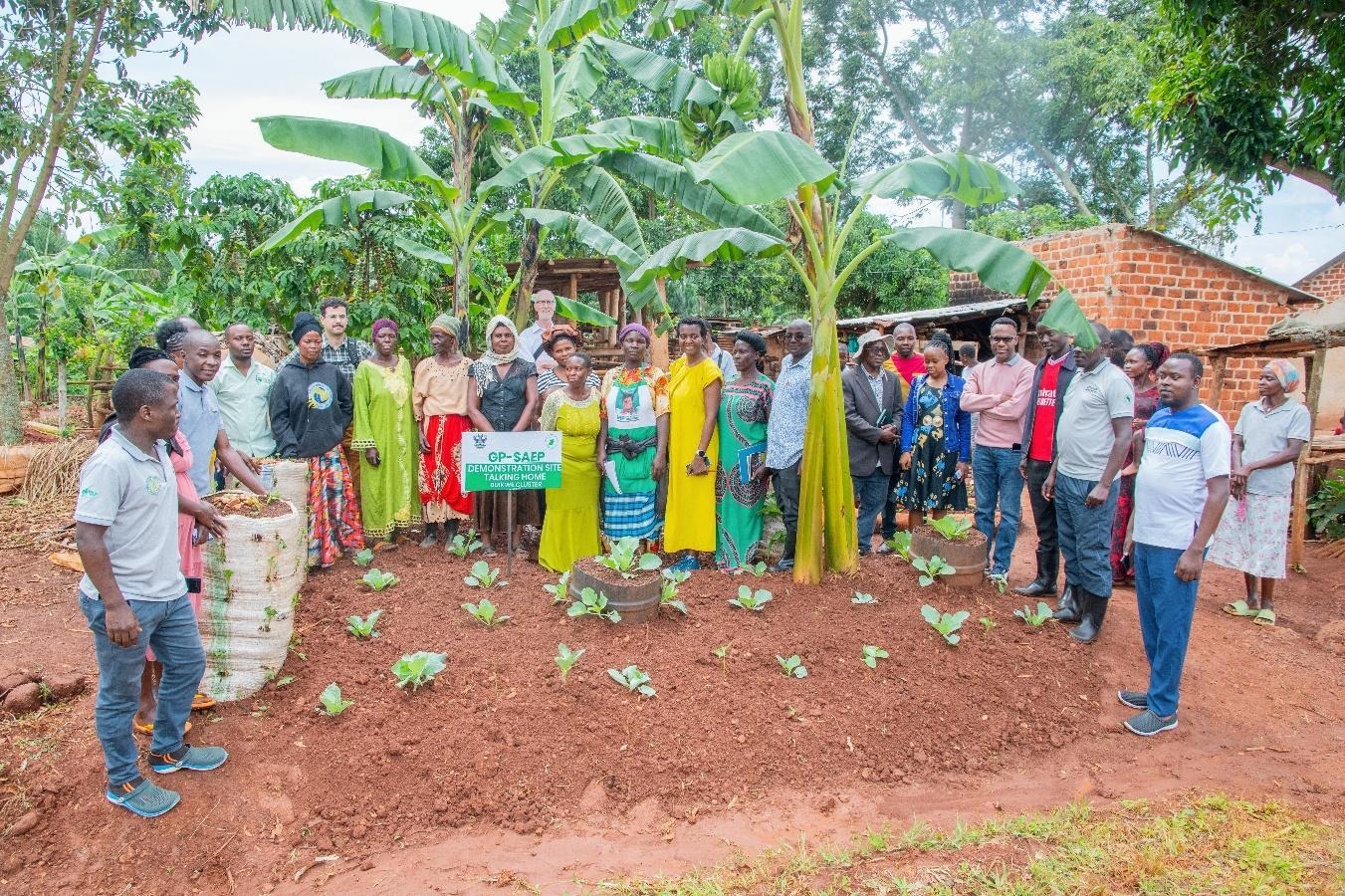
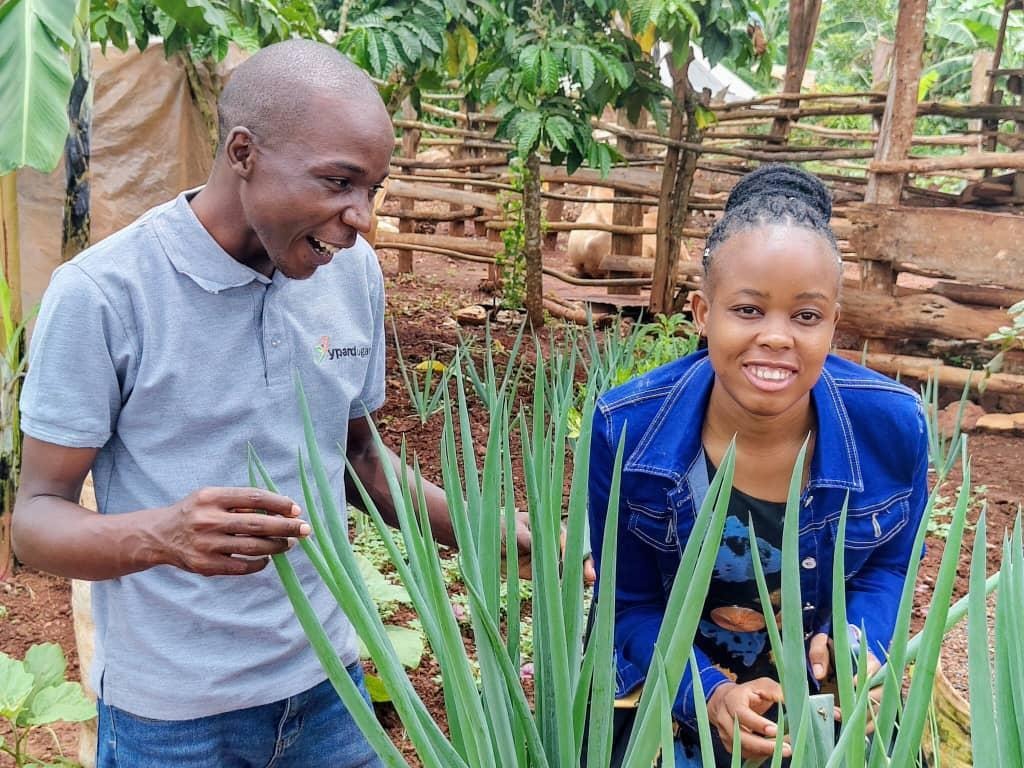
On the final day of the workshop, Tadeo and Deborah joined fellow participants for an immersive field visit to two farms in Buikwe District, providing a practical extension of the concepts explored during the sessions. The visit created a valuable bridge between theory and practice, offering participants a hands-on opportunity to witness agroecological principles in action and deepen their understanding of sustainable farming systems within real-life contexts. At the farms, participants interacted directly with farmers and practitioners who demonstrated a range of innovative and locally adapted techniques. These included diversified horticulture systems that enhance resilience and productivity, bio-cycling approaches that promote efficient nutrient reuse, and Azolla production as a sustainable and cost-effective feed option for livestock.
They also explored kitchen gardening practices that support improved household nutrition, as well as sack mound farming techniques that maximize production in areas with limited land. Beyond the technical insights, the field visit fostered meaningful dialogue and exchange between participants and farmers, creating space for reflection, questions, and shared learning. The experience underscored the adaptability and practicality of agroecological approaches across different contexts, while also inspiring participants to consider how such practices can be replicated, adapted, and scaled within their own communities to drive sustainable transformation in agrifood systems.

.jpg)