
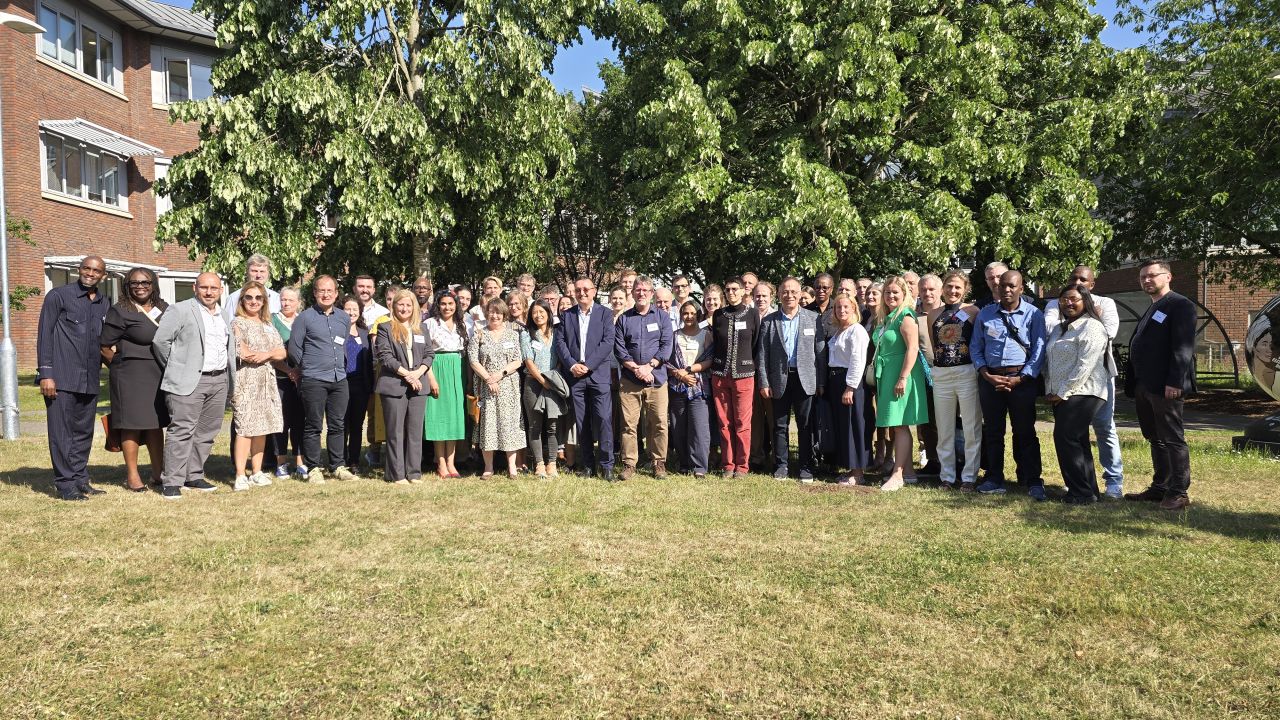

The conference brought together several universities, research institutes, donor parties, as well as CSOs like YPARD. YPARD GCU members Genna Tesdall (Director) and Trisha Mandal (Partnerships Manager) were in attendance, engaging with several partners and students at the university.
Following the Conference, YPARD participated in a post-Conference session titled “Navigating the Food Systems Polycrisis: Anticipating Future Research Priorities through Africa-Europe Partnerships.”
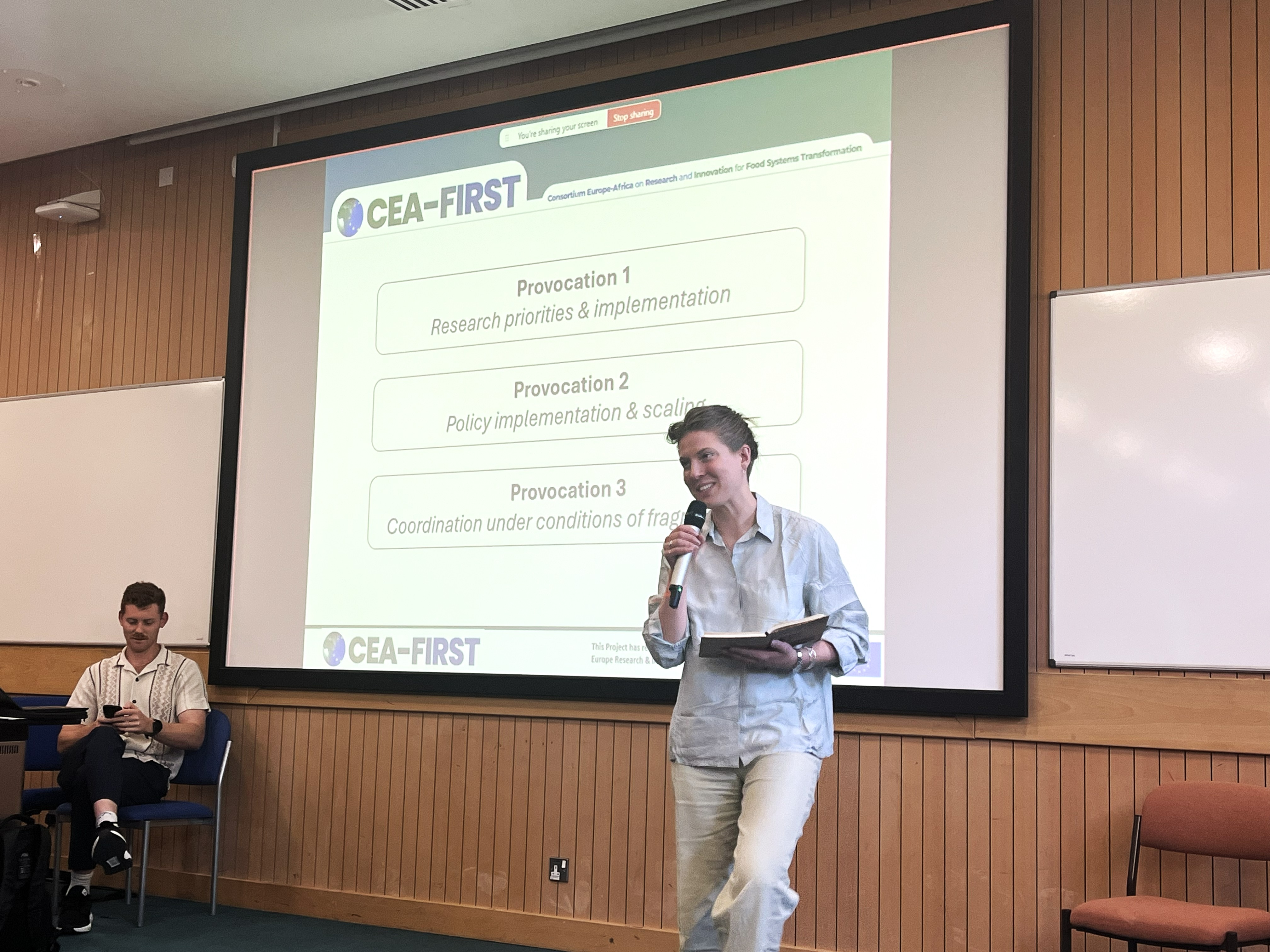
During the session, Genna Tesdall delivered an invited provocation from the CEA-FIRST/IRC-FNSSA perspective, challenging participants to critically reflect not only on future research priorities, but also on how research and development cooperation are conducted. While much of the discussion focused on technical solutions and emerging research agendas for addressing global food systems challenges, Genna’s intervention highlighted a deeper issue within development cooperation and research partnerships: the gap between declared values and lived practice. At the centre of the provocation was the argument that values such as youth engagement, gender equality, participation, and inclusion are frequently referenced in strategies, frameworks, and public commitments, yet are not always meaningfully implemented in practice.
“Relationships in development cooperation have always been transactional,” Genna noted during the session. “We are in a moment where institutions feel threatened in their position and power, and there is a tendency to focus on preserving both that power and the values we claim to represent. But implementing these values does not necessarily require more funding. It requires changing how we conduct research and development cooperation.” Drawing from reflections emerging through the ongoing development of the CEA-FIRST Gender and Youth Strategy, she encouraged organisations and institutions to move beyond symbolic commitments and instead embed inclusion into the structures and processes that shape research partnerships and decision-making.
The intervention called for practical action through:
-Inclusive governance structures
-More equitable procurement and partnership practices
-Intentional opportunities for young researchers and professionals
-Shared decision-making processes and
-Genuine participation of youth and underrepresented groups in research and policy spaces.
Genna further challenged participants to consider whether institutions are truly “living” the values they promote. “These are proposed values, or declared values, but not lived values,” she reflected. “I do not believe we have been effective enough at living these values. This is precisely why we have been asked to create a Gender and Youth Strategy for CEA-FIRST.” The discussion served as an important reminder that transforming food systems requires not only new research priorities, but also more equitable, participatory, and accountable approaches to collaboration itself. As conversations on food systems transformation continue to evolve across Africa-Europe partnerships, YPARD remains committed to advocating for meaningful youth engagement and ensuring that young people are not simply consulted, but actively included as partners and leaders in shaping the future of agrifood systems.
Parallelly, YPARD also presented a poster in the exhibition section to showcase how youth and gender leadership can be advanced in agricultural innovation through co-leadership. The poster presented the main challenges faced by youth and women, and offered tangible mechanisms to address these challenges, along with practical evidence that show how these interventions work.
.png)
At Agrinatura 2026, YPARD showcased practical approaches, partnerships, and evidence that are advancing youth and gender inclusion in agricultural research and food systems transformation, emphasizing the shift from representation to shared leadership.

.jpg)