
.jpg)

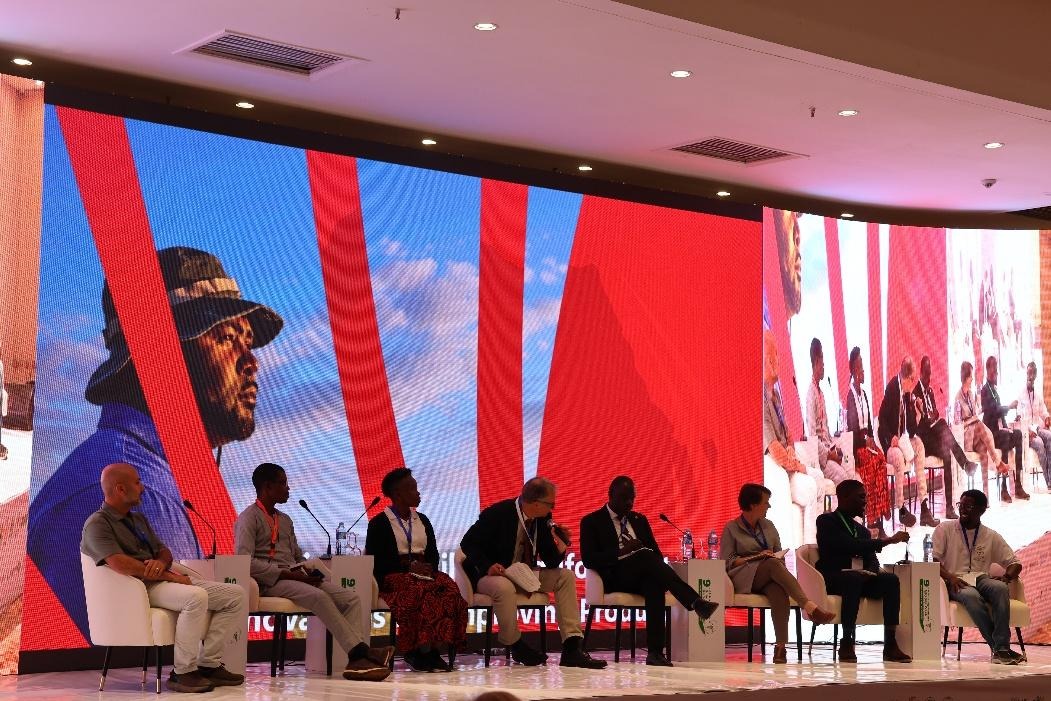
That question sparked a lively discussion during the high-level parallel session "Food Sovereignty in Africa: Scaling Agroecology and Ecological Organic Agriculture for Resilient and Sustainable Agrifood Systems in Africa," held during the 9th Africa Agriculture Science Week (AASW9) in Abuja, Nigeria. The session that had researchers, policymakers, development partners, farmers, private-sector actors and youth leaders in one space as they explored and had discussions on how agroecology can contribute to resilient and sustainable agrifood systems across Africa. The session highlighted agroecology as a science-based, innovation-driven approach that integrates ecological principles, scientific knowledge and local practices to address climate change, land degradation, biodiversity loss and food insecurity. Participants examined the evidence, shared practical experiences from across the continent and identified partnerships needed to scale agroecological innovations.
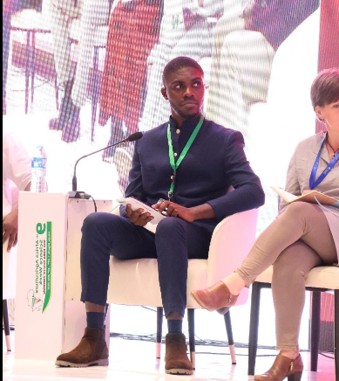
Representing the Young Professionals for Agricultural Development (YPARD) on the expert panel, Kofi Kisiedu Acquaye, YPARD Africa Regional Coordinator, addressed a question frequently raised in discussions on youth and agriculture: Why would young people choose agroecology when many aspire to leave farming or pursue what is often described as "modern agriculture"?
Drawing on YPARD's work across Africa, particularly through the Research for Agroecology Network Southern Africa (RAENS), Kofi challenged the assumption that young people are turning away from agriculture.
"Young people are not rejecting modern agriculture- we are redefining what modern agriculture should look like."
He explained that YPARD's experience demonstrates that young people are attracted to agroecology because it is innovative, science-based and entrepreneurial while responding to the realities they face, including climate change, declining soil health and rising production costs.
Referencing the African Youth Position Statement on the Future of Africa's Agrifood Systems, developed through continent-wide consultations convened by YPARD and the Forum for Agricultiural Research in Africa (FARA), he noted that young Africans consistently called for agrifood systems that are productive, resilient, inclusive and environmentally sustainable.
Rather than seeing themselves as beneficiaries of agricultural development, young people increasingly see themselves as researchers, entrepreneurs, innovators and equal partners in transforming Africa's agrifood systems. Agroecology creates opportunities not only in primary production but across the wider agrifood value chain- from seed systems and biological inputs to advisory services, processing, digital technologies, certification and markets.
Kofi also emphasised that environmental sustainability alone will not drive widespread youth adoption.
"Young people will embrace agroecology when it is profitable, supported by science, connected to markets, backed by enabling policies, and accompanied by access to finance, land, technology and skills." His remarks echoed one of the session's overarching messages: scaling agroecology requires stronger collaboration between science, policy and practice, alongside investments that enable innovation and create opportunities for young people. As discussions concluded, there was broad recognition that agroecology is not an alternative to modern agriculture- it is an integral part of its future. By combining scientific innovation with ecological principles, agroecology offers pathways towards resilient food systems that can nourish growing populations while protecting the natural resources on which future generations depend.
For YPARD, the message was clear: investing in young people as leaders is an investment in Africa's resilience, food security and sustainable development.
.png)