
.jpg)

From farm tours to policy dialogue, young professionals joined peers across Southern Africa to learn from Zambia’s agroecology journey.
.jpg)
Lusaka, 4 March 2026 — The Knowledge Hub for Organic Agriculture and Agroecology in Southern Africa (KHSA), in collaboration with the Research for Agroecology Network Southern Africa (RAENS), convened a one‑day regional learning exchange in Lusaka. The event, part of the BMZ‑funded and GIZ‑managed Knowledge Centre for Organic Agriculture and Agroecology in Africa (KCOA), brought together partners from Malawi, Namibia, South Africa, and Zambia, alongside FiBL and other RAENS stakeholders. The focus was on drawing practical lessons from Zambia’s draft national agroecology strategy to strengthen comparable processes across the region.
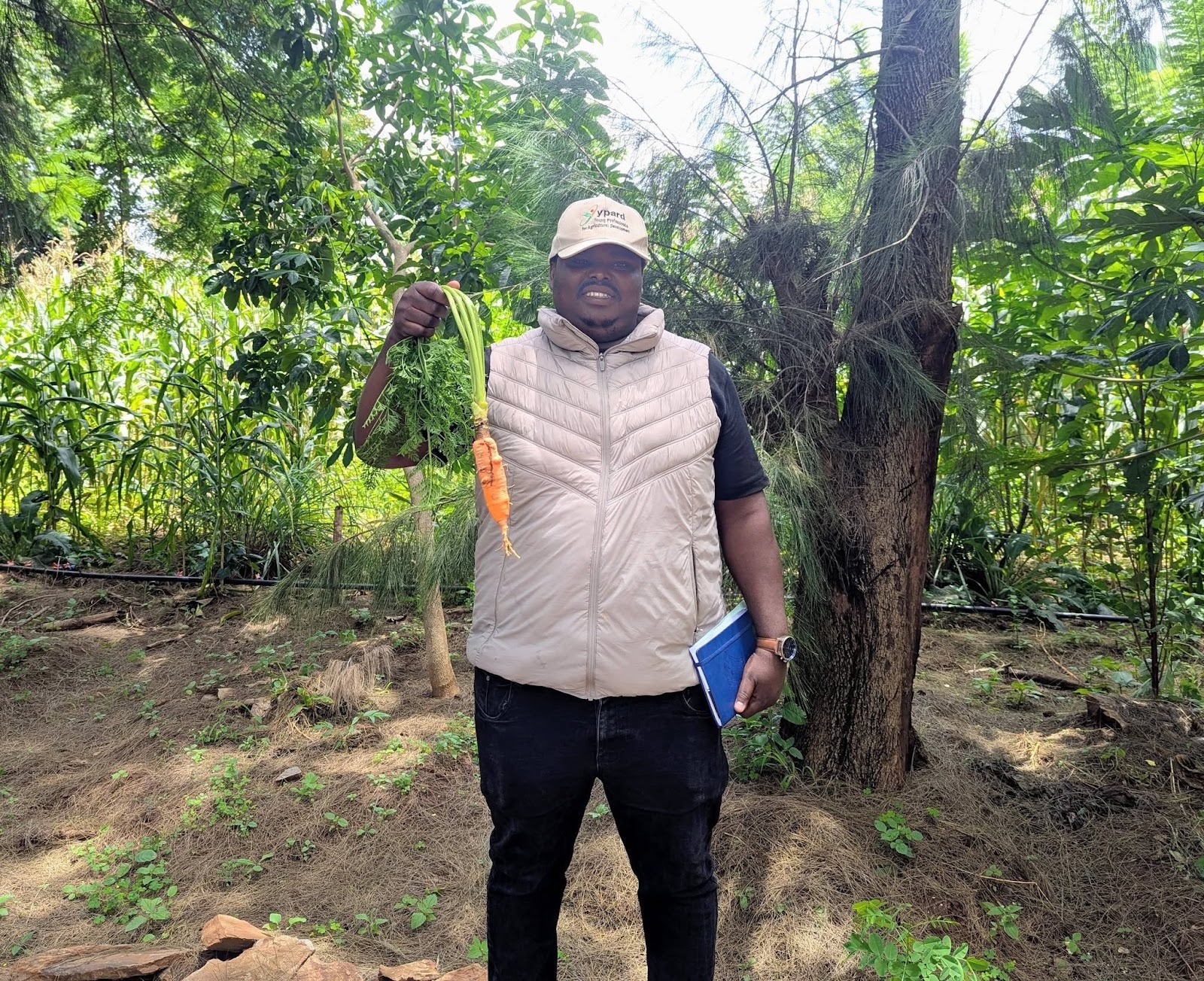
The day began with an innovative Food Jam and farm tour at Loctaguna Organics Farm. Participants explored firsthand how agroecology principles are applied in practice. Demonstrations showcased rainwater harvesting techniques, emphasizing their importance for climate resilience, ecosystem health, and farmer livelihoods. Soil health practices were also highlighted, including the use of comfrey, tithonia, bokashi, vermicomposting, and annual soil testing to improve fertility and manage pests sustainably. The tour extended to the farm’s integrated animal systems—piggery, goats, chickens and rabbits—illustrating how on farm made feed and food waste can raise livestock that provide animal manure, urine and direct sales of meat that feed into a holistic agroecology model. The emphasis throughout was on a systems approach, showing how interconnected practices reinforce productivity and sustainability.
Youth engagement was a central theme throughout the learning exchange. At each station during the farm tour, participants raised critical questions: Is this an opportunity youth would be interested in pursuing? Are there already young people practicing these methods? These reflections highlighted both the potential and the challenges of youth participation in agroecology.

Representatives from YPARD Zambia actively engaged in the discussions, gaining practical insights into how integrated systems—from water harvesting to soil health management and animal husbandry—can drive sustainable farming and contribute to long‑term resilience. Their participation led to deeper reflections on the barriers that young people may face in efficiently engaging with agroecology systems, including access to resources, training and supportive policy environments.
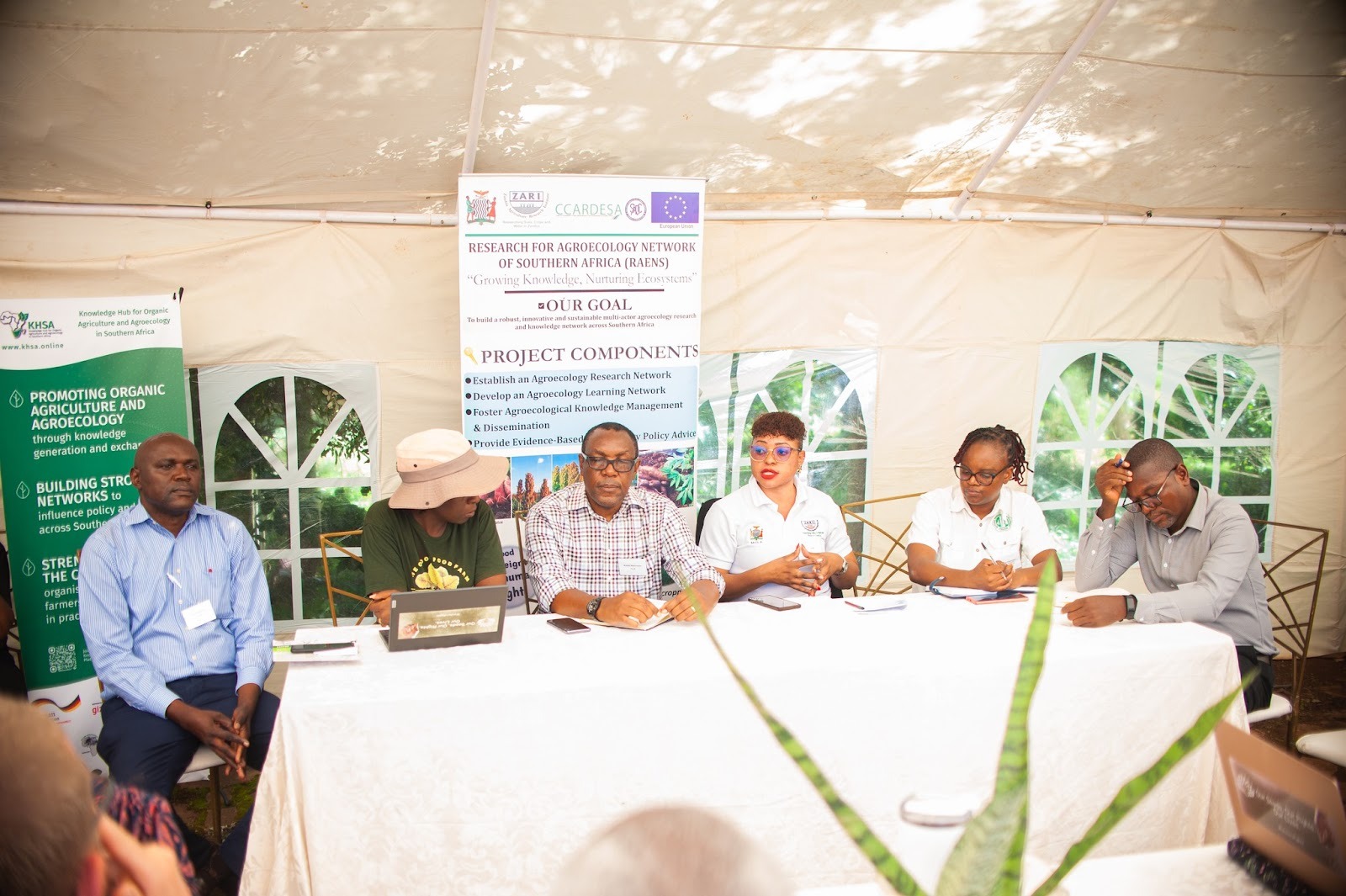
In the afternoon, attention shifted to policy. A panel discussion titled Learning from Zambia’s Draft National Agroecology Strategy: Practical Lessons for Southern Africa brought together government officials, researchers, civil society leaders, and farmers. Co-moderated by Stefanie Swanepoel (KHSA) and Sussana Phiri (YPARD Zambia Country Representative) who was bringing youth perspectives to the panel, the session created a structured learning space for regional peers to interrogate the “how” of policy progress.
Panelists included Mr Joseph Cheelo (Ministry of Agriculture), Ms Sumini Sampa (Zambia Agriculture Research Institute/ RAENS Principal Investigator), Ms Rachael Kapembwa (National Resources Development College), Mr Richard Mumba (COMACO), Ms Kanangwa Newlove (Loctaguna Organics) and Mr Muketoi Wamunyima(PELUM Zambia). Together, they reflected on the enabling factors behind Zambia’s progress, lessons on consultation design and cross‑ministry coordination, and the emerging role of investment planning in financing agroecology strategies.
Key learning questions explored included:
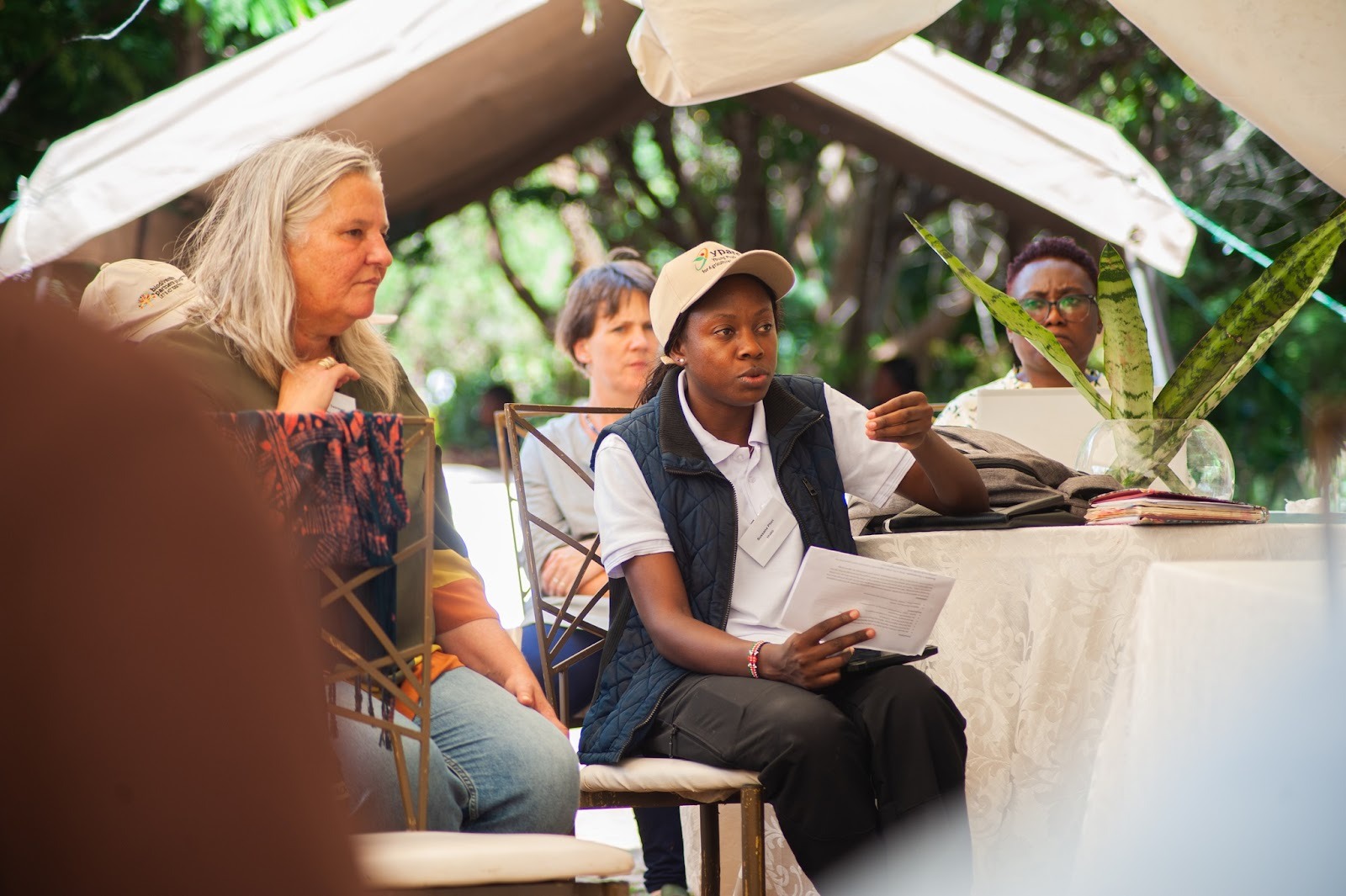
The discussion underscored Zambia’s comparatively advanced process, offering transferable lessons for Malawi, Namibia and South Africa. For KHSA and RAENS, the exchange was not only about content but about process—how consultation, coordination and financing can be structured to advance agroecology at national scale.
The event concluded with networking opportunities, where YPARD Zambia and other participants forged partnerships for future collaboration.
By combining practical farm‑level insights with high‑level policy dialogue, the Lusaka exchange demonstrated how agroecology can move from practice to policy, offering a credible pathway to climate resilience, inclusive livelihoods and healthier food systems and ecosystems across Southern Africa.

.jpg)