.JPG)

Theme: “Cultivating Agro-ecological Opportunities for Youth: Learn, Innovate, Have Fun, and Grow”
Date: 29 August 2026
Location: One Acre Farm, Entebbe, Uganda
Organised by: YPARD-Uganda
On 29 August 2026, YPARD-Uganda convened a group of young professionals, students, educators and agripreneurs at One Acre Farm in Entebbe for the third edition of the YPARD-Uganda Farm Day Out. Held under the theme “Cultivating Agro-ecological Opportunities for Youth: Learn, Innovate, Have Fun, and Grow,” the Farm Day Out provided an experiential learning platform designed to connect young people with practical examples of agroecology, circular agriculture, sustainable agribusiness and innovative farming systems. The activity went beyond conventional classroom-based learning by providing participants with an opportunity to observe, ask questions and engage directly with practical farming models. It also created space for networking, peer learning, reflection and discussion on how young people can turn agricultural challenges into viable enterprises and contribute to more sustainable food systems. The Farm Day Out forms part of YPARD-Uganda’s broader efforts to strengthen youth engagement in agriculture by creating opportunities where young people can learn from practitioners, exchange knowledge, explore agribusiness opportunities and connect local action with broader agricultural and climate policy processes.
.jpg)
The day began with an interactive networking session that enabled participants to introduce themselves, share their experiences and reflect on their interests and aspirations within agriculture. The diversity of participants demonstrated the different pathways through which young people are engaging with agriculture. Among the participants was Derrick Massete, a Biology student at Nkumba University and a secondary school teacher in Entebbe. Derrick is exploring aquaculture as a practical way of exposing his students to agricultural innovation and preparing them to participate in national competence-based curriculum innovation competitions. Other participants included Rehema, an animal management student exploring opportunities within livestock production, and Gideon, a former teacher who is expanding his commercial vegetable farming enterprise. These interactions highlighted an important aspect of youth engagement in agriculture: young people are not approaching agriculture from a single perspective. They are engaging as farmers, educators, entrepreneurs, students, researchers and community actors, bringing different skills and experiences to the sector. The networking session therefore provided an important platform for participants to identify common interests, exchange experiences and explore potential opportunities for future collaboration.
In addition to practical farm-based learning, the Farm Day Out created an opportunity for participants to contribute their perspectives to global agricultural and climate policy discussions. Participants made grassroots submissions to the YPARD Global Position Paper to the UNFCCC, ahead of the upcoming Conference of the Parties (COP). The session was facilitated by Enock Joseph Ssembuusi, YPARD-Uganda Programs & Partnerships Lead and YPARD Global Co-Focal Point for UNFCCC. This engagement provided a direct link between the experiences and priorities of young people working at community level and international policy processes. The exercise encouraged participants to reflect on the challenges they face, the opportunities they see within agriculture and the policy changes they believe are necessary to enable young people to participate more meaningfully in climate action and sustainable food systems transformation. This component reinforced YPARD-Uganda’s commitment to ensuring that youth voices are not only represented in global policy conversations but are informed by the realities and experiences of young people on the ground.
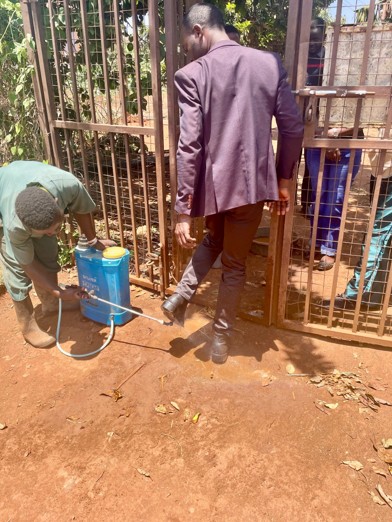
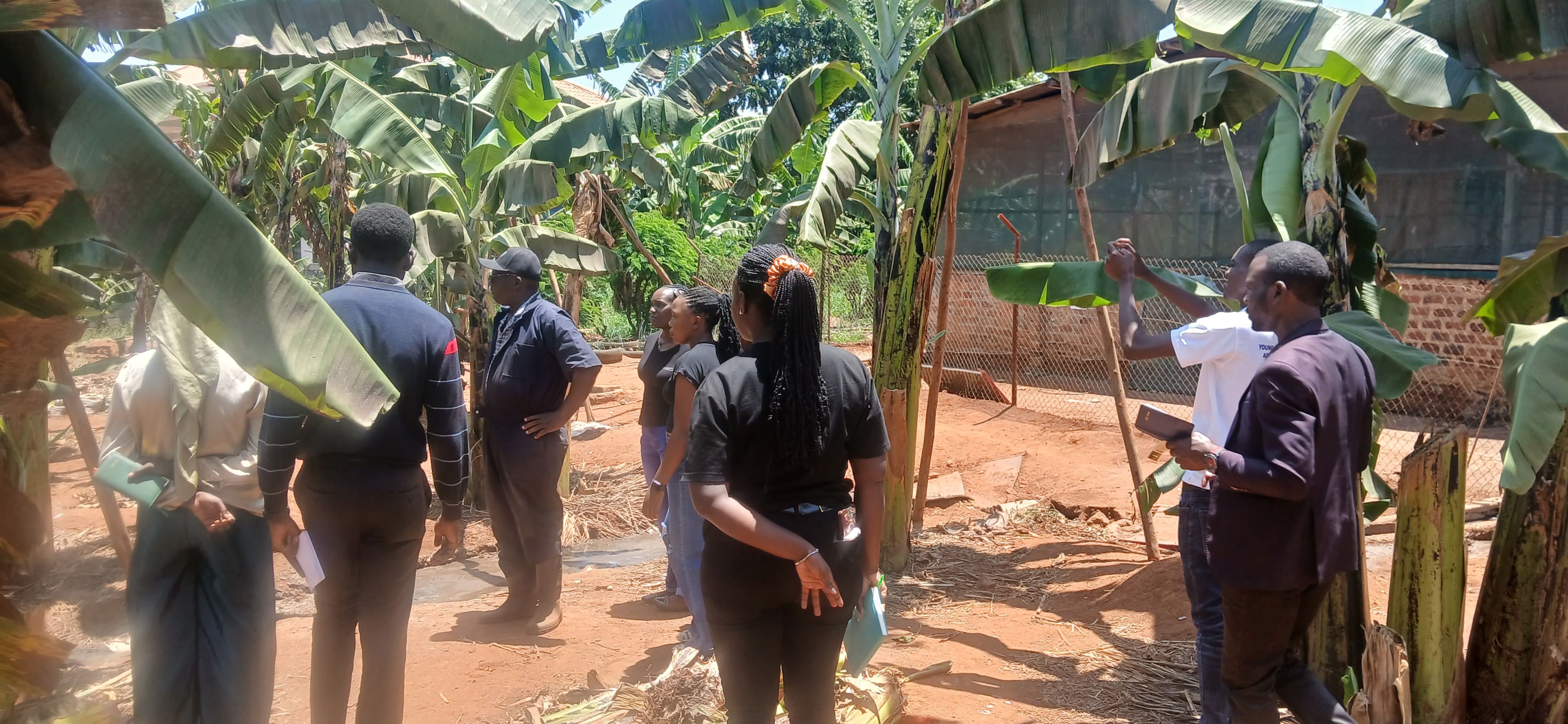
The highlight of the Farm Day Out was the technical learning tour at One Acre Farm, hosted by award-winning veterinarian and urban farming pioneer Dr. Emma Naluyima. Before entering the farm, participants went through the farm’s biosecurity procedures, providing an immediate practical lesson on the importance of maintaining hygiene and preventing the introduction and spread of diseases within agricultural production systems. Dr. Naluyima and her team then guided participants through a range of integrated farming systems demonstrating how different agricultural enterprises can be interconnected to maximise resource efficiency, minimise waste and create multiple sources of value from a relatively small production space.
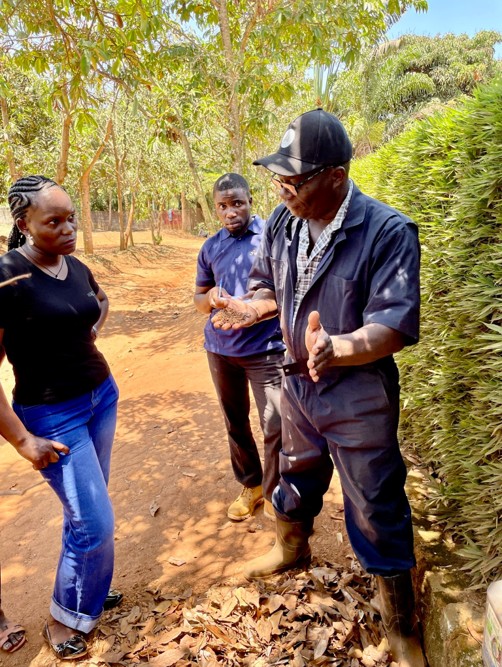
Participants were introduced to the importance of biosecurity and the role of microorganisms in maintaining healthy agricultural systems. The session demonstrated how indigenous microorganisms can be collected from forest leaf litter and used to accelerate the fermentation and decomposition of organic materials. This provided participants with practical knowledge on how locally available biological resources can contribute to soil health and organic waste management.
The farm demonstrated natural approaches to managing banana nematodes, which are associated with root damage and declining plant health. Participants learned about the use of marigold, locally known as Kawunyira, as a companion plant, alongside vermi-liquid applications, as part of an integrated approach to pest management. The practice demonstrated how farmers can explore biological and ecological alternatives that reduce dependence on conventional chemical pest management while supporting healthier production systems.
The piggery provided participants with practical lessons on animal management and production planning. Participants were introduced to key production timelines, including the 114-day gestation period, 28-day lactation period, six-day return-to-heat period and 42-day nursery weaning period. The session also covered precision feeding, including the importance of calculating feed requirements according to animal size, age and production stage. These practical calculations demonstrated how accurate record keeping and management decisions can influence productivity and profitability.
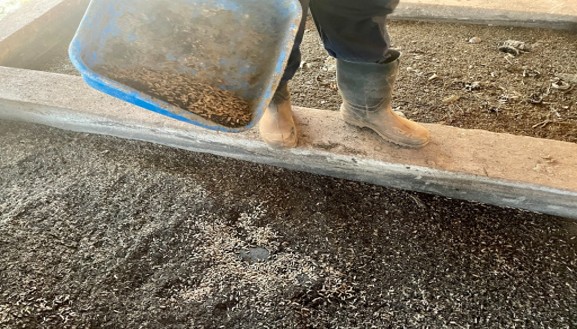
One of the most striking lessons from the farm was the use of interconnected waste-to-resource systems. Pig manure is strategically used to attract flies, whose larvae are then incorporated into the farm's animal feed systems. Housefly larvae are used to feed young chicks, while mature Black Soldier Fly (BSF) larvae provide feed for poultry. This demonstrates the potential of circular agriculture, where waste from one enterprise becomes an input for another, reducing waste while creating additional economic value.
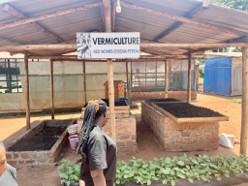
Participants also explored vermiculture systems, where residual material from the fly-digestion process is further processed by red earthworms. This process produces nutrient-rich worm castings, commonly referred to as black soil, as well as vermi-liquid, which can be used as an organic pest-repellent spray. The practice demonstrated how farmers can convert organic waste into useful agricultural inputs, contributing to soil fertility, pest management and reduced reliance on externally purchased inputs.
The zero-grazing cattle unit provided practical lessons on livestock nutrition and resource management. Participants learned about calculating feed rations according to the age and weight of animals and the importance of balancing locally produced feed with strategically sourced inputs. The farm demonstrated that even highly integrated circular farming systems may require farmers to outsource certain inputs. For example, dry-season hay may need to be purchased to maintain consistent dairy production. This provided an important lesson on practical farm economics and the need to balance self-sufficiency with strategic sourcing.
Participants were introduced to automated hydroponic fodder production, where maize fodder is grown within approximately six to seven days under controlled conditions. The system uses automated irrigation, with short irrigation cycles occurring at regular intervals, demonstrating how technology can be integrated into agricultural production to improve efficiency and optimise the use of space and water. For young people interested in urban and peri-urban agriculture, this offered an example of how technology and innovation can help overcome some of the limitations associated with land availability.
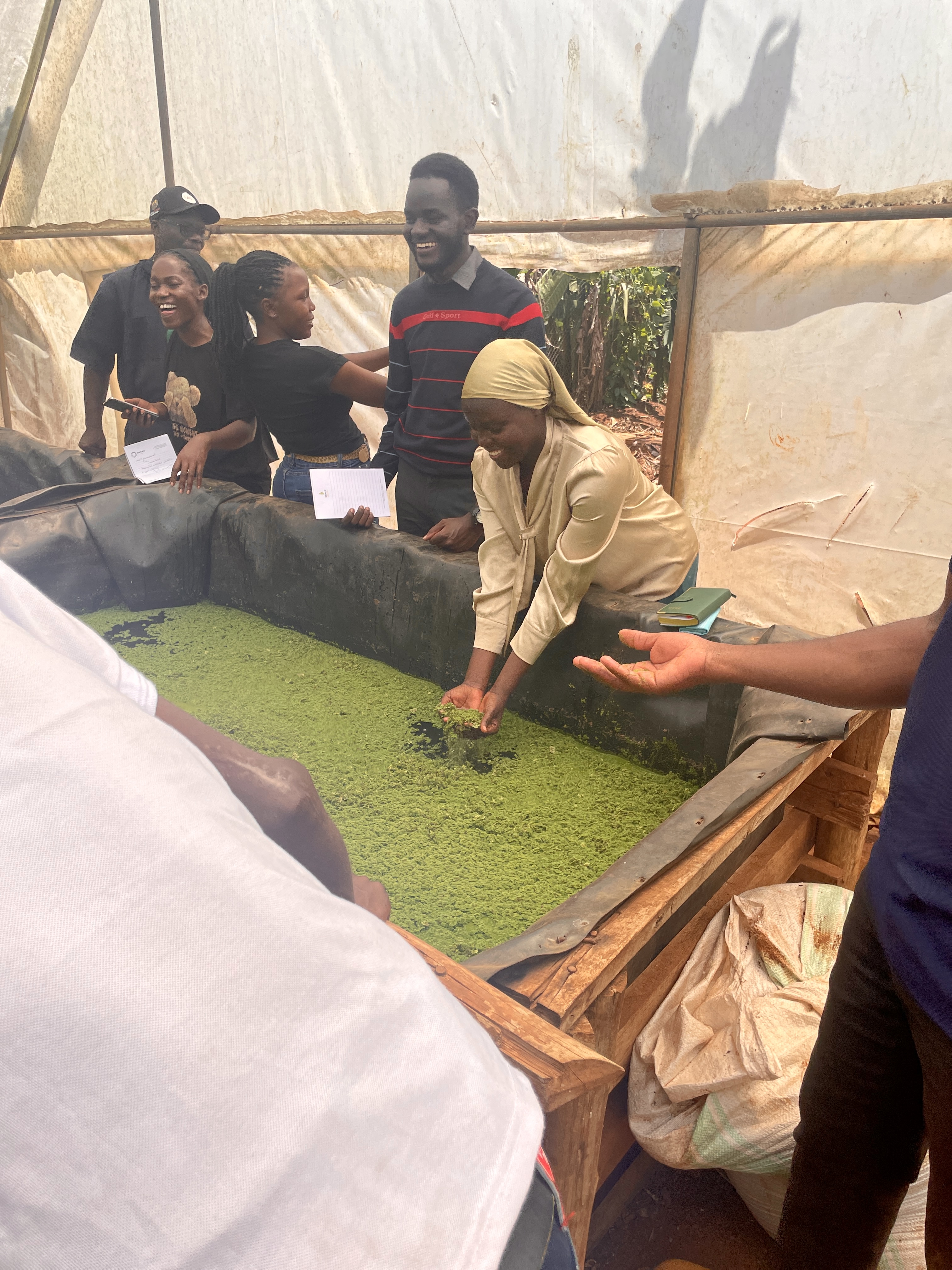
The aquaculture component introduced participants to catfish and tilapia production, alongside the cultivation of Azolla, a floating aquatic fern that can serve as a high-protein feed supplement. This demonstrated how aquaculture can be integrated with other farm enterprises and how locally available biological resources can contribute to reducing feed costs. The session was particularly relevant for participants interested in diversifying agricultural enterprises and exploring alternative income-generating opportunities.
The Farm Day Out also exposed participants to emerging agricultural enterprises, including snail farming. The discussion highlighted opportunities for young people to explore relatively low-space and potentially high-value enterprises while responding to emerging markets and changing consumer demand. The inclusion of such enterprises reinforced the message that youth participation in agriculture does not have to be limited to conventional crop and livestock production.
The learning experience extended beyond production systems to include discussions around sustainable food consumption. Participants shared a traditional meal served using banana leaves, providing a practical demonstration of eco-gastronomy and the use of locally available, biodegradable materials. This simple experience reinforced the broader message that sustainability in food systems extends across the entire value chain, from production and waste management to food preparation and consumption.
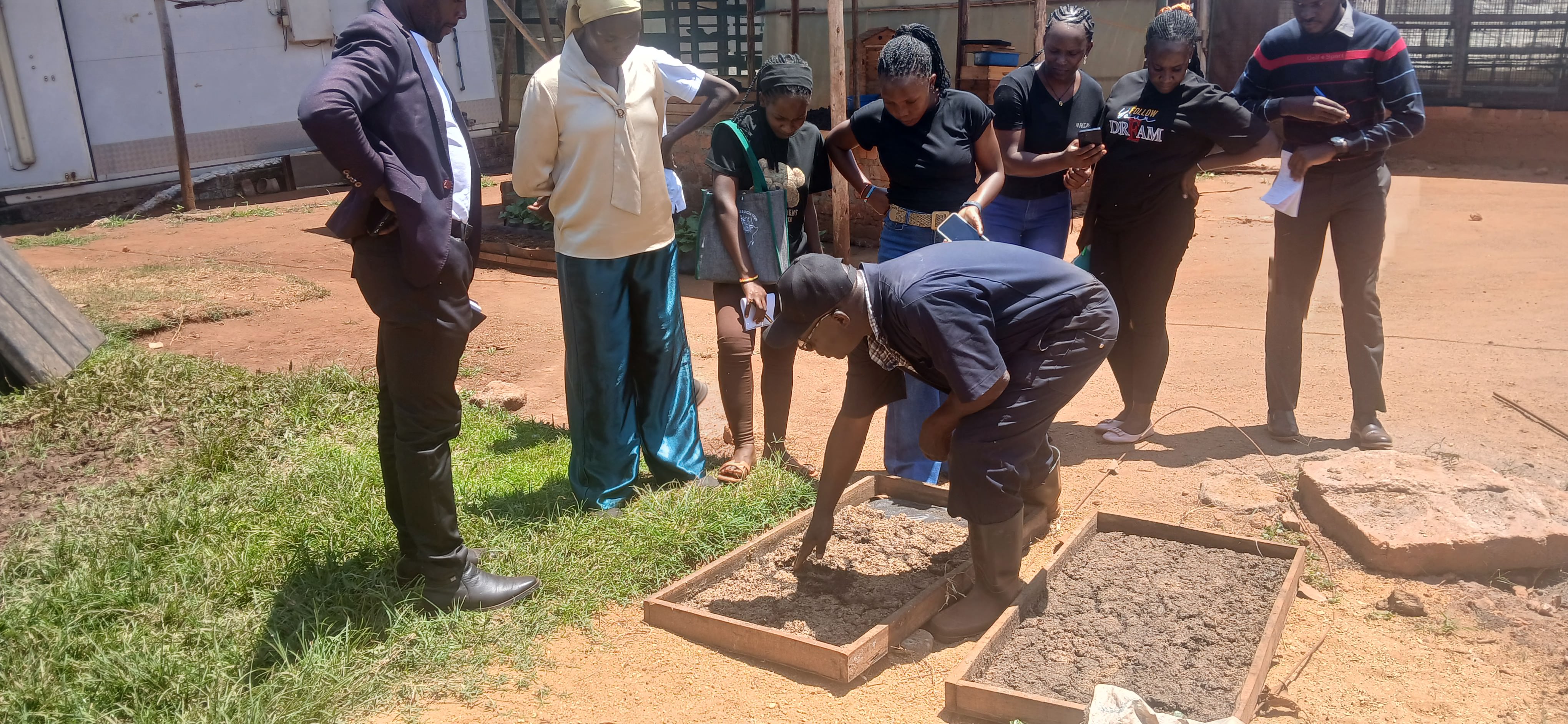
Following the farm tour and meal, participants reconvened at the MST Junior School compound for an interactive closing session. The lead trainer provided a detailed overview of livestock management, sharing practical production figures, feeding ratios and performance indicators. Participants were also able to ask questions and receive feedback relevant to their individual agricultural enterprises. This component transformed the Farm Day Out from a one-day farm visit into a more meaningful mentorship and knowledge-exchange experience. Participants were encouraged to reflect on how the practices they had observed could be adapted to their own contexts, enterprises and communities.
The 2026 Farm Day Out generated several important learning outcomes:
Although the 2026 edition had a more intimate turnout due to scheduling conflicts with the Africa Food Systems Forum in Rwanda and travel limitations for participants from upcountry, the smaller group created a highly interactive learning environment. Participants had greater opportunities to engage directly with the trainers, ask detailed questions, exchange experiences and receive tailored feedback. The experience demonstrated that the impact of a youth learning activity is not determined solely by the number of participants but also by the quality of engagement, practical learning and opportunities for follow-up.
Building on the success of the 2026 Farm Day Out, YPARD-Uganda is already looking ahead to the 2027 edition, with plans to return to One Acre Farm during the wet season. The proposed return visit will provide an opportunity for participants to observe and compare seasonal farming practices and assess how different environmental conditions influence production systems. The 2027 edition is expected to build on the lessons from this year by creating even more opportunities for youth networking, practical learning, agribusiness mentorship, innovation and policy engagement.
YPARD-Uganda extends its sincere appreciation to Co-Country Representatives Daniel Chavo Kisekka and Julian Nagujja for their leadership, mobilisation and coordination of the activity.
Special appreciation goes to Dr. Emma Naluyima and the One Acre Farm team for generously opening the farm to participants, particularly on a Sunday and after several adjustments to the original event dates.
YPARD-Uganda also appreciates Enock Joseph Ssembuusi for facilitating the policy engagement session and all the participants who actively contributed their experiences, questions, ideas and perspectives throughout the day.
The Farm Day Out once again demonstrated the value of creating spaces where young people can learn from one another, engage with experienced practitioners, explore new opportunities and translate knowledge into action.
To everyone who missed the 2026 edition: the YPARD-Uganda Farm Day Out returns in 2027, bigger, more practical and with even more opportunities for young people to learn, innovate, connect and grow.