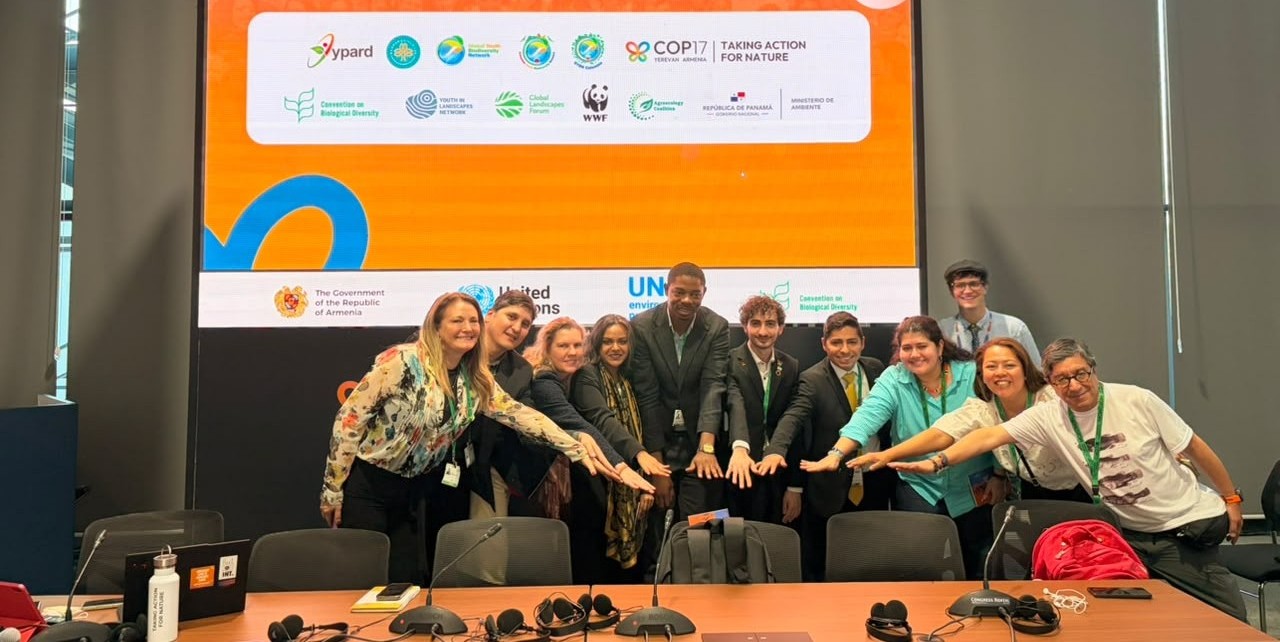

In October 2026, the YPARD delegation headed to the CBD COP17 held in Yerevan Armenia to represent youth in the agrifood systems working at the intersection of biodiversity conservation and land restoration. YPARD advocated for the meaningful participation of young people in biodiversity conservation and the transformation of food systems. Through its delegation, policy advocacy, and multiple engagements at the Youth Pavilion and official side events in the conference, YPARD highlighted the role of young professionals, farmers, and local communities in delivering the goals of the Kunming–Montreal Global Biodiversity Framework (GBF).
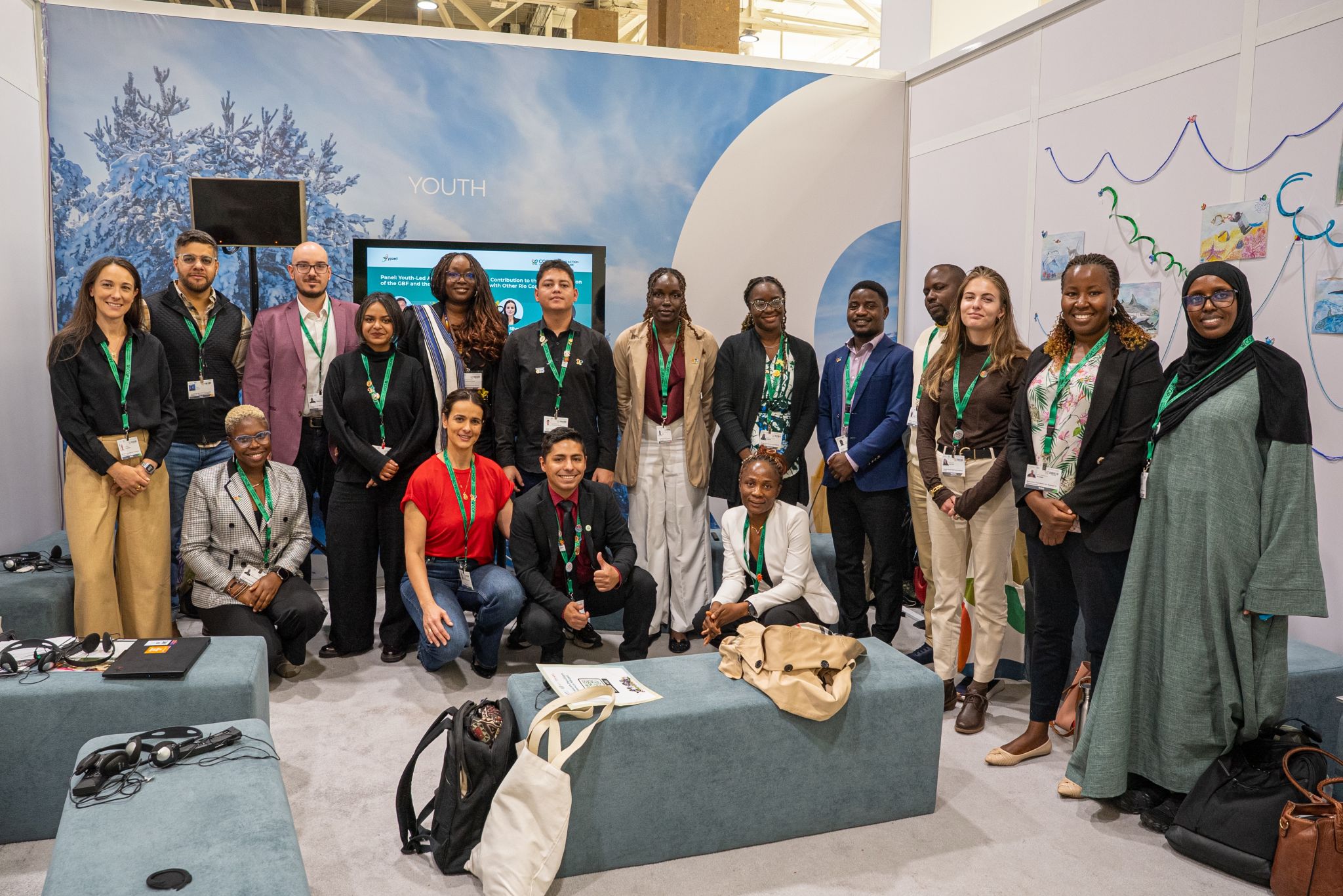
A central message ran through all of YPARD’s engagements: young people must be recognized as active partners in shaping and implementing biodiversity policies, rather than simply as beneficiaries of them. This means creating opportunities for youth to influence decision-making, get direct access to resources, meaningfully contribute their knowledge, and scale solutions that connect biodiversity conservation with sustainable agriculture, resilient livelihoods, and equitable food systems.
The delegation was led by Jean Sebastian Pedraza Paez, Global Engagement Manager; accompanied by Trisha Mandal, Global Partnerships and Communications Manager; and Michelle Gaëlle Bidima, a member of YPARD’s Policy Working Group and the Global Youth Biodiversity Network (GYBN). The engagement was supported by the Youth in Landscapes Network (YIL).
Joe Appiott from the CBD Secretariat gave opening remarks in a side event on oceans at the IUCN Pavilion on Sunday the 25th of October, after the end of the first week of the COP17. He spoke about how the side events, which happen parallely along with the main negotiations, are actually at the foundation of everything being discussed in the negotiating rooms at the COP. YPARD’s engagement in these sessions were underlined with this very belief.
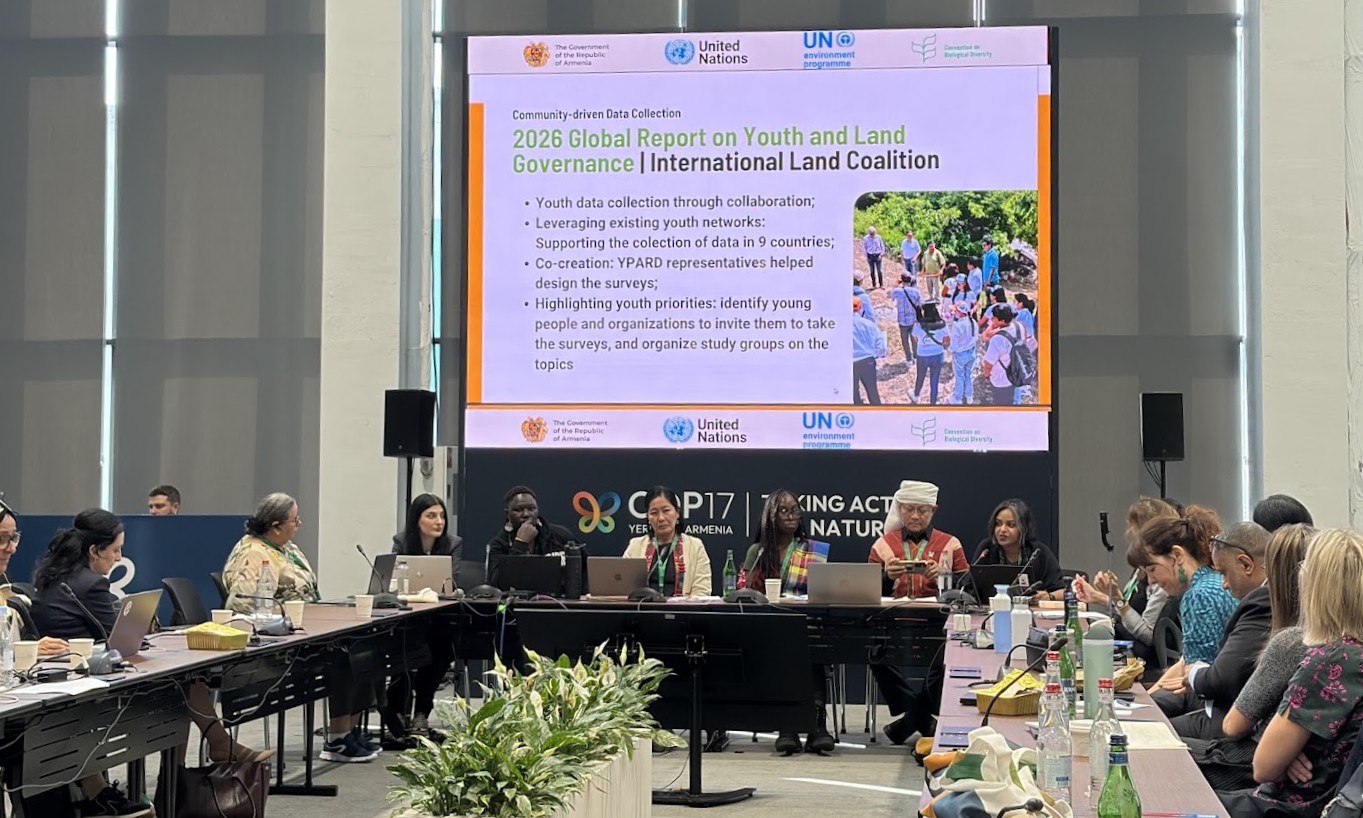
Building on the outcomes of the inaugural Gender and Environment Data Conference held in Cali in 2024, which highlighted the lack of sex-disaggregated and gender- data as a key barrier to KMGBF, the Second Gender and Environment Data Conference was held in Yerevan, Armenia in COP17. It addressed persistent gaps in data availability, accessibility, interoperability and institutional capacity, while strengthening partnerships and scaling practical approaches to ensure women’s contributions, knowledge and priorities are reflected in biodiversity governance and benefit-sharing. Women4Biodiversity, UN-Women and Global GreenGrants Fund, in partnership with UNDP and ILC, hosted this event on the 18th of October at the COP venue, bringing together around 100 participants. The conference facilitated an intensive exchange of experiences and insights into progress made regarding gender data. These discussions resulted in key outcomes aligned with the conference’s main themes: progress, gaps and commitments; financing gender data; and community-driven data collection, tools and methodologies.
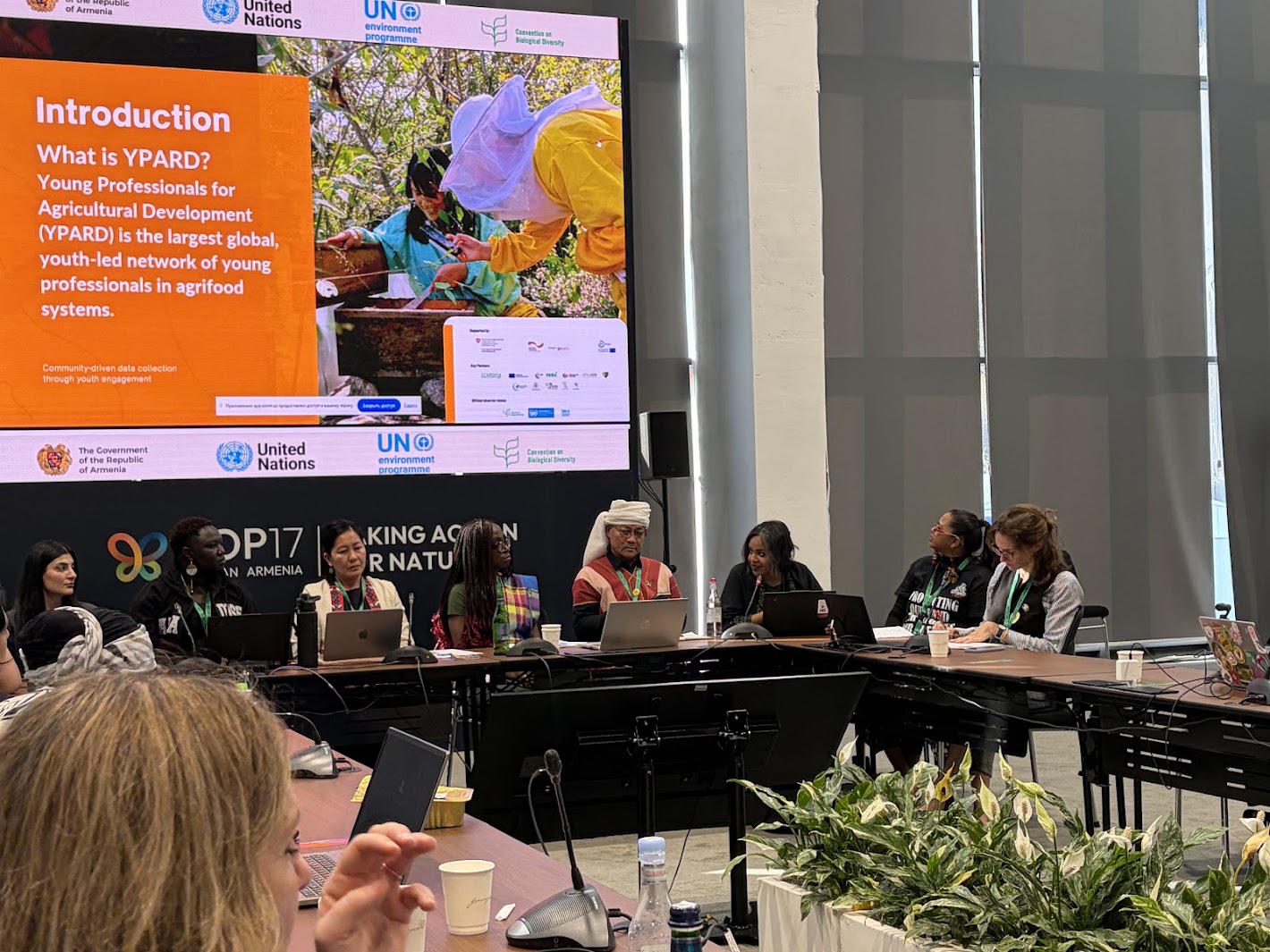
Trisha Mandal spoke as a panellist in the 3rd stream of the Conference titled Community-Driven Data Collection, Tools and Methodologies. The session explored how community-driven data collection and tools can improve accountability, make gender and Indigenous realities visible in biodiversity monitoring, and support more equitable outcomes under the KMGBF. Bringing forward experience from YPARD, Trisha spoke about the role young people are already playing as data collectors and storytellers, and how partnerships help to carry community data to decision-makers. She presented YPARD’s work on the Youth Data Initiative with the International Land Coalition and other partners, which is a global effort to put data in the hands of young people and to make their realities visible. Building on LANDex, ILC's people-centred land governance index, the project is collecting comparable data on youth and land across at least 20 countries, feeding into a 2026 Global Report on Youth and Land Governance. The results will be used to strengthen collective advocacy at UNCBD, UNCCD, UNFCCC COPs, CFS, and the UN Decade of Family Farming, as well as provide actionable evidence for member organisations, partners, regional platforms, and other stakeholders. YPARD’s work with the GEF-8 Food Systems Integrated Program, specifically the co-creation of Global Youth Strategy was another example demonstrated in the session. Trisha presented this document as a key example of youth-led co-creation and data collection. The Strategy was developed in partnership with experts at FAO and using a mixed method approach including analysing of existing reports from IFAD and other partners as well as direct data collection from youth on the ground through the YPARD network. It looked at the challenges faced by youth, and identified priority areas that would ensure their meaningful participation in the Food Systems IP and its 32 target countries. Moving forward, partnerships are critical in ensuring that these priorities are reflected in country projects.
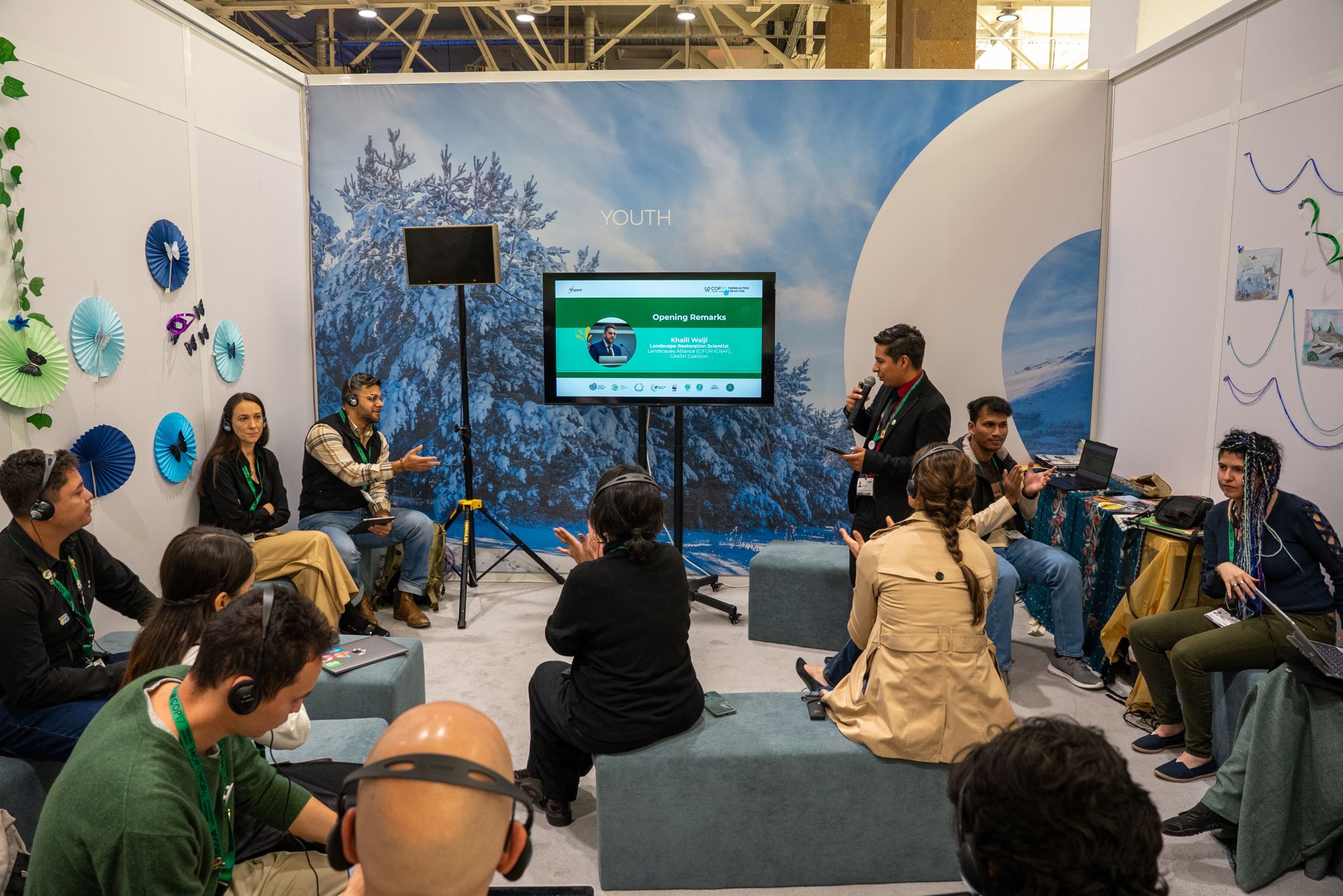
A farmer does not think about climate change on a Monday, soil health on a Tuesday, and biodiversity conservation on a Wednesday- all of these are tackled all at once, everyday. These were the opening remarks delivered by Khalil Wajli of the Landscapes Alliance at the Youth Promoting Implementation: GBF and synergies among Rio Conventions through Agroecology event on the 21st of October in the Youth Pavilion.
Organised by YPARD along with several other partners and moderated by Sebastian Pedraza, the session delved into practical ways of how agroecology can connect biodiversity conservation, climate action and land restoration. Dr. Charlotte Pavageau of the Biovision Foundation demonstrated concrete links between the targets of the GBF and the principles of agroecology, following which speakers from YPARD and GYBN, shared examples of smallholder farmers and young people addressing these synergies through agroecology.
Trisha Mandal presented YPARD’s work in the WYNA programme, focussing on the in-depth fellowship component of the programme that young people in Africa took part in to meaningfully scale their community solution projects.
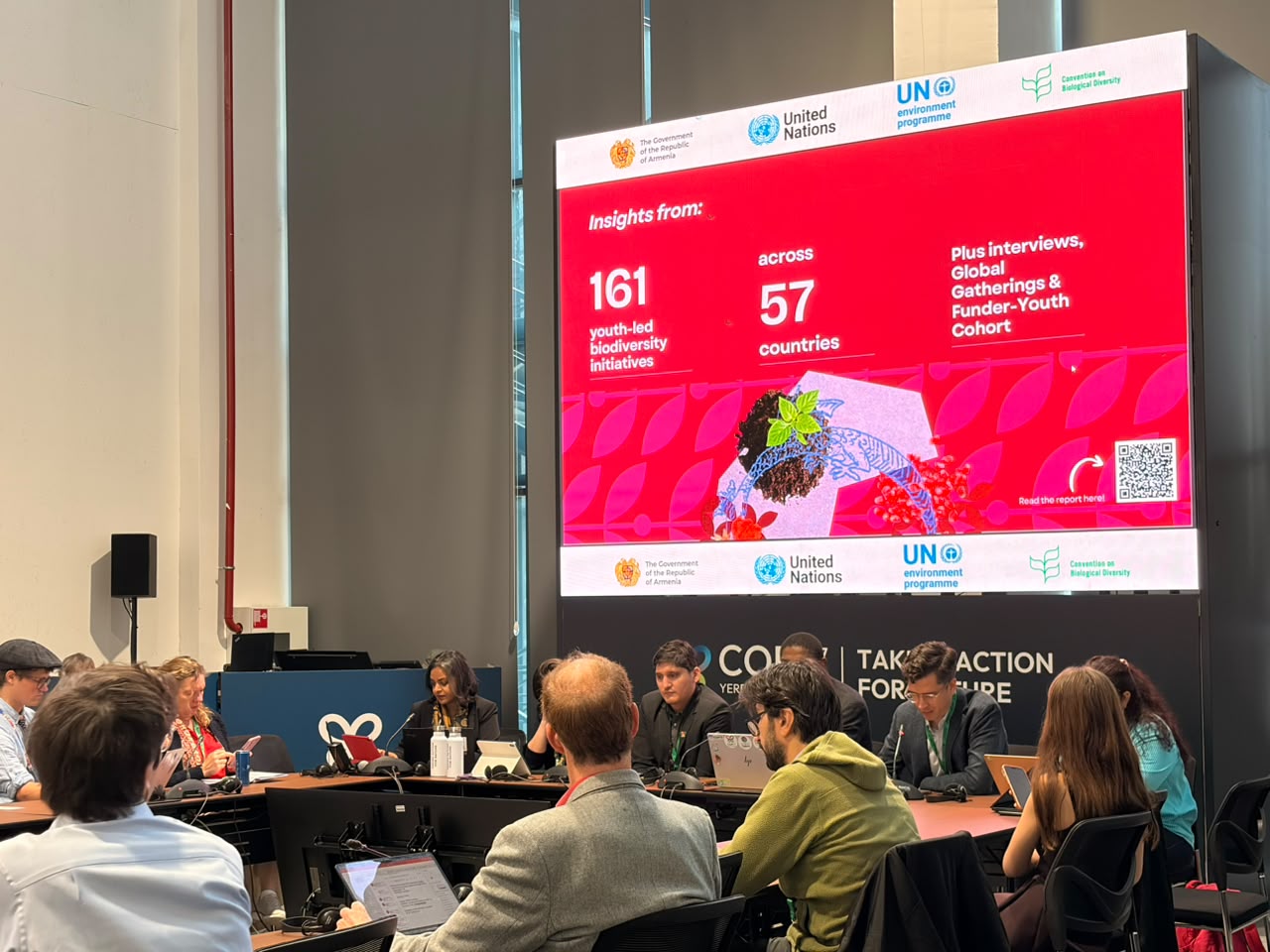
Two years after the COP16 in Cali, organizations gathered to reaffirm that young people are key agents to promote solutions from the territories and build fairer, sustainable and inclusive futures. The event titled Youth and Children Harvesting Life: Agroecology and decent jobs was one such space where we discussed how sustained partnerships and co-creation with youth is essential to advance solutions on biodiversity conservation and sustainable agrifood systems transformation.
Co-organized by YPARD, Barranquilla20, Agroecology Coalition, GYBN, World Wildlife Fund (WWF) , Netherlands Development Organisation (SNV) and other partners, we discussed how biodiversity and climate change interact with children and youth in several ways, presenting concrete initiatives and projects. Adaptation to climate change and measures to restore ecosystems, produce food sustainably and adapt to climate change offer opportunities to create new green jobs while increasing the resilience of existing ones.
Green jobs for young people are a critical vehicle for their social, economic, and political inclusion- and this was another key theme at this event. Speakers highlighted the need for scaling in youth-led solutions, and discussed how agroecology and clean energy technology provides opportunities to address challenges around youth unemployment, poverty and climate change. The session was moderated by Trisha Mandal from YPARD, with speakers from World Wildlife Fund, SNV, GYBN, Synchronicity Earth, Barranquilla20. After opening remarks and a keynote from Taruhim Quadros of WWF Brazil and Ismene Stalpers of the SNV, Felix Fieder from Synchronicity Earth presented the rich report Ecologies of Empowerment that looks at the funding landscape of youth-led solutions in biodiversity, and provides several recommendations for both youth organizations and funders for scaling up such funding. Co-founder of GYBN, Christian Schwarzer gave a powerful intervention on how young people are advocating for change in how the planet and its systems work, and how the COP conferences are about making these changes happen. This was followed by presentations of concrete solutions from the ground, including Sebastian Pedraza from YPARD presenting our work in agroecology and creation of decent, green jobs through the WYNA program and other initiatives.

YPARD engages with the GEF through its GEF-8 Food Systems Integrated Program as well as through the GEF-CSO network. On 28th of October, several members of the CSO network, including YPARD, took part in a session featuring pitches on potential solutions to biodiversity-related challenges or gaps.
Through this session, Sebastian Pedraza pitched in-depth, paid fellowships for young people in agrifood systems. Calling attention to YPARD’s Holistic Fellowship Programme, he highlighted that, in its first cycle in 2025, the Building Women- and Youth-led Network Alliances (WYNA) Programme, funded by Deutsche Gesellschaft für Internationale Zusammenarbeit (GIZ) provided six young African leaders access to finance for their agriculture and agroecology related activities. Featuring a personal testimonial from Ezeofor Goodness, one of the WYNA Fellows who has expanded her organic hibiscus production to value added products through community engagement, the pitch presented the tangible impact that such fellowships bring to youth-led, grassroots initiatives. He implored partners to invest directly with youth-led organizations like YPARD to offer similar programmes so that youth on the ground can directly be engaged.
Working with its global Policy Working Group, YPARD advanced a set of policy priorities aimed at making biodiversity action more inclusive, equitable, and responsive to the realities of young people working in agriculture and food systems. These priorities were co-created with youth from different regions and backgrounds, and aligned with priorities put forward by the Global Youth Biodiversity Network (GYBN), the official youth constituency of the CBD.
These priorities included:
- Recognizing young people as key actors in biodiversity policy and implementation.
- Mobilizing resources and improving access to biodiversity finance for youth-led initiatives.
- Recognizing and supporting farmer-led conservation.
- Strengthening synergies among the three Rio Conventions on biodiversity, climate change, and desertification.
- Integrating biodiversity considerations across food systems and economies.
- Valuing Indigenous knowledge and multicultural leadership.
- Promoting equity in the biodiversity economy.
- Strengthening education, research, and capacity development.
Together, these priorities connected global biodiversity commitments with the practical support needed by young professionals, farmers, and community-led initiatives to translate policy into action.
Outcomes of negotiations showed some progress- on Decision CBD/COP/17/L.16 Biodiversity and Agriculture actions related to the conservation and sustainable use of soil biodiversity were decided on. Among its main elements were strengthening coordination among countries to incorporate soil biodiversity initiatives into other sectoral plans, policies, and strategies, and mobilizing financial resources to expand research on soil biodiversity. Decision CBD/COP/17/L.19 Biodiversity and Climate Change addressing the relationship between biodiversity and climate change promotes integrated approaches to advance the objectives of both agendas.
Key elements included promoting integrated and synergistic approaches to address biodiversity and other interrelated issues, encouraging increased investment in the conservation, restoration, and sustainable use of biodiversity, recognizing the co-benefits of actions to mitigate and adapt to climate change and to reduce disaster risk, and promoting the consideration of the interrelationships between biodiversity and climate in national strategies and plans.
Heitor Dellasta, Policy Coordinator of the Global Youth Biodiversity Network remarks, “The goal of any financial mechanism should be inclusive decision-making and fairer access to biodiversity finance for Indigenous Peoples and local communities, women and youth, as well as megadiverse countries facing disproportionate implementation burdens and growing debt pressures.”