
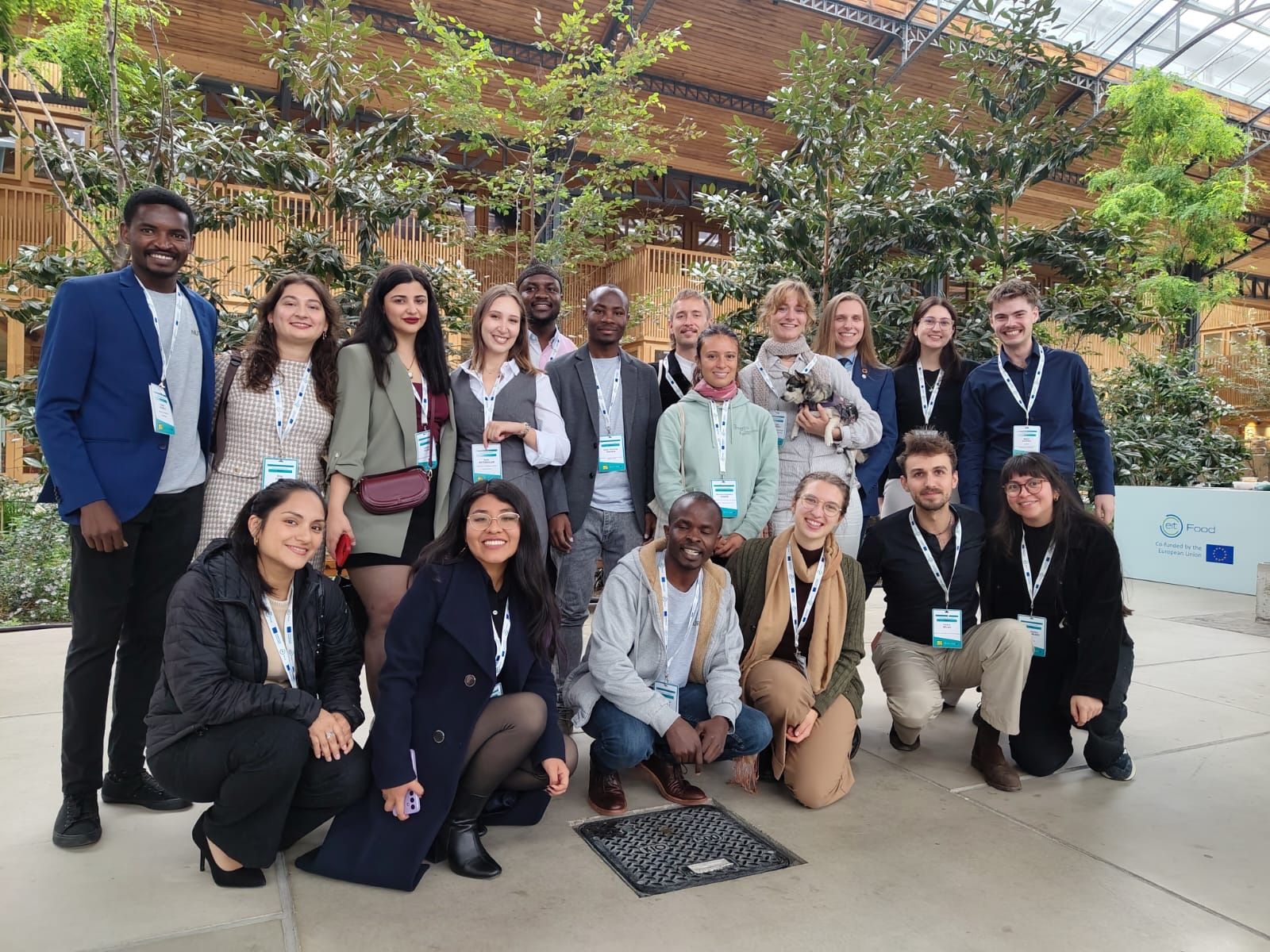

This was the question at the centre of the session titled Young Changemakers in Action: Transforming Europe’s Food Systems at the EIT Food Next Bite 2025 event held in Brussels, Belgium from October 15th-16th, 2025.
The session spotlighted the winning teams of the Menu for Change (MFC) Challenge who demonstrated how youth-led initiatives are reshaping Europe’s food systems through innovation, sustainability, and social impact. Their participation highlighted not only the diversity of ideas emerging from young changemakers but also the critical role of youth in building fairer, healthier, and more resilient agrifood systems.
Participation with the Food Fight Podcast during the Next Bite was another key engagement by the teams. The podcast explores the challenges facing our agrifood systems, and the trends, innovations, and entrepreneurs who are transforming the future of food in Europe. The teams shared their stories of entrepreneurship, community action, research, and education on this podcast, offering a compelling glimpse into what young people across Europe are doing to address pressing food system challenges. The episodes How to Achieve A Net Zero Food System and Crafting Food System Resilience in 2025 featured members from the winning teams.
The winning teams showcased a wide range of initiatives, reflecting the multifaceted nature of food system transformation at the Next Bite. The Menza Collective team, represented by Martin Richter from the Czech University of Life Sciences, Prague, presented a framework aimed at empowering university communities to influence sustainable food procurement in ‘menza’s or cafeterias. By combining insights, metrics, and real feedback from a range of different stakeholders, he demonstrated how the project translates the perspectives of students, university staff, and cafeteria workers to understand how sustainability is defined in practice and which changes are considered realistic and desirable within the university context.
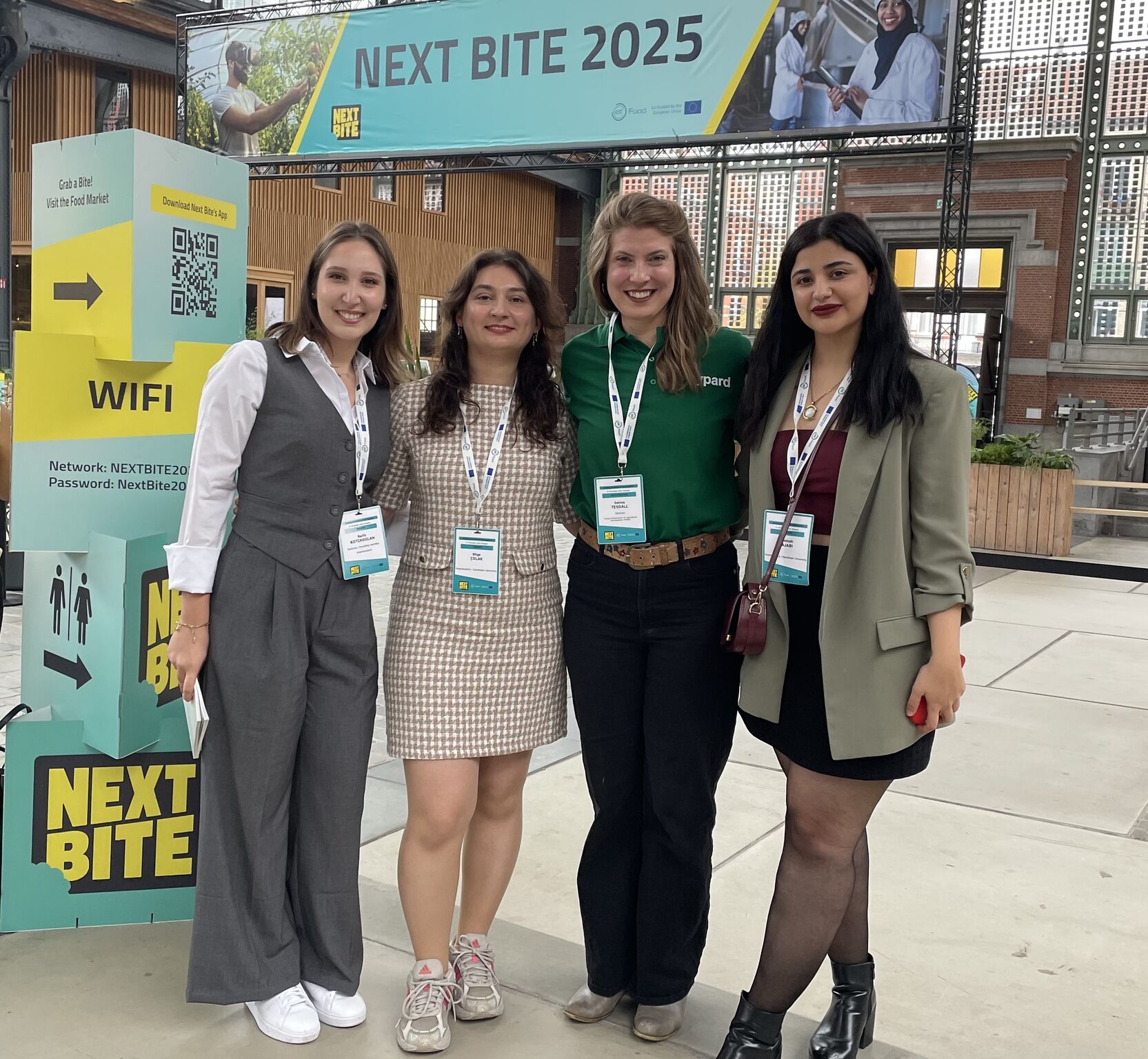
The Greenovators team complimented the Menza Collective by presenting another project that addresses food consumption and sustainability in university cafeterias in the context of a different region. Based in Turkey, their initiative promotes sustainable catering practices through collaboration with universities, policymakers, and sustainability organizations, with a long-term vision of establishing guidelines and scaling impact across Europe and beyond. Raife Kotzaoglan from the Greenovators team took centre stage during the dedicated session to discuss how their initiative incorporates educational modules and infographic-based knowledge products to help students understand how their food choices directly influence environmental outcomes.
The importance of education and capacity building of young people on sustainable food production and agriculture was further explored by the Agroboros team. Representing the team, Sarah Maria Sheid, presented their unique one-week immersive program for children aged 9–14 that reconnects them with agriculture through hands-on farm experiences and immersive learning. Participants explore the full food value chain, engage with agroecology principles, and develop ecological literacy by planting, harvesting, caring for animals, and cooking with regional, organic foods. By nurturing food literacy and environmental awareness from an early age, the initiative aims to build a new generation of food system stewards.
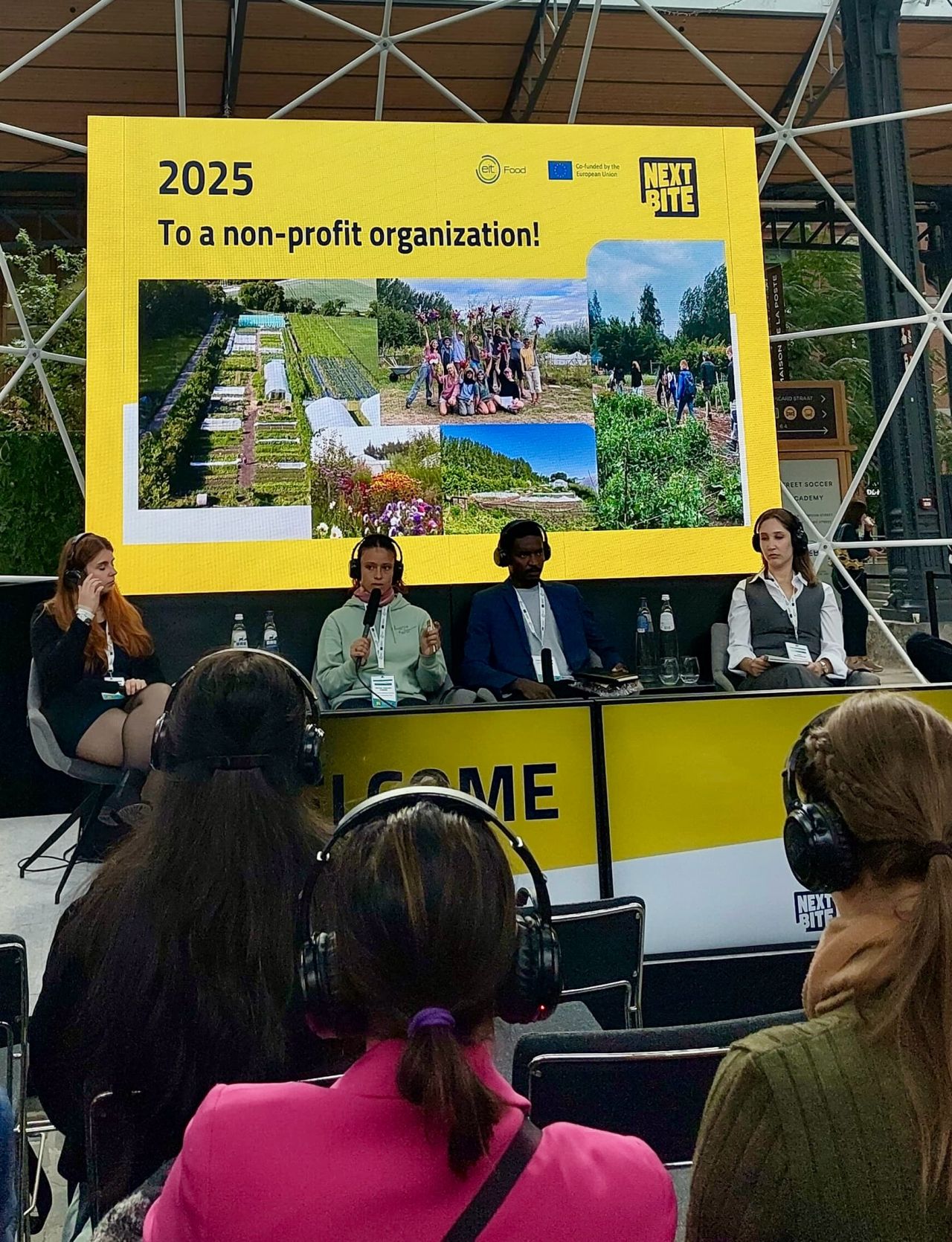
Agroecology as a pathway for sustainable agrifood systems was succinctly demonstrated by the fourth team: Alnarp’s Agroecology Farm. Mariana Forero, Chairperson & Internship Coordinator at the farm, illustrated how a student-led idea evolved into a non-profit organization, combining education, living labs, and community engagement to strengthen agroecological practices and farmer education.
The fifth team of the MFC Challenge, Nutrika, presented how agrifood systems are interconnected and dependent on different regions. They made connections between sustainable practices for smallholder bean farmers in Kenya and the rising need for fast, nutritious, plant-based foods among European consumers through their Supa Beans project. Supa Beans is an innovative approach to plant-based nutrition through dehydrated kidney beans sourced from Kenya. The Group Coordinator & External Relations Lead of the team, Evance Ochola, spoke about how their project tackles multiple challenges simultaneously: farmer livelihoods, consumer access to healthy proteins, and environmental sustainability through regenerative practices and eco-friendly packaging. The team also presented the first prototype of their product at the event.
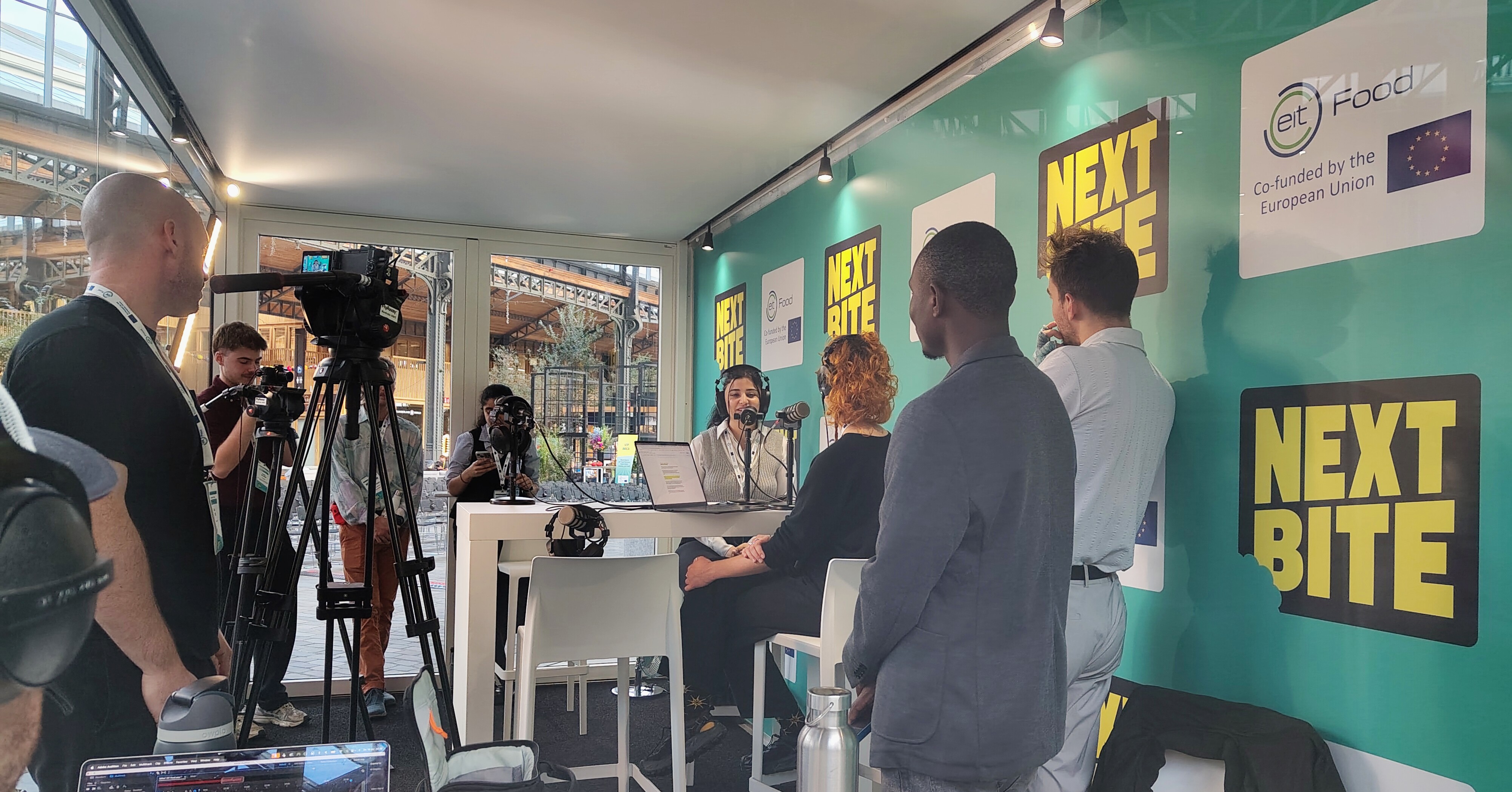
Beyond individual projects, the participation of the MFC winners at Next Bite 2025 sent a powerful message that young people are not just beneficiaries of food system reforms but are driving tangible initiatives and projects on the ground. By sharing their experiences on a major European innovation stage, the MFC winners demonstrated how youth-led initiatives can connect grassroots action with policy debates, research, and entrepreneurship.
The Next Bite 2025 was more than a pitching opportunity for the winning teams. It was a moment of collective visibility, learning, and collaboration. Their engagement fostered dialogue with innovators, policymakers, investors, and peers, strengthening the ecosystem that supports youth-driven innovation in food systems.

.jpg)